Key Points:
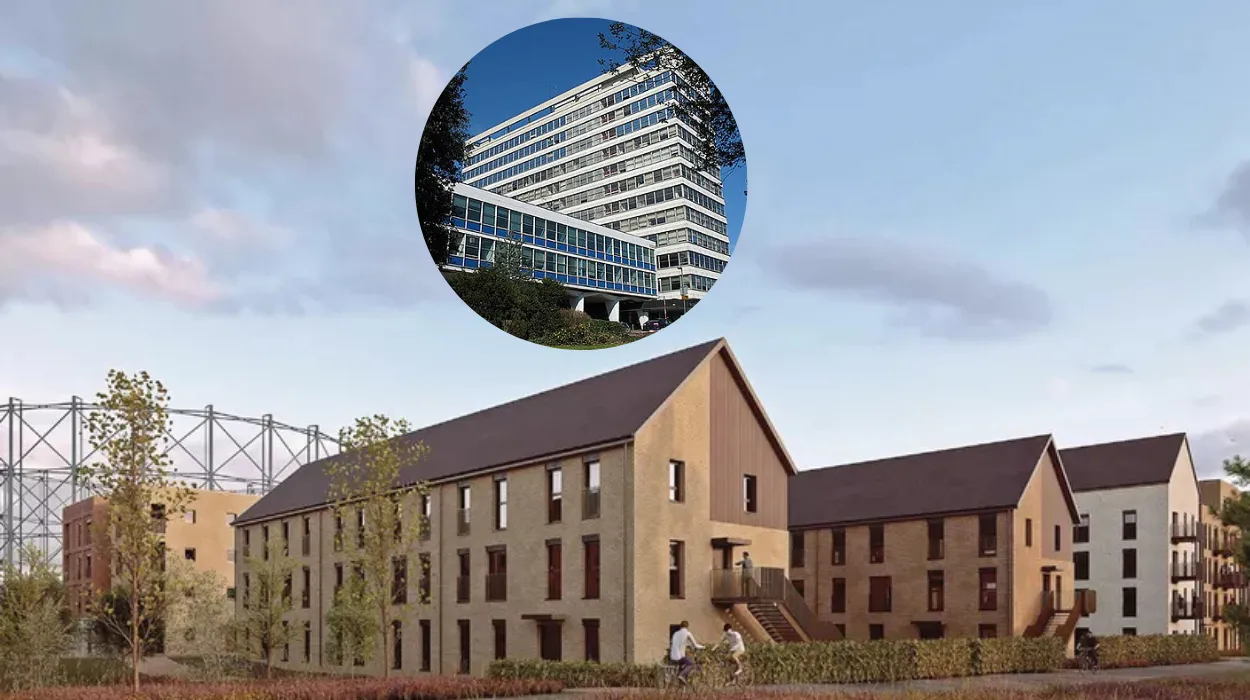
- Edinburgh City Council has approved a £69 million retrofit of Cables Wynd House and Linksview House, two Category A listed buildings in Leith, to improve energy efficiency and fire safety.
- The retrofit, led by Collective Architecture, will bring the 1960s social housing blocks up to modern standards, including EESSH2 compliance, sprinkler systems, and landscape improvements.
- An additional £188 million investment over ten years will upgrade dozens of public buildings across Edinburgh, including schools, libraries, and historic sites.
- In Barnet, London, the council has approved a 130-home Build to Rent scheme at Bunns Lane, Mill Hill, with 50% affordable housing, to be developed in partnership with Aviva Capital Partners and Stories.
- The Barnet project, set for completion in 2028, will be net zero in operation, featuring Passivhaus design, solar panels, and a 10% biodiversity net gain.
What major retrofit has been approved in Edinburgh?
As reported by Project Scotland, plans have been approved for a £69 million retrofit of Cables Wynd House and Linksview House in Leith, Edinburgh. The City of Edinburgh Council confirmed the approval of the planning application submitted by Collective Architecture, marking a significant step in modernising two Category A listed post-war housing developments.
- Key Points:
- What major retrofit has been approved in Edinburgh?
- What improvements will the Edinburgh retrofit include?
- How is Edinburgh investing in its public infrastructure?
- What housing development has been approved in Barnet?
- How is the Barnet project being funded and developed?
- What are the sustainability features of the Barnet development?
Housing, Homelessness and Fair Work Convener Lezley Marion Cameron stated:
“I am delighted that the necessary planning consent for our plans to upgrade Cables Wynd House and Linksview House to provide safe, energy efficient and high-quality homes for residents there has been granted, enabling these long-awaited works to get underway, hopefully at pace”.
She also acknowledged the residents’ active involvement in shaping the project through consultations and advocacy.
Carl Baker, Architect and Passivhaus Certified Designer at Collective Architecture, said:
“We’re thrilled that our retrofit proposals for Cables Wynd House and Linksview House have been granted planning permission and listed building consent”.
He described the project as a milestone in preserving the architectural and social significance of the buildings while transforming them into “warm, safe, and resilient places to live”.
What improvements will the Edinburgh retrofit include?
The retrofit will deliver comprehensive upgrades across multiple domains. Energy efficiency measures will include enhanced insulation, window replacements, and energy-efficient heating systems to meet the Scottish Government’s Energy Efficiency Standard for Social Housing (EESSH2). Fire safety will be improved with sprinkler systems, smoke ventilation, a new fire-fighting lift, and removal of legacy bin chutes.
Resident safety will be enhanced through upgraded lighting, CCTV systems, and access control. Landscape improvements will introduce play areas, seating, wildflower meadows, and sustainable urban drainage systems (SUDS), alongside a review of parking and waste facilities.
The project team includes AtkinsRéalis as lead consultant, Collective Energy for sustainability, Blackwood Partnership for MEP engineering, Narro Associates for structural engineering, and Urban Pioneers Landscape Architects. The Council will continue engaging residents throughout the process.
How is Edinburgh investing in its public infrastructure?
Beyond the Leith retrofit, Edinburgh is committing over £188 million to upgrade its public estate over the next decade, according to a report by Project Scotland. Since 2018, £113.7 million has already been invested, raising the proportion of council buildings in good or satisfactory condition from 83% to over 90%.
Councillor Mandy Watt, finance and resources convener, said:
“This is a huge programme of work to make our schools warmer and our community spaces more welcoming”.
She highlighted upgrades at Parson’s Green Primary, which now features an air source heat pump, solar panels, and LED lighting, as well as improvements at Stockbridge Primary and Tollcross Nursery.
Historic sites like the Nelson Monument and Usher Hall have also seen work, with the latter receiving acoustically designed seating for all 2,200 seats. The council manages nearly 600 buildings, some up to 200 years old, underscoring the scale of the maintenance challenge.
What housing development has been approved in Barnet?
Barnet Council has granted planning permission for a landmark 130-home Build to Rent scheme at Bunns Lane, Mill Hill, as confirmed by the council’s official website and Housing Today. The development, to be built on a council-owned car park adjacent to Mill Hill Broadway station, will be owned and managed by the council.
Cllr Ross Houston, Barnet Council’s Deputy Leader and Cabinet Member for Homes and Regeneration, said:
“This development is a great example of how we can use council land to directly benefit residents, providing much-needed, high-quality homes for local people, with half offered at affordable rent”.
He emphasised the council’s commitment to creating homes that strengthen communities.
How is the Barnet project being funded and developed?
The project marks Barnet Council’s first partnership with an institutional investor of Aviva’s scale, with Aviva Capital Partners collaborating alongside property developer Stories. Richard Meier, CEO of Stories, described Bunns Lane as
“a model for what public-private collaboration can achieve when values and long-term outcomes lead the brief”.
Sophie White, Sector Head Regeneration at Aviva Capital Partners, said:
“This project demonstrates how institutional capital can support the delivery of better places – not just homes, but thriving, sustainable communities”.
She welcomed the council’s endorsement, which she said would unlock long-term benefits for residents and the local economy.
What are the sustainability features of the Barnet development?
The Bunns Lane scheme is designed to be net zero in operation, adhering to Passivhaus principles to minimise energy demand. Solar panels will be installed on all unshaded roofspace, and Exhaust Air Heat Pumps (EAHPs) will provide heating and hot water, with electric panel heaters as backup.
The development is expected to reduce on-site regulated carbon emissions by 80.3% using SAP10.2 emission factors. It will also achieve at least a 10% net gain in biodiversity and a net uplift of 39 trees. Sustainable Urban Drainage (SUDs) will be implemented via green roofs, permeable paving, and an attenuation tank.
Construction is expected to begin in 2026, with completion targeted for 2028. The project exemplifies a new model of public-private partnership focused on long-term social value rather than short-term profit, according to Stories and Aviva Capital Partners.