Key Points
- Emergency Response: London Fire Brigade personnel stepped in to pump up to a foot of mains water into the Brewery Pond on Hadley Green to increase dissolved oxygen levels.
- Fish Mortality: A dozen or more carp were found floating on the surface having suffocated due to acute oxygen depletion in the depleted waterway.
- Potential Survivors: Reports indicate that as many as six or seven carp may have survived the drop in oxygen levels.
- Inter-Agency Discussion: Barnet Council and the Environment Agency are actively assessing long-term interventions, including artificial aeration and chemical dosing, to prevent repeat incidents.
- Wider Ecological Threat: Local anglers have raised concerns regarding nearby Totteridge Long Pond, where fishing has been suspended and dead fish have also been removed.
- Historical Context: Residents noted that the Brewery Pond’s water volume had been depleted since London Fire Brigade extracted water during a major fire at Hollybush House in May of last year, compounded by prolonged dry spells.
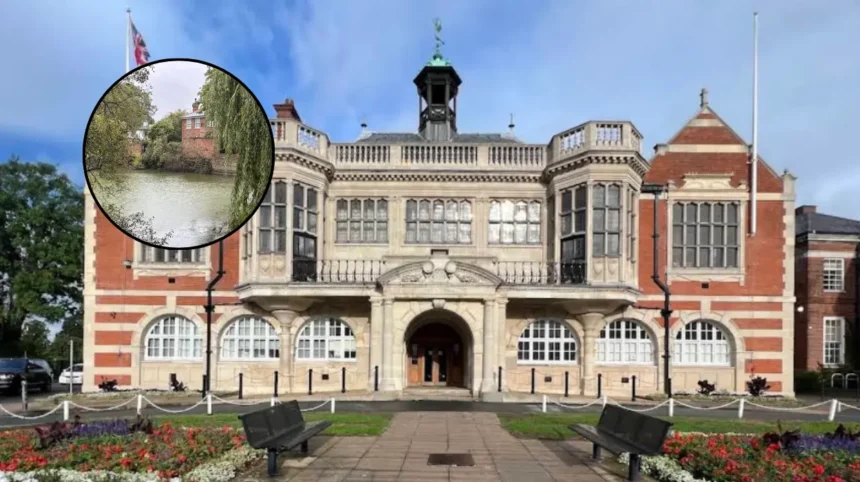
Hadley Green (North London News) October 8, 2026 — London Fire Brigade personnel have stepped in to save surviving aquatic life by pumping up to a foot of fresh mains water into the Brewery Pond on Hadley Green following a severe drop in dissolved oxygen levels that killed over a dozen fish.
As reported by Robin Bishop of The Barnet Society, Barnet Council and the Environment Agency confirmed they will discuss whether further steps can be taken to aerate the pond after local residents discovered a dozen or more carp floating dead on the surface.
The emergency operation was launched after local residents issued urgent appeals for assistance upon observing dead fish being removed from the water. In an official communication to concerned residents, Harriet Duffield, Biodiversity and Conservation Officer at Barnet Council, confirmed that firefighters deployed equipment to pump water directly from the mains supply to refill the pond.
According to estimates cited by Ms Duffield, some carp have managed to survive the ecological emergency, with local reports suggesting as many as six or seven fish remain alive. Authorities remain hopeful that the combination of the mains refill and recent rainfall will stabilize water quality and prevent further loss of life.
What long-term solutions are Barnet Council and the Environment Agency considering?
To prevent subsequent ecological crashes during future periods of dry weather, Barnet Council and the Environment Agency are evaluating multiple aeration and water management strategies.
As reported by Robin Bishop of The Barnet Society, options currently under consideration to increase dissolved oxygen levels include introducing specialized water-treatment chemicals or installing artificial mechanical aeration pumps.
Speaking on the challenges facing urban water bodies during hot weather spells, Harriet Duffield, Barnet Council’s Biodiversity and Conservation Officer, stated: “Hopefully we can come up with a method which will prevent this happening again as I am sure it will only become more common with increasingly hot and dry summers.”
Why are local anglers concerned about Totteridge Long Pond?
The crisis at Hadley Green has heightened concerns among local angling communities regarding adjacent water bodies along Totteridge Lane.
As reported by Robin Bishop of The Barnet Society, members of the Millridge Angling Club in Totteridge Lane expressed growing alarm over dropping water levels at the Long Pond. Anglers confirmed that fishing activity at the site has been formally suspended due to severe drought conditions, following instances where dead fish were removed after suffocating from oxygen shortages.
The Long Pond forms one of three distinct water bodies situated along Totteridge Lane and is regularly stocked with various freshwater species, including carp, roach, and tench. Angling group members have expressed hope that emergency refilling operations can be extended to Totteridge Long Pond to safeguard its remaining fish population.
Background of the particular development
The water crisis at Hadley Green Brewery Pond stems from a combination of operational water extraction, persistent dry weather, and high ambient temperatures.
In May of last year, the London Fire Brigade was required to extract a substantial volume of water directly from the Brewery Pond to combat a major structural fire across the green at Hollybush House. Local residents reported that the pond’s water levels never fully recovered during the subsequent winter months.
The situation was further compounded by extended dry weather and high summer temperatures, which reduced the pond to its lowest recorded depth since the historic drought of 1976. During the 1976 drought, severe water depletion forced authorities to rescue surviving fish from the Brewery Pond and relocate them to a larger, deeper pond on the Wrotham Park estate.
Smaller, shallow standing water bodies like the Brewery Pond are particularly vulnerable to thermal stress. As water temperatures rise, the water’s capacity to hold dissolved oxygen drops significantly. When combined with organic buildup and low water volume, oxygen levels can plummet rapidly, causing acute respiratory distress and suffocation in larger fish species like carp.
Prediction: How this development can affect the local community, wildlife, and municipal authorities
The emergency refilling of Brewery Pond and the broader environmental stress on Barnet’s waterways carry direct implications for residents, conservation groups, and local governance:
- For Local Residents and Park Visitors: Public open spaces like Hadley Green rely heavily on healthy aquatic ecosystems for community leisure and visual amenity. Visible wildlife die-offs cause public distress and lessen the recreational value of local green spaces. Increased community vigilance will likely result in higher volumes of public reporting regarding deteriorating water conditions to local ward councillors.
- For Local Anglers and Recreational Clubs: Organizations such as the Millridge Angling Club face prolonged suspensions of recreational activities if stocked ponds remain unstable. Continued fish losses represent both a financial impact to stocked fisheries and a disruption to local sports clubs.
- For Municipal Infrastructure and Emergency Services: Using emergency fire services and mains water supplies to replenish ponds serves as a short-term emergency stopgap rather than a sustainable strategy. Barnet Council will face growing pressure to allocate capital expenditure toward permanent aeration infrastructure, mechanical pumps, or sediment dredging.
- For Urban Wildlife and Ecosystem Resilience: If hotter, drier summers become a recurring trend, shallow suburban ponds across North London will face repeated ecological collapse. Without permanent aeration or managed water depth restoration, native aquatic species, amphibians, and bird populations dependent on these urban habitats will experience ongoing habitat loss.