Key Points
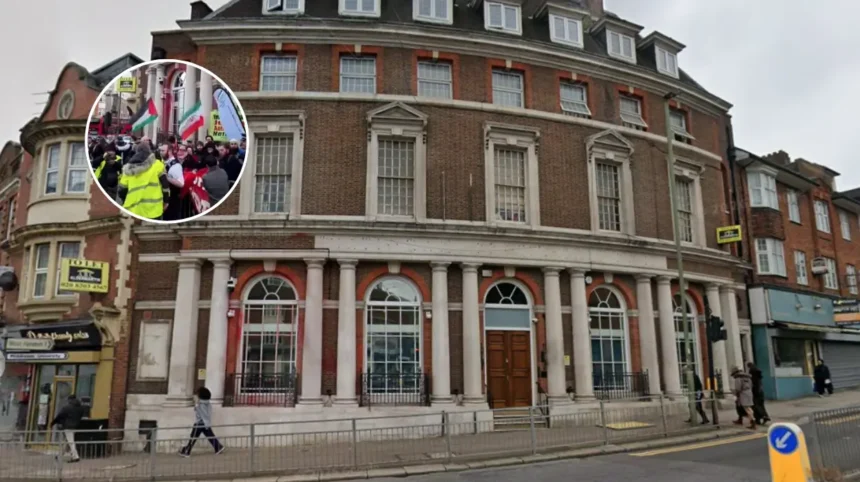
- A demonstration by the International Jewish Anti-Zionist Network (IJAN) took place outside the Jewish National Fund UK (JNF UK) building in Hendon on Monday, 30th March 2026.
- Barnet Council’s cabinet member for community safety, community cohesion, and ending violence against women and girls, Labour councillor Sara Conway, criticised the protest as “deeply concerning and unacceptable” for bringing “intimidation” to the borough’s Jewish community.
- Cllr Conway’s statement referenced the recent suspected arson attack on four Hatzola ambulances in Golders Green on 23rd March 2026, investigated by counterterrorism police as a potentially deadly antisemitic hate crime.
- The protest was spontaneous, with no prior warning or notification to authorities; police arrived within ten minutes of the call.
- Cllr Conway noted an Iranian regime flag at the demonstration, though it is unclear if she was aware the protesters were from a Jewish campaign group.
- Hendon Labour MP David Pinto-Duschinsky described the protest as “utterly appalling, completely unacceptable and clearly antisemitic”.
- IJAN describes itself on its website as “an international network of Jews who are uncompromisingly committed to struggles for human survival and emancipation, of which the liberation of the Palestinian people and land is an indispensable part”.
- Barnet Council is liaising with police, CST (Community Security Trust), Shomrim, and community leaders to enhance community safety amid heightened tensions.
- Reports originate from Joe Ives, Local Democracy Reporter, covering the event for local outlets.
Hendon, Barnet (North London News) April 3, 2026 – A protest by the International Jewish Anti-Zionist Network (IJAN) outside the Jewish National Fund UK (JNF UK) offices in Hendon has drawn sharp criticism from local leaders amid rising concerns over antisemitism in the borough, reports Joe Ives, Local Democracy Reporter.
- Key Points
- What triggered the criticism of the Hendon protest?
- Who is the International Jewish Anti-Zionist Network behind the protest?
- Why did Barnet councillor Sara Conway call the protest unacceptable?
- How did Hendon MP David Pinto-Duschinsky respond to the demonstration?
- What is the context of the recent Golders Green arson attack?
- Was the protest notified to authorities in advance?
- What role does the Iranian regime flag play in the controversy?
- How is Barnet Council addressing community safety post-protest?
- What does IJAN’s mission reveal about the protesters?
- Broader implications for Barnet’s Jewish community?
Labour councillor Sara Conway, Barnet Council’s cabinet member for community safety, community cohesion, and ending violence against women and girls, described the demonstration as “deeply concerning and unacceptable”.
The event unfolded on Monday, 30th March, just one week after a suspected arson attack on four Hatzola ambulances in nearby Golders Green, which counterterrorism police are investigating as a potentially deadly antisemitic hate crime.
Cllr Conway’s statement, released the following day, highlighted the timing of the protest. “Seeing the scenes in Hendon it is deeply concerning and unacceptable that protestors brought intimidation to the streets of Barnet at a time when the Jewish community is feeling so vulnerable following the counter terrorism arrests and the arson attack on the Hatzola ambulances,” she said, as reported by Joe Ives, Local Democracy Reporter.
What triggered the criticism of the Hendon protest?
The backlash centres on the perceived intimidation caused by the unannounced demonstration outside JNF UK, a pro-Zionist charity. As reported by Joe Ives, Local Democracy Reporter, members of IJAN gathered on 30th March without prior notification to authorities. Barnet Council confirmed it was a spontaneous event, with police responding within ten minutes of the initial call.
Cllr Conway emphasised ongoing collaboration with security partners.
“We have been liaising with the police and are aware that this was a spontaneous protest, with no prior warning or notification and the police arrived within ten minutes of receiving the call,”
she stated.
“We will continue to work closely with the police, CST, Shomrim and community leaders to maximise community safety at this very challenging time,”
added Joe Ives, Local Democracy Reporter, quoting the councillor’s full remarks.
It remains unclear whether Cllr Conway knew the protesters identified as a Jewish campaign group. She specifically referenced spotting “an Iranian regime flag” at the demonstration, which may have coloured perceptions of the event’s affiliations.
Who is the International Jewish Anti-Zionist Network behind the protest?
IJAN positions itself as a voice within Jewish activism opposing Zionism. On its website, the group describes itself as
“an international network of Jews who are uncompromisingly committed to struggles for human survival and emancipation, of which the liberation of the Palestinian people and land is an indispensable part,”
as cited in reports by Joe Ives, Local Democracy Reporter.
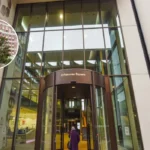
The protest targeted JNF UK, known for its pro-Zionist charitable work supporting projects in Israel. Demonstrators gathered outside its Hendon building to voice opposition, though specific chants, banners, or actions beyond the gathering itself have not been detailed in available accounts.
Why did Barnet councillor Sara Conway call the protest unacceptable?
Cllr Conway’s condemnation ties directly to the fragile security climate in Barnet, home to one of London’s largest Jewish communities. Her role encompasses community cohesion, making her response a key official stance.
“Deeply concerning and unacceptable that protestors brought intimidation to the streets of Barnet,”
she reiterated, linking it explicitly to recent incidents, per Joe Ives, Local Democracy Reporter.
The councillor’s comments underscore broader fears following the 23rd March arson attack. Four Hatzola ambulances—volunteer Jewish emergency service vehicles—were set ablaze in Golders Green, prompting a counterterrorism investigation.
This incident, described as a “potentially deadly antisemitic hate crime,” has left the community on edge, with additional counterterrorism arrests reported in the area.
Barnet Council’s proactive measures include sustained partnerships. By working with police, the Community Security Trust (CST), Shomrim (a Jewish neighbourhood watch), and faith leaders, officials aim to mitigate risks during this “very challenging time,” as phrased by Cllr Conway.
How did Hendon MP David Pinto-Duschinsky respond to the demonstration?
Hendon Labour MP David Pinto-Duschinsky issued a separate but equally forceful rebuke. He labelled the protest
“utterly appalling, completely unacceptable and clearly antisemitic,”
as reported by Joe Ives, Local Democracy Reporter. His statement amplifies concerns from both Labour figures, despite IJAN’s Jewish identity, focusing instead on the protest’s impact amid heightened tensions.
Pinto-Duschinsky’s constituency includes Hendon, where the JNF UK offices are located, making the event particularly resonant for his voters. His outright characterisation as “antisemitic” contrasts with IJAN’s self-description but aligns with the councillor’s emphasis on vulnerability.
What is the context of the recent Golders Green arson attack?
The protest’s timing follows closely on the heels of the 23rd March incident in Golders Green, a short distance from Hendon. Four Hatzola ambulances were deliberately set on fire in a suspected arson attack. Counterterrorism police are leading the probe, classifying it as a potential antisemitic hate crime with lethal intent.
This event has intensified fears within Barnet’s Jewish population, one of the UK’s most significant. Hatzola provides essential volunteer ambulance services to the Orthodox community, rendering the targeting especially alarming. Counterterrorism arrests in the area further signal elevated threats, as noted in Cllr Conway’s statement.
Was the protest notified to authorities in advance?
No prior warning was given. As confirmed by Barnet Council via Cllr Conway,
“this was a spontaneous protest, with no prior warning or notification.”
Police response was swift—arriving within ten minutes—averting escalation, according to reports by Joe Ives, Local Democracy Reporter.
This lack of notice has fed into criticisms of intimidation, as unannounced gatherings can heighten anxiety in sensitive areas. Barnet’s ongoing liaison with police underscores a commitment to rapid intervention.
What role does the Iranian regime flag play in the controversy?
Cllr Conway highlighted “an Iranian regime flag” at the demonstration, as reported by Joe Ives, Local Democracy Reporter.
This detail appears to have influenced her view, potentially evoking associations with anti-Israel sentiments linked to Iran’s geopolitical stance. However, no confirmation exists on whether protesters explicitly represented Iranian interests, and IJAN’s Jewish anti-Zionist focus remains central.
The flag’s presence adds a layer to perceptions, especially post-arson attack, though it does not alter the spontaneous nature of the event.
How is Barnet Council addressing community safety post-protest?
Barnet Council is doubling down on multi-agency efforts. Cllr Conway outlined continued work
“with the police, CST, Shomrim and community leaders to maximise community safety,”
per Joe Ives, Local Democracy Reporter. This includes intelligence sharing and visible patrols to reassure residents.
The borough’s history of cohesion initiatives positions it to navigate such challenges. Labour-led council emphasises ending violence and fostering unity, with Cllr Conway’s portfolio at the forefront.
What does IJAN’s mission reveal about the protesters?
IJAN’s online self-description frames its activism broadly:
“an international network of Jews who are uncompromisingly committed to struggles for human survival and emancipation, of which the liberation of the Palestinian people and land is an indispensable part.”
This anti-Zionist stance drives actions like the JNF UK protest, targeting what they view as pro-Israel entities.
Despite this, local responses prioritise community impact over ideological nuance, with terms like “intimidation” and “antisemitic” dominating discourse.
Broader implications for Barnet’s Jewish community?
Barnet, with its substantial Jewish population, faces intersecting pressures: global conflicts, local hate crimes, and internal Jewish debates. The Hendon protest, though small-scale, exemplifies how such events can exacerbate vulnerabilities, as articulated by Cllr Conway and MP Pinto-Duschinsky.
Reports by Joe Ives, Local Democracy Reporter, capture a unified official front against perceived threats. As investigations into the arson continue, community leaders urge vigilance without stifling dissent, though the balance remains delicate.