Key Points
- A 53-year-old man was found dead in a park located in Mill Hill, north-west London.
- Emergency services, including the Metropolitan Police and London Ambulance Service, were called to the scene near Bunns Lane and Flower Lane on Sunday morning.
- The individual was located in an “unresponsive” state and was officially pronounced dead at the scene by responders.
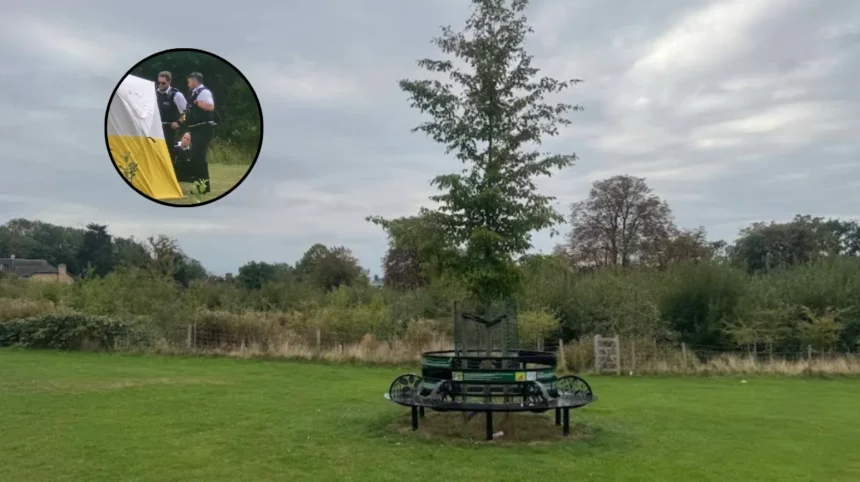
- A police forensic tent and multiple emergency vehicles were deployed to the park, alerting local residents and passers-by.
- Scotland Yard has stated that the death is currently being treated as “unexpected, but non-suspicious”.
Mill Hill (North London News) June 29, 2026 — A 53-year-old man has died after being discovered unresponsive in a north-west London park on Sunday morning, triggering an immediate emergency response and the erection of a police forensic tent.
The Metropolitan Police confirmed that officers were dispatched to the parkland near Bunns Lane and Flower Lane, Mill Hill, at approximately 9:19 am following reports of a man found in an unresponsive state. Paramedics from the London Ambulance Service also attended the location, where the individual was subsequently pronounced dead at the scene.
A spokesperson for the Metropolitan Police has stated that the fatality is currently being treated as “unexpected but non-suspicious”. Enquiries remain ongoing to establish the exact circumstances surrounding the incident.
What Happened on Sunday Morning at Mill Hill Park?
Members of the public traversing the area first noted the scale of the emergency presence shortly after 9:30 am on Sunday, 28 June.
A blue forensic enclosure was erected by authorities near the intersection of Bunns Lane and Flower Lane to shield the deceased from public view while initial assessments were conducted.
As reported by Joseph Reaidi, Senior Breaking News Reporter for London Now, a passing motorist who witnessed the immediate aftermath stated anonymously that he observed multiple police vehicles alongside two ambulances stationed at the perimeter of the parkland at approximately 9:45 am.
The area surrounding the discovery remained cordoned off for several hours while specialist officers completed their initial site surveys and gathered evidence.
How Have the Authorities and Witnesses Responded to the Discovery?
The Metropolitan Police have maintained a strictly neutral stance regarding the causal factors of the death while formal procedures are carried out.
According to the official statement released by the Metropolitan Police corporate press office, the primary classification of the incident remains “unexpected,” which is standard protocol for deaths occurring outside of clinical settings where the cause is not immediately visible.
No details regarding the identity, nationality, or residential status of the 53-year-old male have been made public by the authorities, pending the notification of his next of kin.
The London Ambulance Service has not issued a separate statement, deferring all operational updates to the Metropolitan Police as the lead agency handling the scene.
Local residents have expressed concern regarding the visible presence of forensic units, though police have sought to reassure the public by confirming that the situation is not currently being treated as a criminal inquiry.
Background of the Particular Development
The parkland situated between Bunns Lane and Flower Lane in Mill Hill serves as a prominent green space within the London Borough of Barnet. Historically, the area functions primarily as a residential suburb and a transit corridor, located in close proximity to the M1 motorway and the Thameslink rail line.
While Mill Hill is statistically classified as a low-crime area within Greater London, the deployment of forensic tents in public parks invariably attracts heightened public scrutiny due to the historical context of distinct, unrelated criminal investigations in the wider borough.
Under standard operational guidelines established by the Association of Chief Police Officers (ACPO), any death occurring in a public space that cannot be immediately attributed to a known medical condition must be processed with a forensic preservation protocol.
This requires the deployment of tents and scenes-of-crime officers until a medical examiner or post-mortem examination can definitively rule out foul play.
Prediction: How This Development Can Affect the Local Community
The discovery of an unexpected death and the subsequent police closure of sections of the Mill Hill parkland can affect local residents, park users, and community stakeholders in several distinct ways:
- Short-Term Amenity Disruptions: Regular users of the park, including dog walkers, families, and pedestrians utilizing the footpaths connecting Bunns Lane and Flower Lane, will experience restricted access while police cordons remain active or if subsequent localized sweeps are required.
- Heightened Public Anxiety: Despite reassurances from the Metropolitan Police that the death is “non-suspicious,” the visual impact of forensic tents and emergency cordons frequently correlates with a temporary increase in perceived safety concerns among local inhabitants.
- Administrative and Legal Processes: The development will now shift to the Barnet Coroner’s Court. A formal inquest will likely be opened and adjourned, which will require public resources to determine the medical cause of death. If the post-mortem uncovers underlying environmental or health factors, it may prompt localized public health reviews.