Key Points
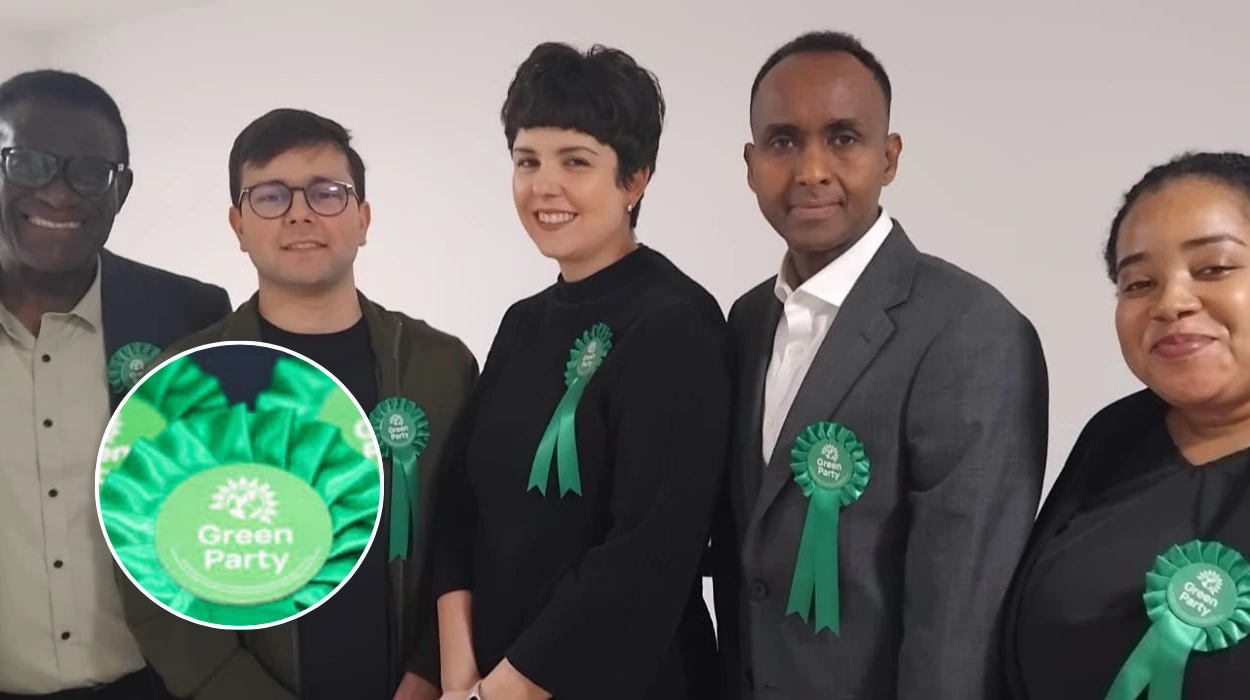
- Five sitting Labour councillors in Brent, North London, have defected en masse to the Green Party.
- The defectors are Welsh Harp councillors Mary Mitchell and Harbi Farah, Wembley Park councillor and Labour chief whip Iman Ahmadi Moghaddam, Stonebridge councillor Tony Ethapemi, and Brondesbury Park councillor Erica Gbajumo.
- Green Party deputy leader and London Assembly member Zack Polanski announced the move on 15 December, describing it as part of a wider “Green surge”.
- The councillors issued a joint criticism of Labour under Keir Starmer, saying the party is “no longer serving the principles it once championed.”
- As reported by MyLondon, the defectors pointed to concerns over social justice, climate action and internal party culture as reasons for their departure.
- The Green Party now gains a significant foothold on Brent Council, where Labour previously held a dominant majority.
- The move highlights growing tensions within Labour at local level, amid wider national debates over policy direction and internal discipline.
- Labour has been under pressure on its stance on issues including austerity, public services and the climate crisis, as councillors and members question whether it remains a transformative alternative.
- The defections in Brent follow other local-level realignments and are being framed by the Greens as evidence of a shifting political landscape in London.
- National Labour sources are expected to downplay the significance of the move, but it raises questions about party unity and the appeal of the Greens to disillusioned Labour representatives.
Why have Brent Labour councillors defected to the Green Party?
As reported by the MyLondon political team in its coverage of the story, the five councillors — Mary Mitchell, Harbi Farah, Iman Ahmadi Moghaddam, Tony Ethapemi and Erica Gbajumo — announced that they were leaving Labour and joining the Green Party after concluding that Starmer’s party had drifted away from its founding values.
- Key Points
- Why have Brent Labour councillors defected to the Green Party?
- Who are the councillors who have crossed the floor?
- What did the councillors say about Labour’s direction under Keir Starmer?
- How did the Green Party respond to the defections?
- What does this mean for the balance of power on Brent Council?
- Is this part of a wider political trend in London?
- How has Labour been portrayed in local reporting following the defections?
- What issues are likely to define the new Green–Labour dynamic in Brent?
- What happens next for local politics in Brent?
According to MyLondon’s report, the group delivered what it described as a “blast” at Labour, declaring that under its current leadership it is “no longer serving the principles it once championed”. While the detailed internal correspondence has not been published in full, the thrust of their criticism, as collated across local reporting, focuses on concerns about social justice, climate commitments and the culture of internal debate inside Labour.
As reported by MyLondon, the defectors linked their move to a broader sense that Labour is failing to provide the bold alternative they believe many communities in Brent need, particularly on inequality, housing, and the climate emergency. They framed their decision as a matter of conscience rather than individual grievance.
Who are the councillors who have crossed the floor?
As detailed by MyLondon, the five councillors represent a cross-section of Brent wards and include both backbenchers and members of the council leadership:
- Welsh Harp councillor Mary Mitchell
- Welsh Harp councillor Harbi Farah
- Wembley Park councillor Iman Ahmadi Moghaddam
- Stonebridge councillor Tony Ethapemi
- Brondesbury Park councillor Erica Gbajumo
As reported by MyLondon, Harbi Farah holds the significant portfolio of Cabinet Member for Safer Communities, Jobs and Skills within Brent Council. This makes his defection particularly notable, given his senior role in shaping local policy on community safety and employment.
Iman Ahmadi Moghaddam is, as also set out by MyLondon, Labour’s chief whip on the council, responsible for party discipline and ensuring Labour councillors vote in line with group decisions. A chief whip leaving to join an opposition party is an unusually visible sign of discontent within a local authority group.
According to the same MyLondon report, the remaining three councillors — Mitchell, Ethapemi and Gbajumo — represent key wards across the borough, from Welsh Harp in the north-west to Stonebridge and Brondesbury Park, areas with diverse communities and differing local pressures.
What did the councillors say about Labour’s direction under Keir Starmer?
As reported by MyLondon’s coverage, the defecting councillors collectively argued that Labour is no longer living up to its historic mission. They stated that the party is “no longer serving the principles it once championed”, a formulation clearly aimed at the national leadership under Keir Starmer as much as at local dynamics within Brent.
Local reporting, as reflected in the MyLondon article, indicates that the councillors criticised what they see as a narrowing of internal debate within Labour, and a shift away from bold action on key issues including inequality, housing affordability and climate action. While the MyLondon piece does not provide an exhaustive verbatim list of each councillor’s comments, it makes clear that their joint message framed Labour as a party that has moved away from its radical, transformative roots.
As reported by MyLondon, the group signalled that they believed they could better advance progressive policies, particularly on the climate crisis and social justice, by moving to the Green Party, which they view as being more aligned with the principles they associate with the Labour movement’s earlier history.
How did the Green Party respond to the defections?
As reported by MyLondon, the announcement was made publicly on 15 December by Zack Polanski, deputy leader of the Green Party of England and Wales and a member of the London Assembly. Polanski announced the defections as part of what he described as a broader pattern of growth for the Greens in London politics.
According to the MyLondon report, Polanski characterised the development as evidence of a “Green surge”, a phrase he used to underline the party’s belief that it is emerging as a serious alternative for voters — and now representatives — disillusioned with both Labour and the Conservatives. As reported by MyLondon, Polanski stressed that these were not isolated defections, but part of what the Greens see as an ongoing trend of councillors seeking a party they feel is more consistent on climate and social justice.
In the broader context, Polanski’s intervention, as described by MyLondon, framed the move as a vote of confidence in the Green Party’s ability to offer credible local governance as well as a strong national voice on climate and equality.
What does this mean for the balance of power on Brent Council?
Before the defections, Brent Council was dominated by Labour, which has traditionally held a strong majority in the borough. As reported by MyLondon, the move of five councillors in one coordinated step gives the Greens a new and more substantial presence on the council benches, though Labour is still expected to retain overall control.
The significance of the shift lies less in the arithmetic of control and more in the symbolism and the practical impact on scrutiny and debate. As collated from the MyLondon account, a bolstered Green group in Brent will be in a stronger position to:
- Challenge Labour on environmental and climate-related decisions.
- Push for more ambitious local policies on issues such as active travel, air quality and green spaces.
- Question the council’s approach to regeneration, housing and community safety from an explicitly Green and left-of-centre perspective.
As MyLondon notes, the fact that a cabinet member and the Labour chief whip have joined the Greens may also affect how Labour’s internal group in Brent manages its own cohesion and strategy in the months ahead.
Is this part of a wider political trend in London?
As reported by MyLondon in its coverage of the Brent developments, Zack Polanski explicitly presented the defections as part of a “Green surge”, signalling the party’s view that it is making sustained gains across London. While the article focuses on Brent, it situates the move within a broader shift in local politics, where the Greens have increased their representation on several London councils in recent election cycles.
Drawing on the wider local government context reported in London-focused political coverage over recent years, the Brent defections sit alongside:
- Rising Green councillor numbers in other London boroughs in recent local elections.
- Instances of individual Labour councillors in other authorities leaving the party over national policy disagreements, sometimes as independents and sometimes joining other parties.
- A political climate where climate policy, cost-of-living pressures and dissatisfaction with central government have opened space for smaller parties to gain traction.
As the MyLondon piece indicates, the Greens are keen to portray these developments not as one-off protest moves but as a sign that local representatives now see the party as a viable vehicle for both principled opposition and practical governance.
How has Labour been portrayed in local reporting following the defections?
In the MyLondon report that first highlighted the coordinated move in Brent, Labour is depicted through the lens of the defectors’ criticisms: a party that, in the view of those leaving, has shifted away from its traditional values and is failing to provide the kind of bold opposition they believe is necessary.
As noted by MyLondon, the most striking line from the defectors’ joint position is that Labour is “no longer serving the principles it once championed”. This choice of words reflects a deeper unease among some local representatives about Labour’s national direction under Keir Starmer and the perceived centralisation of policy and messaging.
At the time of writing, MyLondon’s article does not quote a detailed rebuttal from Labour’s national leadership in response to the Brent defections. However, in comparable instances covered by London political reporters in recent years, Labour sources have typically sought to downplay the broader significance of such moves, emphasising the party’s overall electoral strength in local government and its commitment to winning and retaining power to deliver change.
What issues are likely to define the new Green–Labour dynamic in Brent?
As reported by MyLondon, the councillors who have crossed the floor stressed principles and values as central to their decision, with an emphasis on climate, social justice and the nature of internal party culture. Translating those themes into day-to-day politics on Brent Council, observers can expect a sharper focus on:
- Climate and environment: The Greens are likely to push Labour to go further on decarbonisation, local climate adaptation, public transport and active travel schemes, as well as on air quality and protection of green spaces.
- Social and economic justice: Given the wards involved — including Stonebridge and Welsh Harp, which face acute social and economic pressures — the defectors are expected, as suggested by the MyLondon framing, to stress policies tackling inequality, housing affordability and access to jobs.
- Governance and accountability: With a former Labour chief whip among the defectors, there may be heightened scrutiny of how decisions are made within the council, transparency, and the balance between the executive (cabinet) and backbench scrutiny.
As reflected in MyLondon’s account, the defectors argue that the Green Party offers a clearer, more consistent platform on these fronts, whereas they believe Labour has become too cautious and centralised.
What happens next for local politics in Brent?
The immediate next steps will involve the formal reclassification of the five councillors on Brent Council’s website and within its committee structures. As covered by MyLondon, their switch boosts the Green Party’s presence, which may lead to renegotiations over committee seats, scrutiny roles and speaking rights in full council meetings.
In practical terms, residents in Welsh Harp, Wembley Park, Stonebridge and Brondesbury Park will continue to be represented by the same individuals, but now under a Green rather than Labour banner. As MyLondon’s reporting implies, how those residents respond — whether with support, concern or indifference — may become clearer at the next local elections, when voters have the opportunity to endorse or reject the councillors’ decision.
For Labour, the defections pose questions about how it maintains unity and manages dissent at borough level while presenting itself nationally as a government-in-waiting. For the Greens, as articulated by Zack Polanski and reported by MyLondon, the moment is being used to showcase what they describe as growing momentum, and to encourage other disaffected Labour representatives to consider making a similar move.