Key Points
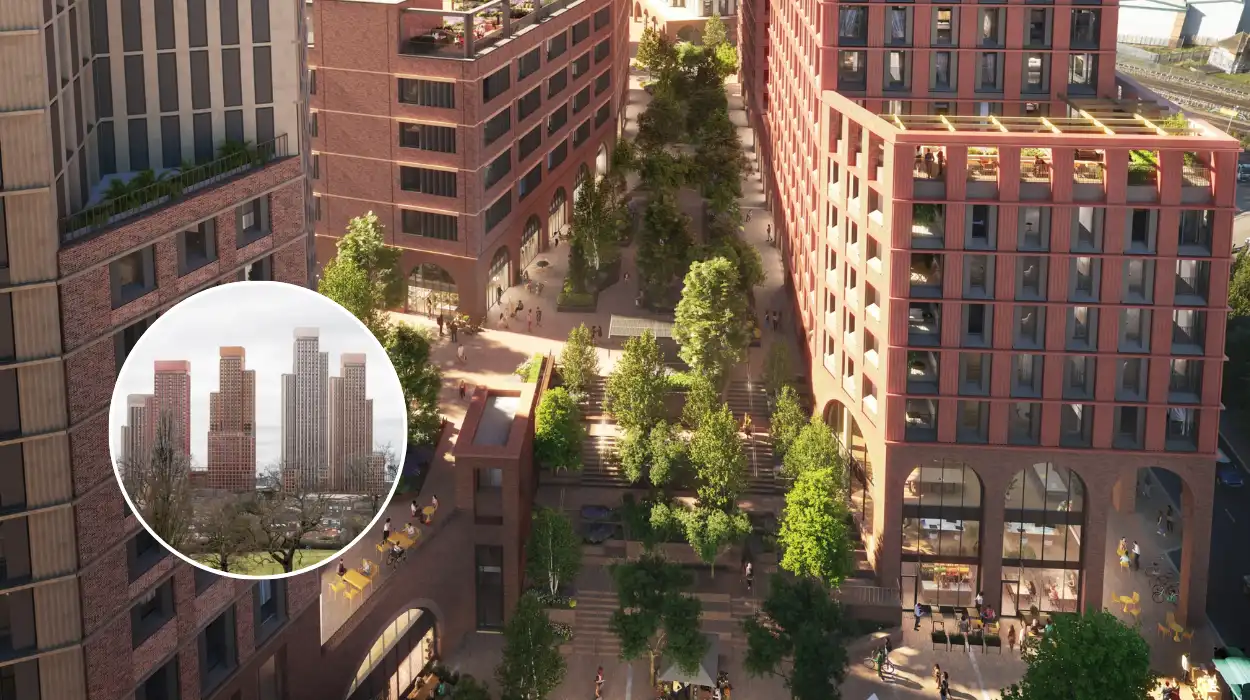
- Property developer Hollybrook has resubmitted plans for Neasden Goods Yard site next to Neasden Underground Station, proposing seven tower blocks from 5 to 45 storeys, making it the tallest residential development in Brent.
- The scheme includes 1,084 homes (one- to three-bedroom build-to-rent, private sale, and social rent units) and 492 student accommodation units, scaled back from previous 1,151 homes and 604 student rooms.
- Only 105 homes (just under 10%) designated as ‘affordable’; remainder for build-to-rent or market sale.
- Towers: two mid-range (5 and 16 storeys); five tall towers (36, 39, 39, 39, and 45 storeys).
- Additional features: retail space, community centre, industrial floorspace, public realm enhancements.
- Site currently underdeveloped industrial area in a ‘neighbourhood growth area’.
- Plans include station improvements for Neasden Underground (Jubilee line), link to proposed West London Orbital Rail Station, footpath, and potential footbridge to Wembley for cycle route.
- Resident concerns: blocking light, skyline change obscuring Wembley Stadium, strain on infrastructure, excess student housing amid council pause proposals, lack of affordable council units.
- Developer claims scheme delivers “exemplary” benefits with high-quality housing and public improvements; initial 2023 plans had taller 51-storey building.
What Towers Are Proposed for Neasden Goods Yard?
The development comprises seven towers of varying heights. Two are classified as “mid-range buildings” at 5 and 16 storeys, while the five taller structures rise to 36, 39, 39, 39, and 45 storeys. Beyond residential and student spaces, the scheme incorporates retail units, a new community centre, modern industrial floorspace, flexible commercial areas, and extensive public realm enhancements.
- Key Points
- What Towers Are Proposed for Neasden Goods Yard?
- Why Have the Plans Been Scaled Back?
- What Transport Improvements Are Included?
- What Concerns Have Residents Raised?
- How Does This Fit Brent’s Housing Needs?
- What Is the Developer’s Vision for the Site?
- Could This Transform North London’s Skyline?
- What Happens Next in the Planning Process?
- Broader Context: Neasden and Brent’s Growth
As stated by Hollybrook in the planning documents,
“The revised development will deliver an exemplar scheme, providing a substantial quantum of high-quality housing and industrial floorspace. It will deliver homes of the highest residential quality, alongside new, modern industrial floorspace, flexible commercial and retail uses, as well as a new community centre, along with extensive public realm enhancements.”
The site, currently an underdeveloped industrial zone within a designated ‘neighbourhood growth area’, sits primed for regeneration next to Neasden Underground Station on the Jubilee line.
Why Have the Plans Been Scaled Back?
Hollybrook’s initial application in 2023 proposed taller towers peaking at 51 storeys and higher accommodation figures: 1,151 homes and 604 student rooms. The developer claims the revisions maintain an “exemplary scheme” with the same “significant public benefits”, though specifics on reductions cite responsiveness to prior feedback without detailing exact triggers.
This resubmission arrives as Brent grapples with housing pressures, positioning the project as a key contributor to local supply amid North London’s evolving skyline.
What Transport Improvements Are Included?
Planning documents outline enhancements to boost “accessibility and capacity” at Neasden Station. A proposed footpath would link it directly to the anticipated West London Orbital Rail Station, a new service aiming to connect West and North West London.
Additionally, there are provisions for a footbridge from the site to Wembley, integrating with a cycle route. Hollybrook highlights this as a means to “encourage greater connection between the two areas”, fostering better links between Neasden and the iconic Wembley Stadium vicinity.
What Concerns Have Residents Raised?
Local opposition has surfaced prominently on Brent Council’s planning portal. Residents decry the towers’ “excessive height” and transformative impact.
One unnamed resident commented:
“The skyline of our street will be altered, and the iconic Wembley Stadium will be obscured. The height of these buildings is solely driven by profit, disregarding the community’s needs.”
They added that the scale would “permanently alter our local area and community”.
Another resident warned of added pressure on services, stating:
“building further student accommodation would put ‘a much greater strain’ on the borough’s ‘already overstretched local social infrastructure’.”
They referenced Brent Council’s recent proposals for a pause on purpose-built student accommodation (PBSA), noting:
“There is such a high concentration of it when a greater number of mixed tenure homes are really needed in order to create a more balanced community around the borough. There is also a lack of genuinely affordable council housing units.”
Broader worries include light blockage for existing homes, drastic skyline changes, and strain on local amenities from the influx of residents and students.
How Does This Fit Brent’s Housing Needs?
Neasden’s ‘neighbourhood growth area’ status underscores its role in addressing London’s housing crisis. Hollybrook emphasises the project’s “substantial quantum of high-quality housing”, blending market-rate, build-to-rent, and limited social rent options. Yet, the modest 105 affordable units—less than 10%—has fuelled debate over true accessibility.
Critics argue for more council housing and mixed-tenure balance, aligning with council discussions on curbing PBSA amid oversupply concerns. Proponents, including the developer, point to the overall boost: over 1,000 homes plus student beds easing separate pressures.
What Is the Developer’s Vision for the Site?
Hollybrook positions the scheme as a holistic regeneration. Beyond towers, it promises modern industrial space to retain economic activity on the former goods yard, plus retail and community facilities to serve new inhabitants.
The developer underscores public realm upgrades, station links, and active travel infrastructure as cornerstones. “Continues to deliver an exemplary scheme” with “significant public benefits”, they assert, framing revisions as refinements rather than retreats.
Could This Transform North London’s Skyline?
Absolutely, if approved. At 45 storeys, the tallest tower would dwarf current Brent landmarks, visibly reshaping views from Neasden towards Wembley. Residents fear eclipsing the stadium’s silhouette, a cherished local icon.
This fits a pattern of high-rise pushes in outer London boroughs, balancing density with infrastructure. Success hinges on council weighing benefits against heritage, light, and community impacts.
What Happens Next in the Planning Process?
Brent Council will now assess the resubmitted application, incorporating public consultations. Past scrutiny led to scaling back, suggesting rigorous review ahead. Decisions could hinge on affordable housing ratios, transport mitigations, and skyline precedents.
Hollybrook anticipates approval for what it calls a landmark scheme. Outcomes remain pending, with residents urged to engage via the planning portal.
Broader Context: Neasden and Brent’s Growth
Neasden, in northwest Brent, embodies suburban evolution. Proximity to the Jubilee line and growth area designation make it ripe for intensification. Yet, infrastructure lags: GP shortages, school pressures, and transport bottlenecks amplify concerns.
The West London Orbital, if realised, could alleviate some strains via new rail links. Meanwhile, Brent’s PBSA pause signals caution on student-heavy developments, favouring family homes.
Hollybrook’s bid tests balances between profit-driven density and community needs. As reported across initial coverage, the story draws from planning submissions and portal feedback, with no named journalists in provided sources attributing directly to council records and developer statements.