Key Points
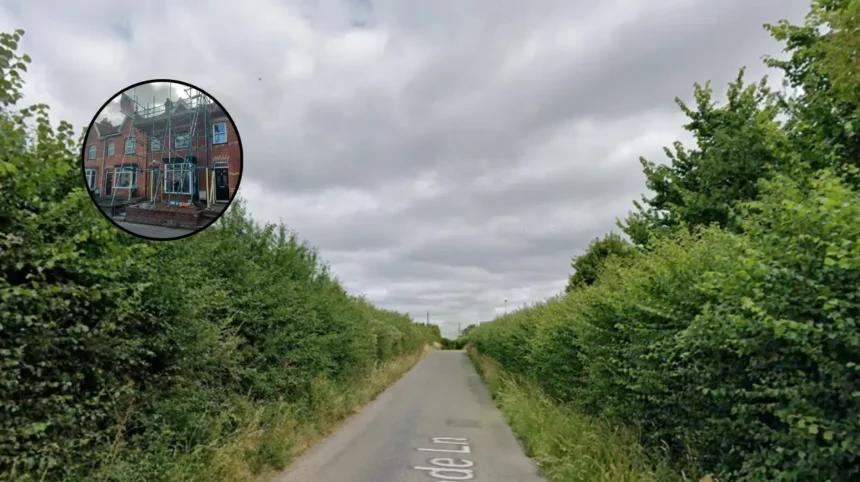
- Somerset Council councillors refused plans by Jotdale Properties to expand an existing six-bedroom HMO at 9 Rhode Lane in Bridgwater’s Hamp area to eight bedrooms.
- The application was submitted in November 2025.
- The decision reflects concerns over over-development in a busy residential street with terraced housing and limited parking, near the A38 Taunton Road junction.
- Bridgwater has experienced a sharp increase in HMOs, partly due to demand for worker accommodation at the Hinkley Point C construction site.
- Councillors stated it was time to “make a stand” against this type of over-development.
- The property’s ground floor includes a communal lounge, kitchen, dining area, and one bedroom; the first floor has the remaining five bedrooms.
Bridgwater (North London News) April 20, 2026 – Somerset Council has refused plans to expand a house of multiple occupation (HMO) at 9 Rhode Lane in the Hamp area of Bridgwater, rejecting a proposal by Jotdale Properties, based in Wembley, north-west London, to increase capacity from six to eight bedrooms.
- Key Points
- Why did Somerset Council reject the HMO expansion at 9 Rhode Lane?
- What is the context of HMO growth in Bridgwater?
- How does this fit into broader planning concerns in Bridgwater?
- What role does Hinkley Point C play in Bridgwater’s HMO demand?
- Background of the Development
- Predictions for Bridgwater Residents
The application, lodged in November 2025, sought to extend the existing HMO located at the eastern end of Rhode Lane, a busy residential street characterised by terraced housing and limited parking availability, close to the junction with the A38 Taunton Road leading into Bridgwater town centre.
Why did Somerset Council reject the HMO expansion at 9 Rhode Lane?
Councillors on the Somerset Council planning committee made the decision to refuse the plans, citing over-development as a primary concern. As reported in coverage by Somerset Live, councillors stated it was time to “make a stand” against this type of development in the area.
The HMO’s layout features a ground floor with a communal lounge, kitchen, and dining area, alongside one existing bedroom, while the remaining five bedrooms are on the first floor. This configuration was part of the existing setup, with the expansion proposal aiming to add two more bedrooms, which councillors deemed unsuitable for the street’s residential character.
Somerset Council planning documents highlight that the refusal aligns with efforts to manage the proliferation of HMOs in Bridgwater, where demand has surged due to the Hinkley Point C nuclear power station construction site requiring accommodation for workers.
What is the context of HMO growth in Bridgwater?
Bridgwater has witnessed a sharp increase in HMOs in recent years, driven in part by the accommodation needs of workers at Hinkley Point C, located approximately 20 miles away in Somerset.
Jotdale Properties, the applicant based in Wembley, north-west London, submitted the plans in November 2025 to extend the property at 9 Rhode Lane. The street’s position near the busy A38 Taunton Road exacerbates parking pressures, with terraced housing already limiting on-street spaces.
Local residents and council members have expressed concerns over the cumulative impact of multiple HMO conversions, contributing to a perceived strain on neighbourhood amenities and character.
How does this fit into broader planning concerns in Bridgwater?
Related planning discussions in Bridgwater, as noted by Bridgwater Town Council, have raised alarms over a series of HMO-related applications. For instance, deliberations included the proposed conversion of 41 Taunton Road into an eight-bedroom HMO, which the council’s committee unanimously recommended for refusal.
Other applications, such as those at 127 Bristol Road (from a six-person HMO to nine bedrooms) and 37 North Street (from six to eight bedrooms), were also recommended for refusal on grounds of overdevelopment, insufficient parking, and detrimental impact on neighbourhood character.
These patterns indicate a coordinated local resistance to further HMO expansions amid ongoing housing pressures linked to major infrastructure projects like Hinkley Point C.
What role does Hinkley Point C play in Bridgwater’s HMO demand?
The Hinkley Point C construction site has significantly influenced housing dynamics in Bridgwater, with increased demand for affordable, shared accommodation like HMOs for temporary workers.
This surge has led to multiple conversion applications across the town, prompting Somerset Council to scrutinise proposals more rigorously to protect residential areas.
Councillors’ decision on 9 Rhode Lane underscores a policy stance against unchecked growth, even as the economic benefits of Hinkley Point C continue to support local employment.
Background of the Development
Rhode Lane in Bridgwater’s Hamp area consists primarily of terraced housing, forming a residential enclave near the A38 Taunton Road, which serves as a key route into the town centre. The property at number 9 operates as an existing six-bedroom HMO, with communal facilities on the ground floor including a lounge, kitchen, and dining area, plus one bedroom, and five bedrooms upstairs. Jotdale Properties, headquartered in Wembley, north-west London, acquired or manages the site and filed the expansion application in November 2025, seeking to add two bedrooms to meet rising demand. This follows a broader trend in Bridgwater, where HMO numbers have risen sharply since the Hinkley Point C project began ramping up, necessitating worker housing within commuting distance. Somerset Council’s planning framework prioritises maintaining residential amenity, parking provision, and street character, which formed the basis for the refusal. Bridgwater Town Council has similarly flagged related applications nearby, such as on Taunton Road, reflecting community-wide concerns over saturation.
Predictions for Bridgwater Residents
This refusal could signal a tightening of planning controls on HMO expansions in Bridgwater’s residential streets, potentially stabilising parking availability and preserving the character of areas like Hamp for long-term local residents. For Bridgwater residents, particularly those in terraced housing zones near busy routes like Rhode Lane and the A38, the decision may reduce competition for on-street parking and limit noise or density increases from additional tenants. Families and homeowners in the vicinity might experience less pressure on communal amenities, fostering a more consistent residential environment. Workers reliant on HMOs for Hinkley Point C commutes could face higher rental costs or longer searches for available shared housing, possibly shifting demand to purpose-built sites or outlying areas. Overall, Somerset Council’s stance may encourage developers to pursue alternative housing models, indirectly benefiting residents by curbing over-development while sustaining economic activity from the power station project.