Key Points
- Incident Details: A man believed to be in his 20s died following a fall from height near the North Circular Road underpass in Wembley.
- Emergency Response: Emergency services, including the Metropolitan Police Service and London Ambulance Service, were dispatched shortly before 9:00 AM on 31 October.
- Outcome: The individual was pronounced dead at the scene despite the efforts of first responders.
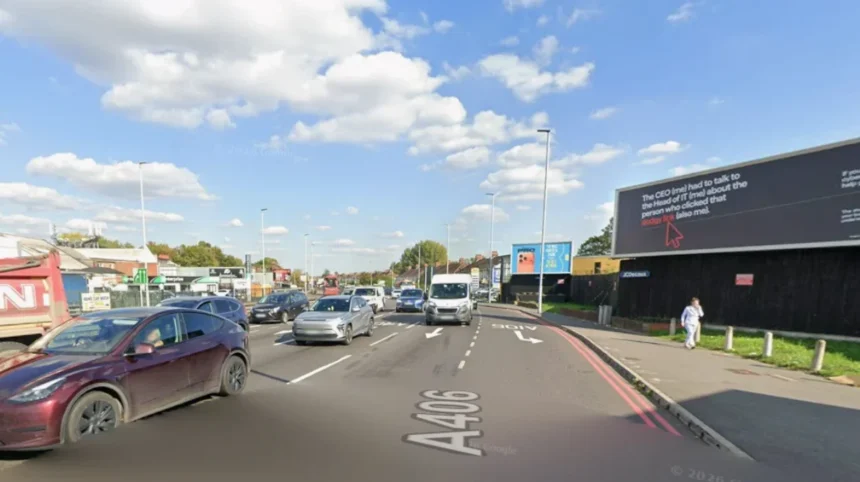
- Traffic Impact: Major road closures and severe traffic delays were recorded along the A406 North Circular Road throughout the morning.
- Police Status: Authorities have launched an investigation to establish the circumstances surrounding the incident, with formal identification and next-of-kin notification pending.
Wembley (North London News) October 31, 2026 – Emergency services were called to the scene of a fatal incident on the A406 North Circular Road near Wembley early on Friday morning after a man, believed to be in his 20s, fell from a height near a major underpass.
- Key Points
- What Occurred on the North Circular Road in Wembley on 31 October?
- How Did Emergency Services and Police Respond to the Scene?
- What Impact Did the Incident Have on North London Traffic and Travel?
- What Is the Background of Safety and Traffic Management on the A406 North Circular Road?
- What Are the Predictions for How This Development Will Affect the Local Community and Commuters?
What Occurred on the North Circular Road in Wembley on 31 October?
According to reports provided by local news outlets covering North London, officers from the Metropolitan Police Service and paramedics from the London Ambulance Service responded to urgent calls shortly before 9:00 AM today (31 October). The initial emergency reports indicated that a person had fallen from a height in the immediate vicinity of the North Circular Road underpass, near Wembley.
Upon arrival, emergency responders located a man in his 20s suffering from critical injuries. Despite the immediate medical interventions administered by paramedics at the location, the man was pronounced dead at the scene.
As reported by crime and local community reporters across London media outlets, the area surrounding the underpass was quickly cordoned off to allow emergency personnel and forensic officers to secure the site and carry out initial investigations into the event.
How Did Emergency Services and Police Respond to the Scene?
A spokesperson for the Metropolitan Police Service confirmed that officers were alerted to the incident at approximately 8:50 AM following reports of an individual falling onto or near the carriageway section of the A406.
The London Ambulance Service dispatched several units to the scene, including ambulance crews, incident response officers, and advanced trauma teams. The London Air Ambulance was also requested to support the ground effort due to the severe nature of the casualty’s condition.
Police cordons were promptly established across key lanes of the A406 North Circular Road to preserve the scene for forensic analysis and to ensure public safety. Officers spent the remainder of the morning conducting inquiries, collecting physical evidence, and speaking with potential eyewitnesses who were traveling along the route during the peak rush-hour period.
What Impact Did the Incident Have on North London Traffic and Travel?
The partial closure of the North Circular Road (A406)—one of London’s busiest orbital trunk routes—caused immediate and widespread disruption across the Brent and Harrow boroughs.
Transport for London (TfL) issued travel advisories warning motorists of long delays stretching back toward Neasden and the Brent Cross Interchange. Several local bus routes operating through Wembley and surrounding arterial roads faced temporary diversions or cancellations while police carried out their work near the underpass.
Drivers were instructed by traffic management authorities to seek alternative routes via the A40 or A41 where possible, as lane closures remained in effect for several hours following the incident.
What Is the Background of Safety and Traffic Management on the A406 North Circular Road?
The North Circular Road (A406) is a vital 25.7-mile primary ring road encircling Inner London from West to East. The specific stretch running through Wembley features complex infrastructure, including multi-lane flyovers, pedestrian walkways, elevated bridge segments, and subterranean underpasses designed to manage high volumes of vehicle traffic intersecting with local pedestrian access.
Over the years, elevated infrastructure and major road corridors in urban transport hubs have required continuous monitoring by Transport for London, local councils, and public safety bodies. Incidents occurring on elevated sections of major arteries often necessitate complex multi-agency responses involving police collision investigation units, local authority highways departments, and mental health support services, owing to both the operational challenges on active highways and the potential risks posed to road users and pedestrians.
What Are the Predictions for How This Development Will Affect the Local Community and Commuters?
The immediate consequence of this tragedy will be felt primarily by local residents, regular commuters, and municipal transport authorities in the Wembley and wider Brent area.
Impact on Commuters and Logistics Network
In the short term, the emergency response and ongoing collision investigations will lead to residual traffic congestion across North West London. High-volume transit routes like the A406 often experience secondary delays on surrounding residential streets when main arterial lanes are restricted. Logistics operators and local public transport schedules may face disruptions throughout the day as traffic flows normalize.
Long-Term Considerations for Public Safety and Infrastructure
Following incidents of this nature on elevated public infrastructure, transport bodies such as Transport for London and local councils typically conduct safety evaluations of the specific location. These reviews assess physical barriers, pedestrian access controls, and emergency contact signage along bridges and high-level structures to determine whether additional preventive measures or structural modifications are required to enhance safety for the public and pedestrians.