Key Points
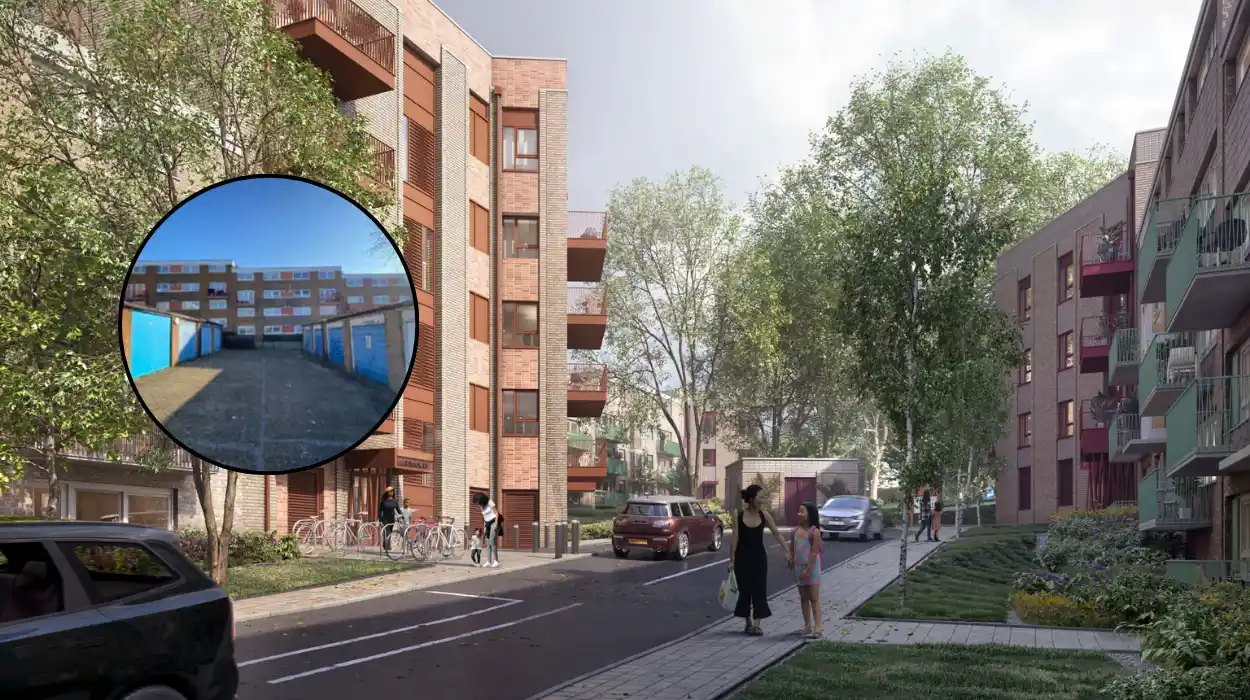
- Developers Metropolitan Thames Valley Housing (MTVH) have submitted plans to demolish 105 garages on the Chalkhill Estate in Wembley, North London, to build five apartment blocks with 61 social rent homes, all 100% affordable housing.
- The site includes Havenwood and Kingsbury garages; an electrical substation will be relocated as part of the scheme, recommended for approval by Brent Council officers.
- New homes breakdown: 18 one-bedroom, 28 two-bedroom, 11 three-bedroom, and 4 four-bedroom units, with a maximum height of five storeys in a car-free development.
- MTVH has secured 60 garages, with 41 more to be obtained via vacant possession; no changes proposed to existing five 1960s-era residential blocks nearby, housing 104 properties (46 leaseholds, 2 affordable rent, 56 social rent).
- Additional features include a new play area and a £30,000 contribution from developers to a Controlled Parking Zone (CPZ).
- Local residents have raised concerns over potential over-development and overcrowding, though council officers highlight the need for much-needed affordable housing.
Developers table plans to raze 105 Wembley garages for 61 affordable homes amid resident backlash
Metropolitan Thames Valley Housing (MTVH) has lodged a planning application with Brent Council to demolish 105 garages on the Chalkhill Estate in Wembley, North London, paving the way for five new apartment blocks comprising 61 social rent homes. The proposal, covering the Havenwood and Kingsbury garages site, promises 100% affordable housing and includes relocating an electrical substation. Brent Council officers have recommended approval, emphasising the delivery of much-needed social housing despite objections from some residents about over-development and overcrowding.
- Key Points
- Developers table plans to raze 105 Wembley garages for 61 affordable homes amid resident backlash
- What is the Location and Current Layout of the Site?
- How Many Homes Will Be Built and What Types?
- What Resident Concerns Have Been Raised?
- What Infrastructure Changes Are Planned?
- What is the Status of Garage Ownership and Possession?
- Why Have Council Officers Recommended Approval?
- Who Are the Developers Behind the Proposal?
- When Could Construction Begin if Approved?
- How Does This Fit Broader Housing Trends in Brent?
- What Happens Next in the Planning Process?
The scheme aligns with broader efforts to address London’s acute housing shortage, particularly for social rent properties. MTVH, a key housing association in the region, has already secured possession of 60 garages, with plans to acquire the remaining 41 through vacant possession processes. The development will be car-free, aiming to reduce traffic pressures in the densely populated area.
What is the Location and Current Layout of the Site?
The Chalkhill Estate in Wembley, part of the Brent London Borough, hosts the targeted Havenwood and Kingsbury garages site. As detailed in the planning documents, the area currently features five garage courts alongside five residential blocks from the 1960s era, standing three to four storeys tall and accommodating 104 properties in total. These existing homes consist of 46 leaseholds, two affordable rent units, and 56 social rent properties, with no alterations proposed for them under the MTVH scheme.
This configuration underscores the site’s underutilised potential, as the garages—many likely disused—occupy space ripe for residential redevelopment. Wembley, known for its diverse communities and proximity to transport links, faces ongoing housing pressures, making such infill projects a focal point for local planning debates.
How Many Homes Will Be Built and What Types?
The five proposed apartment blocks will deliver 61 new social rent homes, broken down as follows: 18 one-bedroom units, 28 two-bedroom units, 11 three-bedroom units, and 4 four-bedroom units. Each block will reach a maximum of five storeys, integrating seamlessly with the surrounding low-rise estate architecture. This mix caters to families and individuals, addressing varied housing needs in the borough.
Council officers have praised the provision as a direct response to Brent’s social housing waiting lists, which stretch into the thousands. The 100% affordability commitment ensures all units remain accessible to low-income households, bypassing market-rate pressures prevalent in North London.
What Resident Concerns Have Been Raised?
Some residents have voiced strong opposition, suggesting the scheme could lead to over-development and overcrowding on the Chalkhill Estate. Local feedback highlights fears of increased density straining local amenities, parking, and community cohesion in an already bustling Wembley neighbourhood. These concerns echo wider tensions in London boroughs where garage demolitions often spark debates over land use.
Despite such objections, Brent Council officers counter that the project delivers essential affordable housing without impacting existing residents’ homes. The car-free designation and developer contributions aim to mitigate some infrastructure burdens.
What Infrastructure Changes Are Planned?
An electrical substation on the site will be relocated to facilitate the build, ensuring continuity of services. Developers MTVH have pledged a £30,000 contribution towards a Controlled Parking Zone (CPZ), targeting parking pressures exacerbated by Wembley’s popularity. A new play area will also be introduced, enhancing on-site amenities for future occupants and the wider estate.
These enhancements reflect standard planning mitigations in urban redevelopment. The CPZ funding, in particular, responds directly to resident worries about vehicle congestion.
What is the Status of Garage Ownership and Possession?
MTVH has secured 60 of the 105 garages, demonstrating proactive land assembly. The remaining 41 will be obtained via vacant possession, a process involving notices to tenants and compulsory acquisition if needed under housing association powers. This phased approach minimises disruption during planning stages.
Such strategies are common in estate regenerations, where fragmented ownership delays projects. Brent Council’s recommendation for approval signals confidence in MTVH’s delivery timeline.
Why Have Council Officers Recommended Approval?
Brent Council planning officers have endorsed the application, prioritising the urgent need for social rent housing in Wembley. They argue the benefits—61 new affordable homes, play facilities, and parking contributions—outweigh resident concerns about density. The scheme’s car-free nature and retention of existing blocks further support its viability.
This stance aligns with national and local housing targets, where affordable units remain critically short. Officers’ reports typically weigh public benefits against localised impacts, favouring development in high-need areas like Chalkhill.
Who Are the Developers Behind the Proposal?
Metropolitan Thames Valley Housing (MTVH), a prominent housing association, leads the project. Operating across London and the South East, MTVH specialises in affordable and social housing, with a track record of estate-led regenerations. Their involvement guarantees long-term stewardship of the new homes.
As reported in coverage of the plans, MTVH’s application emphasises community benefits, positioning the scheme as a model for garage-to-homes transitions.
When Could Construction Begin if Approved?
Should Brent Council grant permission—expected at the forthcoming planning committee—MTVH could commence demolition and construction promptly, subject to final garage acquisitions. Timelines typically span 12-18 months from approval to first occupancy in similar projects. Monitoring conditions would ensure minimal disruption to Chalkhill residents.
The recommendation phase indicates advanced progress, with public consultation already influencing refinements like the play area.
How Does This Fit Broader Housing Trends in Brent?
Wembley and Brent exemplify North London’s housing crunch, with garage sites increasingly eyed for redevelopment amid soaring demand. This MTVH proposal mirrors dozens of similar schemes council-wide, targeting infill opportunities without greenfield expansion. Affordable housing quotas drive such initiatives, countering private developments’ market focus.
Critics argue cumulative projects risk overwhelming infrastructure, yet proponents see them as vital to meeting government mandates.
What Happens Next in the Planning Process?
The application awaits Brent Council’s planning committee decision, where councillors will review officer recommendations alongside public submissions. Approval would trigger detailed design and community liaison phases. Rejection remains possible if resident opposition sways members, though the backing suggests progression.