Key Points
- Mahmoud Al-Abyari, identified as a senior leader within the Muslim Brotherhood, has been located residing in Willesden, north-west London.
- United States authorities allege that Al-Abyari serves as the Secretary-General of the Muslim Brotherhood General Secretariat and has facilitated financial transfers to Hamas through two charitable entities.
- The location of his residence is in close proximity to a local synagogue and two Jewish primary schools.
- Al-Abyari has strongly denied all allegations of financing Hamas, describing US Treasury sanctions targeting him as “false” and “without proof.”
- Neighbours in the Willesden area described him as a quiet, softly-spoken resident, unaware of his international political profile or foreign government designations.
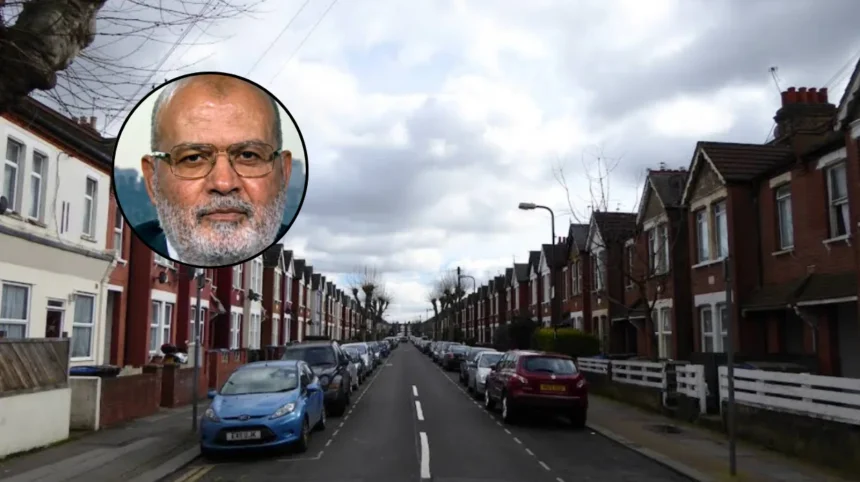
Willesden (North London News) August 10, 2026 –As reported by journalists at the Mail on Sunday, senior Muslim Brotherhood figure Mahmoud Al-Abyari has been tracked down to a residential address on a leafy avenue in Willesden, north-west London. According to investigative reports by the Mail on Sunday, Al-Abyari is designated by the United States Department of the Treasury as the Secretary-General of the Muslim Brotherhood General Secretariat. US counter-terrorism authorities allege that he has played a central role in soliciting and transferring funds to Hamas utilizing two ostensibly charitable organizations as financial conduits.
- Key Points
- Who Is Mahmoud Al-Abyari and What Are the Allegations Against Him?
- How Has Mahmoud Al-Abyari Responded to US Treasury Claims?
- What Proximity Does His Residence Have to Local Community Institutions?
- Background of the Particular Development
- Prediction: How This Development Can Affect the Local Community and Public Policy
Who Is Mahmoud Al-Abyari and What Are the Allegations Against Him?
According to reporting published by the Mail on Sunday, Mahmoud Al-Abyari is a bespectacled, elderly figure living on the corner of a residential street in Willesden. Local residents expressed surprise upon learning of his high-profile inclusion in international counter-terrorism sanction lists, noting that he appeared to live an unassuming lifestyle.
As detailed by the US Department of the Treasury, Al-Abyari occupies a key administrative function within the global apparatus of the Muslim Brotherhood.
Federal authorities in Washington assert that his position as Secretary-General involved overseeing financial operations that diverted donations through bogus non-governmental organizations to Hamas, an organization designated as a terrorist entity by the US, the United Kingdom, and the European Union.
How Has Mahmoud Al-Abyari Responded to US Treasury Claims?
In statements obtained during reporting by journalists at the Mail on Sunday, Mahmoud Al-Abyari firmly rejected every assertion made against him by international agencies.
When confronted at his north-west London property, Al-Abyari stated that allegations connecting him to the financial networks of Hamas were entirely untrue.
As quoted by the Mail on Sunday, Al-Abyari maintained that the measures implemented against him by the US Treasury were “false” and instituted “without proof.” He main
tained that he has engaged solely in political and administrative advocacy and denied distributing any capital or resources to violent non-state actors operating in the Middle East.
What Proximity Does His Residence Have to Local Community Institutions?
Investigations into the location of Al-Abyari’s property in Willesden revealed that his home stands within minutes of several prominent local Jewish institutions. The residential neighborhood encompasses a local synagogue alongside two Jewish primary schools, raising local discussions regarding national security vigilance, counter-terrorism surveillance, and immigration vetting protocols in the United Kingdom.
Local residents interviewed by reporters indicated that they were completely unaware of Al-Abyari’s background or international designation prior to public media reports detailing his history and foreign government sanctions.
Explore More Willesden News
North London Bar Recanto Kings Faces Licence Revocation Willesden 2026
Recanto Kings Bar Faces Licence Revocation in Willesden 2026
Background of the Particular Development
The presence of high-ranking international political figures in metropolitan London reflects the capital’s long-standing history as a hub for foreign political dissidents, exiles, and ideologues.
The Muslim Brotherhood, founded in Egypt in 1928, expanded internationally over the latter half of the twentieth century, establishing organizational branches and administrative councils across Europe, including the United Kingdom.
While the United Kingdom government conducted a comprehensive review into the Muslim Brotherhood, determining that membership or association with the group should be scrutinized as a potential indicator of extremism, the organization itself has not been banned in its entirety under UK proscription laws.
Conversely, the United States, along with several Middle Eastern nations, has placed selective sanctions on specific individuals, subsidiaries, and financial managers associated with the Brotherhood, citing links to Hamas—which originated as the Palestinian branch of the Muslim Brotherhood in the late 1980s.
The intersection of international sanctions regimes and domestic law enforcement means that individuals flagged by foreign governments—such as the US Treasury—do not automatically face criminal arrest or deportation within the UK unless specific UK laws or local proscription thresholds have been breached.
Prediction: How This Development Can Affect the Local Community and Public Policy
The public exposure of Mahmoud Al-Abyari’s presence in north-west London is anticipated to produce direct political and regulatory impacts across multiple stakeholders:
- Local Residents and Community Organizations: The proximity of an individual designated by foreign counter-terrorism authorities to local religious institutions and primary schools is likely to heighten safety concerns among community members. This may result in increased security measures around local synagogues and educational centers, alongside demands for greater transparency from municipal law enforcement.
- Parliamentary and Legal Scrutiny: Lawmakers and counter-terrorism analysts are expected to use this case to question the Home Office regarding intelligence-sharing frameworks between the US and the UK. Increased parliamentary debate may center on whether current British immigration policies and financial sanction enforcement mechanisms adequately address foreign-designated operatives residing within major UK cities.
- Diplomatic Relations: The visibility of figures facing international sanctions within the UK may re-ignite diplomatic discussions between UK authorities and foreign partners, including the United States and Middle Eastern allies, concerning the monitoring, asset-freezing, and extradition protocols applied to political entities linked to regional conflicts.