Key Points
- Camden Council and Camden Learning have expanded the London AI Campus in Camden, UK, as a physical hub for AI education outside traditional classrooms.
- The campus offers weekly sessions, enrichment programs, and teacher development focused on AI and digital skills for secondary and post-16 students.
- Initial findings show 71% of participating students were familiar with generative AI tools, but gaps exist in understanding core concepts like training data and bias.
- Curriculum adjustments emphasise understanding underlying AI systems over mere tool interaction.
- David Black, Managing Director at Google, highlighted impacts beyond technical skills, including increased student confidence.
- AI Connect program selects 30 Year 12 students annually for two-year enrichment with mentors from Google, Google DeepMind, and industry partners.
- Sessions include masterclasses, workshops, and workplace visits linking AI to sectors like health, social sciences, and arts.
- AI Campus Opportunity Centre provides AI and IT literacy for ages 11-18, partnering with Knowledge Quarter and Donmar Warehouse.
- Teacher training covers AI literacy and safe adoption, including Experience AI programs.
- The ‘third space’ model enhances engagement by providing a space separate from school.
- Builds on existing Google, Camden Learning, and Camden Council STEAM collaboration.
- One-year insights report details delivery, outcomes, and expansion plans.
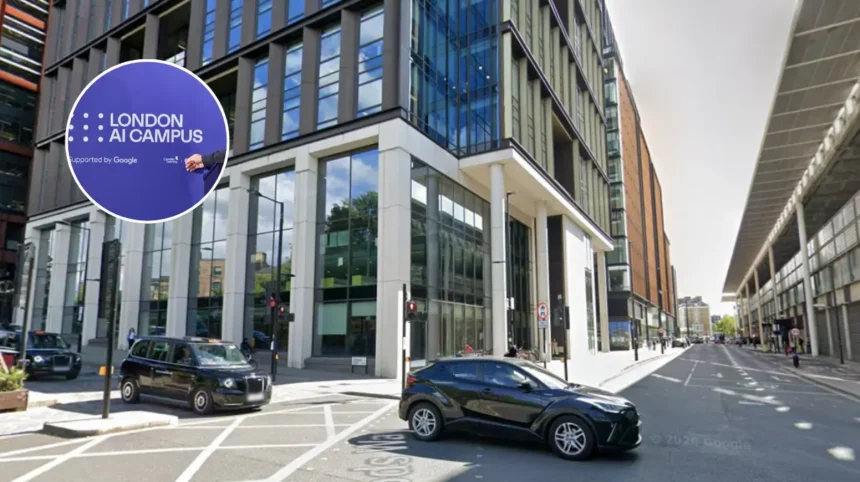
London AI Campus Expansion in Camden (North London News) April 9, 2026 –Camden, the London AI Campus has expanded with support from Google, Camden Council, and Camden Learning, establishing a dedicated physical hub where students and teachers gain structured AI learning, industry mentorship, and technical training beyond traditional school settings.
- Key Points
- What is the London AI Campus and How Has It Expanded?
- Who Are the Key Partners Backing the London AI Campus?
- How Does the AI Connect Programme Structure Student Involvement?
- What Teacher Training Does the London AI Campus Provide?
- Why Focus on a ‘Third Space’ Model for AI Education?
- How Does This Initiative Fit into Broader AI Education Trends?
- Background of the Development
- Predictions: Impact on Camden Students and Educators
What is the London AI Campus and How Has It Expanded?
The expansion transforms the campus into a comprehensive education hub in Camden, UK, focusing on artificial intelligence and digital skills for secondary and post-16 education.
As detailed in coverage by the EdTech Innovation Hub, the initiative provides weekly sessions, enrichment programs, and teacher development to embed AI literacy into curricula. This reflects a wider educational shift towards practical AI integration.
Initial programme findings, outlined in the same report, reveal that 71 percent of participating students were already familiar with generative AI tools.
However, significant gaps persisted in grasping core concepts such as training data and bias. In response, the curriculum has shifted to prioritise comprehension of AI systems’ foundations, moving beyond surface-level tool usage.
Who Are the Key Partners Backing the London AI Campus?
Google plays a central role, alongside Camden Council and Camden Learning. David Black, Managing Director at Google, shared insights in a LinkedIn post referenced by the EdTech Innovation Hub:
“The evidence suggests that even one afternoon a week at the AI Campus delivers impact well beyond technical skills: students report feeling supported and teacher interviews noted an increase in student confidence.”
Black further noted:
“While 71% of Campus students were familiar with Generative AI tools, there was a clear gap in the fundamentals, including understanding training data and bias.”
This underscores the programme’s evidence-based adjustments.
The campus builds directly on prior collaborations through the partners’ STEAM programme, which has encompassed work experience initiatives.
An insights report, published one year post-launch, documents delivery, outcomes, and future development areas as the model scales.
How Does the AI Connect Programme Structure Student Involvement?
A flagship element, the two-year AI Connect enrichment programme, selects 30 Year 12 students each year. Participants receive mentorship from professionals at Google, Google DeepMind, or other industry partners. Weekly sessions explore real-world AI applications.
As per the EdTech Innovation Hub’s coverage, these include masterclasses, workshops, and workplace visits. The programme connects AI learning to diverse sectors such as health, social sciences, and the arts, broadening practical exposure.
Complementing this, the AI Campus Opportunity Centre delivers AI and IT literacy sessions for students aged 11 to 18. Delivery involves partnerships with Knowledge Quarter organisations and the Donmar Warehouse, fostering interdisciplinary links.
What Teacher Training Does the London AI Campus Provide?
Professional development forms a core pillar, with sessions on AI literacy and safe AI adoption in teaching. Programmes like Experience AI are rolled out via the campus to equip educators.
David Black emphasised the campus’s physical setup in his LinkedIn comments, as reported by the EdTech Innovation Hub:
“The power of a ‘third space’ – by operating in a space that feels ‘related, but separate’ from school, students are finding it easier to adopt professional behaviours.”
This model enhances engagement and supports teacher-led delivery.
Why Focus on a ‘Third Space’ Model for AI Education?
The ‘third space’ concept distinguishes the campus from standard school environments, promoting a professional atmosphere. Coverage from the EdTech Innovation Hub highlights how this setup aids behavioural shifts and confidence building, aligning with teacher feedback.
The one-year insights report reinforces these outcomes, detailing measurable progress in student support and technical understanding while identifying expansion priorities.
How Does This Initiative Fit into Broader AI Education Trends?
The London AI Campus responds to evident needs in AI fundamentals amid rising tool familiarity. By addressing biases, training data, and systemic knowledge, it positions Camden students competitively in tech-driven fields. Partnerships ensure sustained resourcing, with Google’s involvement signalling long-term commitment.
Reports from the EdTech Innovation Hub note the programme’s role in a national push for AI skills, particularly through non-classroom hubs that blend industry input with education.
Background of the Development
The London AI Campus originates from ongoing partnerships between Google, Camden Council, and Camden Learning, initially under their STEAM programme. This encompassed work experience and digital skills initiatives tailored to Camden’s diverse student population. Launched prior to 2025, the campus addressed early gaps in AI education identified through pilot feedback.
Expansion followed a one-year evaluation, with the insights report providing data on engagement and learning outcomes. Key drivers included rising demand for AI literacy amid generative tools’ proliferation, alongside Camden’s focus on inclusive education.
Google’s backing evolved from mentorship commitments via DeepMind, scaling to structured hubs. The model draws from successful ‘third space’ learning environments, proven to boost participation outside formal schooling.
Predictions: Impact on Camden Students and Educators
This development equips Camden’s secondary and post-16 students with foundational AI knowledge, potentially narrowing skills gaps in training data and bias awareness. Year 12 participants in AI Connect gain industry mentorship and sector exposure, aiding university applications and tech career pathways in health, arts, and social sciences.
For educators, enhanced training via Experience AI supports classroom integration of AI tools safely, fostering confident teaching practices. The ‘third space’ sustains engagement, likely increasing retention and confidence as per initial findings.