Key Points
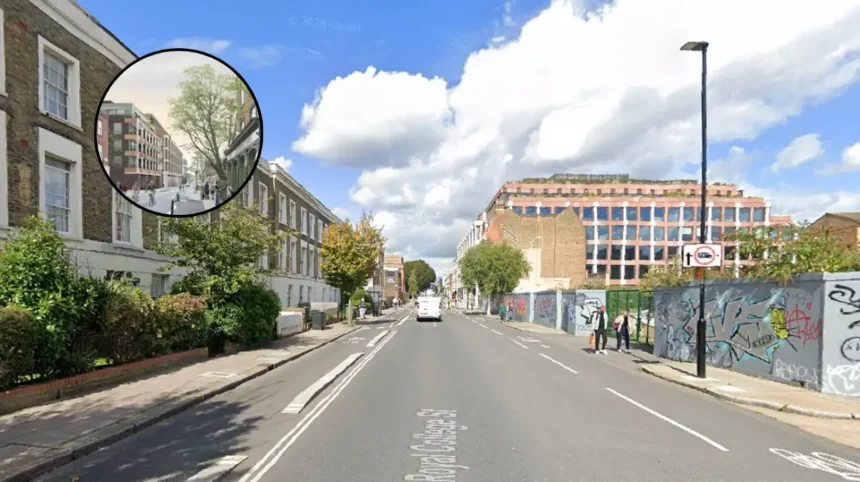
- Major Urban Development: A comprehensive planning application has been submitted to Camden Council for the major demolition and redevelopment of a key brownfield site at 24–58 Royal College Street.
- Mixed-Use Infrastructure: The flagship proposal outlines the construction of three commercial buildings alongside two tall residential buildings, incorporating ground-floor retail units and cafés.
- Public Realm Transformation: The project intends to completely reshape the surrounding public space, opening up new pedestrian areas and community spaces.
- Borough-Wide Applications: Alongside the major Royal College Street development, Camden Council has received various localized applications across Hampstead and Belsize Park, involving flat amalgamations, structural modifications, and tree fellings.
- Rigorous Scrutiny Ahead: All listed planning applications, specifically the large-scale commercial and residential integration, are now subject to statutory public consultation and comprehensive review by local planning authorities.
Camden (North London News) June 15, 2026 — A major transformation of a prominent brownfield site near the heart of Camden Town has been officially proposed through a comprehensive planning application submitted to Camden Council. The wide-ranging development scheme, filed under reference number 2026/2199/P, outlines the complete demolition of existing structures at 24–58 Royal College Street, London, NW1 0QA, to make way for a significant mixed-use hub. The vision for the site encompasses the erection of three commercial buildings alongside two tall residential buildings, designed to seamlessly blend corporate, domestic, and leisure environments. According to the planning documentation published by local authorities, the ambitious master plan is anchored by extensive public realm improvements, including new ground-floor retail outlets, accessible cafés, and redesigned open spaces intended to enhance community connectivity.
- Key Points
- What are the Details of the Royal College Street Mixed-Use Scheme?
- What Other Major Property Modifications are Under Review in Camden?
- How are Environmental and Tree Management Rules Being Applied Across the Borough?
- Background of the Royal College Street Redevelopment Area
- Predictions: How This Development Can Affect Local Residents and Businesses
- Small Business Owners and Entrepreneurs
- Property Seekers and Belsize Park/Hampstead Communities
This flagship development leads a newly released weekly registry of planning applications managed by Camden Council, which highlights a broader wave of property modifications, infrastructure upgrades, and environmental management across the borough.
While the Royal College Street project represents a high-profile economic and architectural shift for the Camden Town periphery, several secondary applications across affluent residential sectors—including Belsize Park and Hampstead—underscore the continuous micro-development of London’s urban fabric.
These localized files range from residential expansions and mechanical installations to mandatory environmental maintenance. As with all major urban interventions in the Borough of Camden, the proposed multi-structure complex on Royal College Street faces a period of rigorous public consultation, environmental impact assessments, and strict structural evaluations before securing executive planning approval.
What are the Details of the Royal College Street Mixed-Use Scheme?
As documented in official municipal files under reference 2026/2199/P, the application for 24–58 Royal College Street proposes a complete architectural overhaul of an underutilized brownfield footprint. The blueprint outlines a high-density zone consisting of five distinct multi-story structures.
Three of these buildings will be dedicated entirely to modern commercial use, providing flexible office spaces and business hubs aimed at capturing the expanding London knowledge economy.
Flanking these commercial zones will be two tall residential buildings designed to alleviate local housing pressures. To ensure the development integrates into the existing social fabric of Camden, the base of these towers will feature dedicated zones for retail shops and local cafés.
This design strategy aims to foster an active street front, encouraging foot traffic between Royal College Street and the central transit zones of Camden Town. A core component of the submission involves a complete redesign of the public realm, prioritizing pedestrian pathways, green infrastructure, and sustainable drainage systems.
What Other Major Property Modifications are Under Review in Camden?
Beyond the large-scale commercial proposal, Camden Council’s planning registry reveals several significant modifications within the borough’s conservation areas and residential quarters. A notable residential reconfiguration has been proposed at 27 Belsize Square, London, Camden, NW3 4HU.
Registered under application reference 2026/2246/P, the planners have requested permission for the formal amalgamation of the existing first-floor flat and the second-floor/attic flats into a single, expansive residential dwelling. This structural consolidation reflects an ongoing trend within the local property market toward reversing historic multi-flat conversions back into large, single-family luxury residences.
Simultaneously, minor external alterations are being reviewed to balance modern architectural standards with heritage preservation rules. At Flat 1st Floor, 14 Buckland Crescent, London, NW3 5DX (Ref. No: 2026/2207/P), an application has been submitted detailing the planned replacement of an existing metal door and fanlight.
The owners intend to install high-specification, double-glazed timber French doors alongside completely new balcony railings, an upgrade aimed at improving thermal efficiency while preserving the building’s historical facade.
Further north in the borough, mechanical infrastructure upgrades are being scrutinized for potential acoustic impacts on residential neighborhoods.
At 23 Glenmore Road, London, Camden, NW3 4BY, registered under reference number 2026/2003/P, plans have been logged for the installation of an external air conditioning unit. Because the unit is slated for placement within the property’s rear garden, the application specifically details a specialized acoustic enclosure designed to suppress operational noise and prevent disturbance to adjacent properties.
How are Environmental and Tree Management Rules Being Applied Across the Borough?
The latest council updates emphasize that environmental conservation remains a critical element of Camden’s planning oversight, with several applications focusing on tree preservation and mandatory replanting schemes.
At 15 Wedderburn Road, London, Camden, NW3 5QS, a dedicated application under reference 2026/2187/P marks the formal submission of details regarding a replacement Malus (crabapple) tree. This filing is a strict legal requirement stemming from a condition attached to a previously granted planning consent that involved major structural alterations and change of use at the property. The condition ensures that any canopy loss resulting from construction is offset by appropriate urban greening.
Conversely, some areas require targeted tree removals to address safety concerns or institutional development needs.
Hereward House School, situated at 14 Strathray Gardens, London, NW3 4NY, has submitted an application under reference 2026/2287/T to manage its rear playground area. The school authorities are seeking permission for the felling of one unidentified tree down to ground level to optimize space and ensure student safety within the recreational zone.
Furthermore, urgent ecological interventions have been registered near the conservation sectors of the borough. At 7 Netherhall Gardens, London, NW3 5RN, an expedited application under reference 2026/2289/T has been filed for emergency five-day works.
The emergency order authorizes the immediate felling of one Laburnum tree located in the rear garden, a procedure typically triggered when a tree becomes diseased, structurally unstable, or poses an imminent risk to surrounding residential properties and residents.
Background of the Royal College Street Redevelopment Area
The brownfield site stretching across 24–58 Royal College Street occupies a highly strategic position within the London Borough of Camden. Historically characterized by low-rise industrial units, commercial warehouses, and yards, this specific corridor has long been identified by urban planners as an underutilized zone ripe for high-density regeneration. Located just east of the primary Camden Town markets and transit hubs, the area sits at the intersection of traditional industrial working-class heritage and modern commercial expansion.
Over the past two decades, the wider Camden area has experienced severe space shortages, driven by a growing demand for both premium commercial offices and affordable residential housing.
Previous local development frameworks published by Camden Council have consistently advocated for the recycling of brownfield land to prevent urban sprawl while preserving the distinct architectural identity of nearby conservation areas.
The Royal College Street corridor serves as a transitional zone between the high-traffic commercial core of Camden High Street and the quieter residential neighborhoods of St Pancras and Kentish Town. Over the years, surrounding parcels of land have gradually been converted into mixed-use blocks, meaning this latest five-building proposal represents the continuation of a long-term municipal strategy to transform industrial remnants into dense, walkable economic centers.
Explore More Camden Council News
Camden Council Crackdown: Fines for Antisocial Street Drinkers in Camden 2026
Families Demand Investigation Into Vincent Chan Nursery Abuse Scandal; North London, 2026
Predictions: How This Development Can Affect Local Residents and Businesses
If approved by Camden Council’s planning committee, the multi-structure redevelopment at 24–58 Royal College Street is projected to alter the daily lives, economic conditions, and environmental landscape for several specific local audiences.
For residents living in the immediate vicinity of Royal College Street, the construction phase will introduce unavoidable short-to-medium-term disruption.
The demolition of existing structures and the subsequent erection of two tall residential towers will mean increased heavy goods vehicle (HGV) traffic, temporary pedestrian diversions, and heightened ambient noise levels.
In the longer term, the insertion of two tall residential blocks will alter local visual sightlines and increase demand on neighborhood infrastructure, such as public transport and medical services.
However, the accompanying public realm improvements, open pedestrian spaces, and new green infrastructure will provide local families with upgraded community spaces that are currently absent from this industrial footprint.
Small Business Owners and Entrepreneurs
The introduction of three large commercial buildings will directly impact the local business ecosystem. Independent shopkeepers, restaurateurs, and market vendors in Camden Town are likely to see a substantial increase in mid-week foot traffic, driven by the influx of office workers and corporate employees occupying the new commercial spaces.
The inclusion of ground-floor retail units and cafés within the new development will create direct competition for existing local establishments, but it will also offer fresh spaces for businesses looking to expand.
The specialized office facilities are expected to attract firms from London’s tech, media, and scientific sectors, accelerating the area’s transition from a traditional weekend tourist destination into a continuous, weekday commercial hub.
Property Seekers and Belsize Park/Hampstead Communities
For individuals seeking housing within the competitive London property market, the addition of two residential towers will introduce vital housing stock to the borough.
While the exact ratio of affordable to luxury housing within the scheme remains subject to negotiation, the project expands urban density where it is most needed.
Meanwhile, in the adjacent areas of Hampstead and Belsize Park, the ongoing approvals of high-end flat amalgamations (such as 27 Belsize Square) and premium property upgrades will likely continue to drive up residential property values.
This will further cement those neighborhoods as exclusive enclaves, while pushing high-density living down toward the regenerated Royal College Street axis.