Key Points
- Iconic Reopening: The legendary Camden Barfly live music venue has officially celebrated its grand re-opening, returning to its roots after operating under different names for a decade.
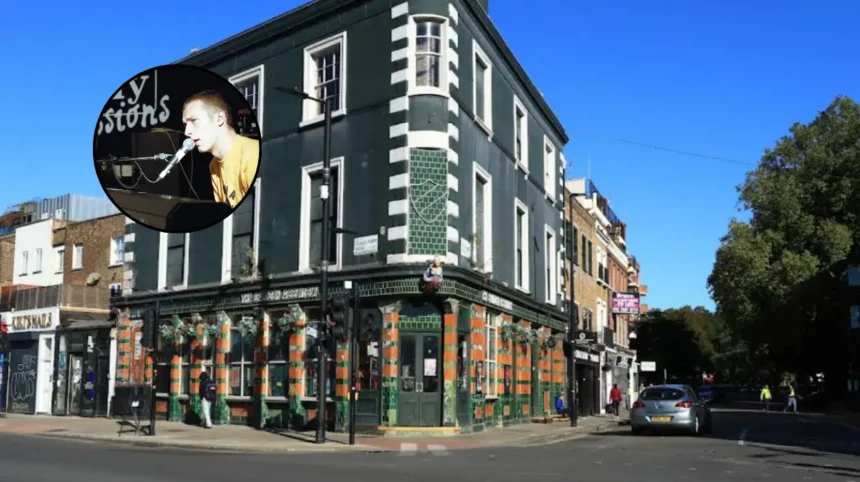
- Star-Studded History: Located at 49 Chalk Farm Road, the 200-capacity venue served as an early launchpad for global icons including Amy Winehouse, Coldplay, Adele, The Strokes and Ed Sheeran.
- New Ownership Structure: The space has been revived by Propaganda Independent Venues co-founders Dan Ickowitz-Seidler and Richard Buck, alongside Camden-based music promoter Chris McCormack.
- Technical and Cultural Upgrades: The relaunch introduces a complete PA and lighting upgrade, a daytime pub space, a Tokyo-inspired vinyl listening bar and a permanent ‘Wall of Fame’ featuring commemorative blue plaques.
- Launch Night Performance: Punk singer-songwriter Frank Turner kicked off the new era by performing two sold-out intimacy shows in a single evening.
- Festival Resurgence: Co-owner Chris McCormack revealed preliminary plans to revive the multi-venue Camden Rocks festival, placing the newly resurrected Barfly at its focal heart.
Camden (North London News) June 24, 2026 – In a significant boost to the capital’s embattled grassroots music scene, the historic Camden Barfly has officially reopened its doors to the public, marking the return of one of the UK’s most historically significant independent music stages. Operating on Chalk Farm Road on June 23, 2026, the venue hosted a double-bill of sold-out shows headlined by punk-rock troubadour Frank Turner, effectively reversing a decade of structural rebrands and signaling a defiant pushback against the closure of small cultural spaces across London.
- Key Points
- Why Is the Return of the Camden Barfly Significant for London Grassroots Music?
- Who Is Behind the Revival of the Iconic Camden Venue?
- What Did Frank Turner Say About the Importance of Small Independent Stages?
- How Has the Venue Been Upgraded for the 2026 Live Music Landscape?
- Could the Return of the Barfly Lead to the Revival of Camden Rocks Festival?
- Background of Grassroots Venue Closures in London
- Prediction: How This Development Affects Emerging Musicians and Local Gig-Goers
Why Is the Return of the Camden Barfly Significant for London Grassroots Music?
The venue at 49 Chalk Farm Road holds a sacred position in contemporary British music lore. From 1996 to 2016, operating under the Barfly banner, the 200-capacity room upstairs was an essential proving ground where unsigned talent transitioned into global stars.
In 2016, the building was rebranded as the Camden Assembly, moving away from the distinctive underground identity that had initially defined it.
As documented by journalist Gerald Lynch of Shortlist, the venue’s noughties-era incarnation remains its most revered period, serving as a vital launchpad for foundational acts like Muse, Blur, Franz Ferdinand, The Libertines, Sam Fender, Royal Blood and The 1975. The resurrection of the original brand comes at a critical juncture for independent live rooms.
Over the past decade, economic inflation, steep business rates and changing consumer habits have led to the systematic closure of small live music environments across the United Kingdom. By bringing back the Barfly name, the new management team aims to re-establish a dedicated, non-corporate sandbox for the “stars of tomorrow”.
Who Is Behind the Revival of the Iconic Camden Venue?
The reclamation of the Barfly name has been executed by Propaganda Independent Venues, a company established with a mandate to acquire and preserve independent music real estate across the country.
The firm recently re-acquired a regional portfolio from TEG UK, which included regional hubs such as XOYO London, XOYO Birmingham, and Tramshed and The Globe in Cardiff, putting the Camden property back under independent control.
The operation is spearheaded by Propaganda co-founders Dan Ickowitz-Seidler and Richard Buck, alongside veteran Camden music promoter and former 3 Colours Red guitarist Chris McCormack.
The venture carries strong personal symmetry for the ownership group. As noted in coverage by Max Steventon of Access All Areas, co-owner Dan Ickowitz-Seidler actually worked as a club night disc jockey during the Barfly’s closing night exactly ten years prior in June 2016, making the current relaunch an emotional, full-circle commercial endeavor.
What Did Frank Turner Say About the Importance of Small Independent Stages?
To mark the opening night, singer-songwriter Frank Turner performed two consecutive acoustic shows. Turner’s history with the room spans a quarter-century; his early post-hardcore outfit, Million Dead, played their debut live set at the Barfly in 2001, a night facilitated because their bass player, Julia, was an employee at the venue.
Writing for Shortlist, Gerald Lynch recorded Turner’s remarks regarding his deep-rooted connection to the room. Standing on the stage where he also played his first ever sold-out solo show in 2006, Frank Turner stated:
“I would not have the career I have, the living I have, the art that I have, all that kind of thing, if I hadn’t had the opportunity to find myself, find my audience, figure out who I am, figure out what I want to say, in rooms like the Barfly.”
Turner expanded on the systemic value of sub-300 capacity spaces, noting that rooms like the Barfly grant musicians the essential time and physical territory to build authentic, sustainable followings.
He warned that this organic progression is heavily threatened in an modern industry climate that frequently prioritises digital algorithmic metrics and social media virality over raw live performance experience.
During the performance, Turner also unveiled a tongue-in-cheek, unofficial historical “blue plaque” dedicated to his history with the building.
How Has the Venue Been Upgraded for the 2026 Live Music Landscape?
While the venue aims to harness the nostalgic energy of its 1990s and 2000s heyday, the structural infrastructure has undergone a comprehensive technological modernization.
According to technical details published by Gideon Gottfried of Pollstar News, the primary upstairs performance space has been outfitted with a completely overhauled PA system integrated with strategically positioned fill-speakers to eliminate dead zones and ensure uniform acoustic quality throughout the room. The main stage lighting rig has also been modernized with contemporary programmable fixtures.
Downstairs, the public bar area has been designed to operate dynamically throughout the day. The ground floor now includes a high-end vinyl listening bar heavily influenced by the minimalist audiophile listening rooms of Tokyo.
This space utilizes custom acoustics, a curated archival record collection and a restored 1959 AMI vintage jukebox, allowing the ground floor to transition smoothly from a daytime community hub into a late-night club environment. Furthermore, a permanent ‘Wall of Fame’ has been installed to showcase previously unseen archival photography spanning the venue’s twenty-year history, which will be accompanied by formal, upcoming commemorative plaques celebrating landmark performances.
Could the Return of the Barfly Lead to the Revival of Camden Rocks Festival?
The reopening of the Barfly appears to be the catalyst for a broader cultural renaissance within North London’s live music corridor.
In an exclusive follow-up feature published by Shortlist, co-owner Chris McCormack confirmed that serious discussions are underway to officially bring back the multi-venue Camden Rocks festival, with the revived Barfly operating as the central anchor of the weekend event.
The rock and metal-focused multi-venue festival last occurred in 2019, featuring headlining sets from Frank Turner and alternative rock band Ash, alongside hundreds of emerging acts performing across more than twenty independent Camden stages under a unified wristband-entry system. Speaking to journalist Gerald Lynch regarding the unique geography of the area, Chris McCormack stated:
“Camden’s still Camden. There’s not many places you can pull off a festival like Camden Rocks. You can do it in Brighton, but you’ve got to get taxis everywhere. But Camden is very concentrated, you’ve got your great venues like The Underworld, The Black Heart, the big ones like Electric Ballroom and The Roundhouse.”
McCormack further emphasized that independent operators in the borough must view themselves as a unified ecosystem rather than direct competitors, stating that
“it’s important that the venues group together. We’re not against each other, we’re all part of the same thing, and that’s what creates the scene in Camden”.
While the festival’s return remains in the early, foundational planning phases, the physical return of the Barfly establishes the necessary independent framework required to support such an ambitious urban music event.
Background of Grassroots Venue Closures in London
The return of the Barfly brand arrives as an unusual victory within a broader, decade-long narrative of severe decline for the UK’s grassroots music infrastructure.
According to annual data compiled by the Music Venue Trust (MVT), small independent music venues across London and the wider UK have faced an existential threat driven by skyrocketing commercial property values, aggressive urban gentrification, noise complaints from new residential developments and an unprecedented surge in utility overheads.
Between 2016 and 2026, the sector consistently lost dozens of operating spaces each year. Many independent rooms were forced to close permanently or abandon live programming entirely in favor of more profitable food and beverage layouts.
The loss of these spaces created what industry experts describe as a “talent pipeline crisis.” Without small, forgiving environments like the original Barfly—where artists can perform to modest crowds, make stylistic mistakes and refine their stage presence—new talent faces an immense barrier to entry.
The trend has forced many emerging musicians to rely almost entirely on short-form video platforms to get noticed, bypassing the traditional, community-driven live circuit that historically birthed Britain’s most successful musical exports.
Explore More Camden News
Camden Assembly Replaces Barfly Name – North London 2026
King’s Cross Group Unveils St Pancras Hospital Vision Camden 2026
Prediction: How This Development Affects Emerging Musicians and Local Gig-Goers
The revival of the Barfly is poised to reshape the immediate ecosystem for both emerging touring musicians and the local London gig-going public. For up-and-coming artists, the restoration of a high-spec, 200-capacity room under independent management provides a crucial stepping stone that had become increasingly scarce in the capital. Instead of jumping directly from bedroom recording setups to medium-sized corporate spaces, acts will once again have access to a dedicated space tailored specifically for artist development.
The inclusion of a daytime vinyl listening bar and an integrated local network means artists can organically connect with industry professionals and peers within a centralized, community-oriented hub.
For the local gig-going audience, the operational model introduced by Propaganda Independent Venues offers a blueprint for modernizing the live music experience without stripping away its historical grit. By combining a daytime audiophile environment with a high-energy nighttime concert space, the venue addresses the shifting demands of modern consumers who seek high-fidelity sound, diverse curation and cultural authenticity.
If the venue’s collaborative ethos successfully triggers the return of the multi-venue Camden Rocks festival, local patrons will see a substantial revitalization of the nighttime economy along Chalk Farm Road. This development could solidify Camden’s historic status as a premier global destination for live music, proving that grassroots venues can remain commercially viable in a highly demanding modern economic climate.