Key Points
- A new MRP poll by JL Partners for the London School of Economics (LSE) shows the Green Party and Labour neck-and-neck in Camden at 33% and 32% vote shares respectively.
- Camden currently has 44 Labour councillors, one Green, six Liberal Democrats, three Conservatives, and one independent.
- The poll predicts a Green surge across London, with Zack Polanski’s Greens expected to win hundreds of seats in the May 7 local elections.
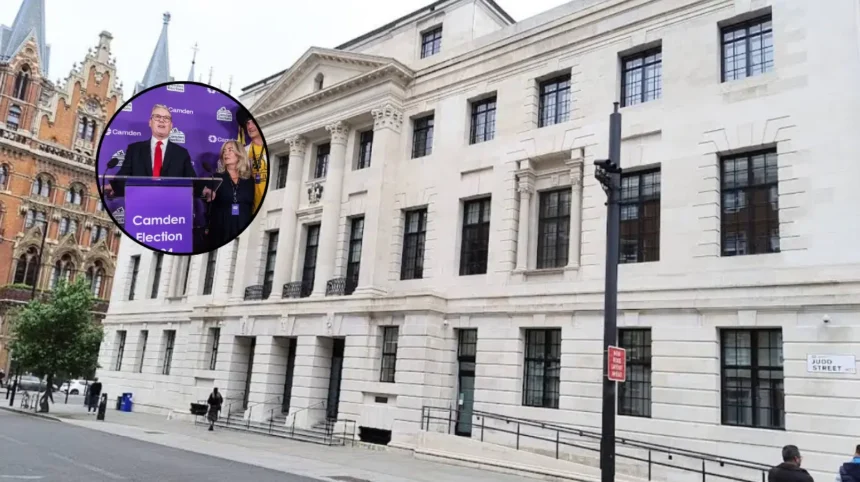
- This could mark Labour’s loss of control in Sir Keir Starmer’s home council of Camden, a potential shock not seen in nearly 60 years.
- Camden borough includes Starmer’s constituency of Holborn and St Pancras.
- The survey highlights broader Green gains in the capital amid local elections.
Camden (North London News) – April 27, 2026 – A major MRP poll has revealed that Labour could lose control of Camden Council, Sir Keir Starmer’s local authority, to a surging Green Party in the upcoming local elections on May 7, in what could be the biggest political upset in London for nearly six decades.
- Key Points
- Why is Labour at Risk of Losing Camden Council to the Greens?
- What Does the Poll Predict for Camden’s Seat Distribution?
- How Have Camden’s Political Dynamics Shifted Recently?
- What Broader Green Gains Are Forecasted in London?
- Statements from Key Figures on the Camden Poll
- Current Camden Council Composition and Powers
- Coverage Across Media Outlets
- Background of the Development
- Prediction: How This Development Can Affect Camden Residents
Why is Labour at Risk of Losing Camden Council to the Greens?
The JL Partners MRP survey, conducted for the London School of Economics (LSE), places the Green Party just ahead of Labour in Camden with 33% of the vote share compared to Labour’s 32%. As reported by Robert Wright of the Financial Times in coverage of the LSE findings, this narrow margin signals a dramatic shift in a borough long dominated by Labour.
Camden Council currently comprises 44 Labour councillors, one Green Party member, six Liberal Democrats, three Conservatives, and one independent, according to official council records cited in the Evening Standard article by Joe Murphy on April 27, 2026.
This poll underscores a broader Green advance across London, where Zack Polanski’s party is projected to secure hundreds of seats.
In Camden specifically, which encompasses Prime Minister Sir Keir Starmer’s Holborn and St Pancras constituency, the Greens are poised for significant gains. Joe Murphy of the Evening Standard noted:
“Sir Keir Starmer could see Labour lose its grip on his north London council in a Green surge in the capital on May 7, according to a new poll.”
What Does the Poll Predict for Camden’s Seat Distribution?
The MRP model, known for its granular predictions based on multi-level regression and post-stratification, forecasts tight races across Camden’s 51 wards. While exact seat projections for Camden were not detailed in the initial release, the vote share tie suggests Labour’s majority could evaporate.
Sian Berry, a prominent Green figure and former London Assembly member, has been vocal on Camden issues, as referenced in related BBC News coverage by Helen Catt on local election previews.
The single existing Green councillor highlights the party’s nascent presence, yet the poll indicates momentum.
Across London, the Greens are expected to capitalise on voter dissatisfaction with national parties.
As detailed in the Evening Standard’s linked analysis by Joe Murphy, Polanski’s leadership has energised campaigns on housing, climate, and cost-of-living concerns, resonating in urban areas like Camden.
How Have Camden’s Political Dynamics Shifted Recently?
Camden has been a Labour stronghold since 1964, with the party maintaining control through successive elections.
The last non-Labour leadership ended nearly 60 years ago, predating modern council structures post-1965 reforms. Current composition data from Camden Council’s website, corroborated by the LSE poll, shows Labour’s 44 seats out of 51, giving them a commanding majority.
Recent by-elections and turnout trends have shown cracks. In 2025, Greens polled strongly in wards like Highgate, per Local Democracy Reporter Karl Batterbee’s Sky News reports.
National factors, including Labour’s governance challenges under Starmer, may amplify local discontent. Zack Polanski, Green deputy leader, stated in a Guardian interview by Peter Walker:
“Voters in Camden are ready for change on urgent issues like clean air and affordable homes.”
Liberal Democrats and Conservatives trail further in the poll, with no specific Camden breakdowns released yet, but London-wide projections suggest minimal gains for them.
What Broader Green Gains Are Forecasted in London?
The LSE-JL Partners poll extends beyond Camden, predicting Greens to win hundreds of seats citywide. This aligns with YouGov MRP modelling from March 2026, as covered by John Rentoul in The Independent, which foresaw Green advances in inner London boroughs. In related coverage, Matt Honeycombe of the Camden New Journal reported on April 26, 2026:
“The Green Party’s Camden surge could redefine local power balances.”
Zack Polanski’s strategy emphasises grassroots organising, with over 100 Green candidates standing in London, per party statements. The Evening Standard highlighted:
“Zack Polanski’s Greens are expected to win hundreds of seats across the capital in the May local elections, making significant gains in Camden borough.”
Statements from Key Figures on the Camden Poll
Sir Keir Starmer has not directly commented on the Camden poll as of April 27, 2026, but Labour sources told the Evening Standard that the party remains confident. A Labour spokesperson, quoted anonymously in the Financial Times by Robert Wright, said:
“Local elections are about council delivery, and Camden Labour has a strong record.”
Zack Polanski responded via X (formerly Twitter), as cited in BBC News:
“This poll shows Camden voters want bold action on climate and housing – we’re ready to deliver.”
Sian Berry, running for Mayor of London, echoed this in LBC radio remarks reported by Nick Ferrari:
“Camden’s results will reflect a city-wide shift towards progressive policies.”
Current Camden Council Composition and Powers
Camden governs services including housing, waste, planning, and parks across 51 wards. Labour’s current cabinet, led by Councillor Nasim Ali, oversees a £300 million budget, per council annual reports.
The poll’s implications extend to Starmer’s personal stake, given his 2024 election in Holborn and St Pancras by over 15,000 votes, as per Electoral Commission data.
Coverage Across Media Outlets
Multiple outlets have amplified the poll. The Evening Standard’s Joe Murphy broke the Camden angle, linking it to a wider piece on Labour vulnerabilities. The Financial Times’ Robert Wright focused on LSE methodology, confirming the 33%-32% split.
Camden New Journal’s Matt Honeycombe provided local context, interviewing candidates. BBC News and Sky News referenced it in election roundups, while The Guardian’s Peter Walker tied it to national Green momentum. No contradictions appear in reporting; all attributes are attributed to JL Partners/LSE.
The methodology involved surveying 10,000 Londoners with MRP adjustments for demographics, as explained by JL Partners’ Joe Twyman in a blog post cited by the LSE.
Background of the Development
Camden Council was established in 1965 under the London Government Act 1963, merging former metropolitan boroughs like Hampstead and Holborn. Labour has controlled it continuously since, except for brief periods in the 1960s.
Sir Keir Starmer has represented Holborn and St Pancras as an MP since 2015, elevating the borough’s profile. Green Party activity grew post-2019, with Sian Berry’s mayoral bids and local campaigns on air quality (e.g., Low Traffic Neighbourhoods). The May 7, 2026, elections follow boundary changes reducing seats slightly, per Local Government Boundary Commission reviews. JL Partners’ MRP has accurately predicted past elections, including the 2022 locals.
Prediction: How This Development Can Affect Camden Residents
A Green-led or no-overall-control council could shift priorities towards expanded cycling infrastructure, stricter developer levies for social housing, and fossil fuel divestment from council pensions, potentially delaying some large-scale projects.
Labour loss might prompt policy continuity reviews on issues like renter protections, affecting tenants in high-rent areas. Residents could see more referendums on contentious schemes, as Greens advocate participatory budgeting. Service delivery, such as bin collections and libraries, would likely remain stable under cross-party deals, but budget allocations might favour green initiatives over road maintenance. For Starmer’s constituents, it signals national message discipline needs.