Key Points
- An “unacceptable” slanted pavement on West End Lane in West Hampstead, north-west London, likened to a ski jump, is being fixed after a year-long dispute over responsibility.
- The issue arose following the completion of the £120m West Hampstead Central development, featuring one and two-bedroom apartments, finalised last year with hoardings removed in October 2024.
- Camden Council attributes the steep slope to developers Astir Living and A2 Dominion carrying out works without permission, while the firms blame the council’s “continued inaction” and “prolonged inaction”.
- Works to level the “steep and hazardous” slope began on Monday, involving BT Openreach lowering a telecoms chamber, with full completion expected by mid-February amid traffic controls.
- Labour councillor Sharon Hardwick, representing West Hampstead, reported numerous resident complaints about dangers to unsteady pedestrians, pushchair users, and older people.
- Local resident Ian Ferrie described the slant as a “ski jump” very dangerous for older people in a BBC interview in November.
- Astir Living paid Camden Council approximately £67,000 in February 2020 under Section 106 for highway works, expecting reimbursement from developers for fixes.
- Chris Ives of A2 Dominion stated the firm engaged constructively despite not being directly responsible.
- The council, as highway authority, must approve changes to the footpath.
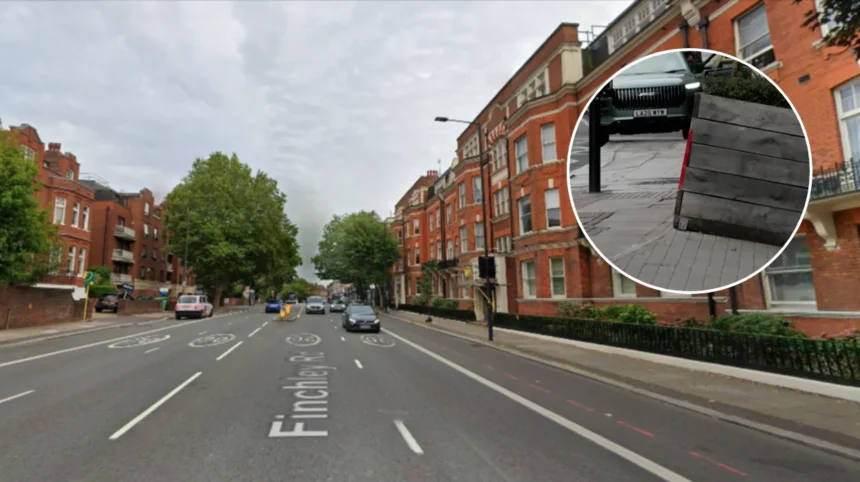
West Hampstead (North London News) February 6, 2026 – An “unacceptable” ramp-like slant on a pavement in West Hampstead, north-west London, dubbed a “ski jump” by residents, is finally being corrected after a protracted year-long dispute between Camden Council and developers Astir Living and A2 Dominion. The hazardous walkway on West End Lane, exposed after hoardings were removed from the £120m West Hampstead Central project in October 2024, has posed risks to pedestrians, particularly those unsteady on their feet or using pushchairs. Works commenced on Monday to level the slope, with completion slated for mid-February following BT Openreach’s telecoms adjustments.
- Key Points
- What Sparked the ‘Ski Jump’ Pavement Dispute?
- Who Bears Responsibility for the Slanted Pavement?
- Why Did the Dispute Drag On for a Year?
- What Fixes Are Underway for the Hazardous Slope?
- How Does the West Hampstead Central Project Fit In?
- What Do Residents Say About the ‘Ski Jump’ Danger?
- Whose Statements Define the Blame Game?
- When Will the Pavement Be Fully Safe?
- Why Matters This for North-West London?
What Sparked the ‘Ski Jump’ Pavement Dispute?
The controversy centres on a pavement outside 156 West End Lane, part of the West Hampstead Central development that began in 2017 and concluded last year. Since the removal of protective hoardings in October 2024, the uneven surface has drawn sharp criticism for its steep incline.
As reported by BBC News, local resident Ian Ferrie told the BBC in November: “They’ve made a ski jump. That is very, very dangerous for older people.” His comments highlighted immediate safety fears among residents.
Camden Council, responsible as the highway authority for the footpath, confirmed that developers Astir Living and A2 Dominion undertook works without prior consent. A council spokesperson stated:
“This should never have happened, but we are stepping in to fix this.”
The authority noted the firms’ actions led to an “unacceptable slope for which they should take accountability”.
Who Bears Responsibility for the Slanted Pavement?
A year-long row ensued, with each side pointing fingers. Camden Council blamed the developers for the unauthorised changes, while Astir Living and A2 Dominion accused the council of delays.
Labour councillor Sharon Hardwick, who represents West Hampstead, told the Local Democracy Reporting Service (LDRS):
“If you’re unsteady on your feet or have got a pushchair you really have to navigate it.”
She added that her inbox was “full of emails from residents worried about the slant” and criticised the firms for “spectacularly failing” to adhere to their plans. Hardwick further remarked:
“There is now a light at the end of this particular tunnel.”
In response, Chris Ives, managing director of development and regeneration at A2 Dominion, countered: “As our development approached completion, scheduled pavement works had not yet been completed by the council. With agreement from the council our development partners Astir temporarily reinstated the pavement so that the council could finalise their permanent plans for the pathway.” Ives emphasised:
“While the matter does not fall under our direct responsibility, the firm had continued to engage with the council to help find a timely and effective solution.”
A spokesperson for Astir Living reinforced this, stating the company paid the council roughly £67,000 in February 2020 towards highway works under the project’s Section 106 planning agreement. They asserted:
“This prolonged inaction is unacceptable and cannot be attributed to the developer or the planning process.”
The spokesperson maintained the development was “fully in accordance with the approved planning consent” and that the council had “remained silent” despite the firm’s “repeated” engagement attempts.
Camden Council countered that, per the Section 106 legal agreement, it expects the developers to reimburse costs for rectifying the pavement.
Why Did the Dispute Drag On for a Year?
The finger-pointing created a stalemate. Residents like Ian Ferrie voiced frustrations publicly, amplifying calls for action. Councillor Hardwick’s constituent complaints underscored the human impact, particularly on vulnerable groups in a bustling north-west London area.
Developers highlighted their financial contributions via Section 106, a common UK planning obligation where developers fund local infrastructure. Astir Living’s £67,000 payment was specifically earmarked for highway improvements, yet the pavement remained problematic.
A2 Dominion’s Chris Ives detailed temporary reinstatement efforts made “with agreement from the council”, suggesting collaborative intent amid perceived official delays. This back-and-forth exemplifies tensions in large-scale urban projects where public footpaths intersect private developments.
What Fixes Are Underway for the Hazardous Slope?
Camden Council announced works began on Monday to address the “steep and hazardous” slope. The process involves coordination with BT Openreach, expected to spend a week lowering an underground telecoms chamber to enable levelling and resurfacing.
All works are projected to conclude by mid-February, though traffic controls may cause minor delays. The council’s intervention marks a resolution, stepping in despite attributing primary fault to the developers.
Councillor Hardwick welcomed the progress, noting relief for residents navigating the area daily. Her optimism signals closure to a saga that blemished the otherwise ambitious West Hampstead Central project.
How Does the West Hampstead Central Project Fit In?
The £120m development delivered one and two-bedroom apartments, revitalising the locale since 2017. Completion last year brought modern housing but unveiled the pavement flaw upon hoarding removal.
As highway authority, Camden Council oversees footpath consents, a standard safeguard in UK planning. The unauthorised works disrupted this, fuelling the row.
Developers complied with broader planning consents, per Astir Living, yet the pavement skirmish highlights execution challenges in Section 106-funded infrastructure.
What Do Residents Say About the ‘Ski Jump’ Danger?
Public outcry focused on accessibility. Ian Ferrie’s stark “ski jump” analogy captured the peril for older residents, a demographic vital in community feedback.
Councillor Sharon Hardwick echoed this, detailing pushchair and mobility struggles via LDRS. Her flooded inbox reflected widespread concern, pressuring resolution.
These voices ensured the issue gained traction, transforming a local grievance into actionable change.
Whose Statements Define the Blame Game?
Key attributions clarify positions:
- Camden Council spokesperson: “This should never have happened, but we are stepping in to fix this.”
- Sharon Hardwick (LDRS): Firms “spectacularly failed” to follow plans.
- Chris Ives (A2 Dominion): Temporary works done “with agreement from the council”.
- Astir Living spokesperson: “Prolonged inaction is unacceptable”.
- Ian Ferrie (BBC): “Very, very dangerous for older people.”
Neutral reporting captures this multifaceted dispute without favour.
When Will the Pavement Be Fully Safe?
Mid-February marks the target, post-BT Openreach’s chamber works and council resurfacing. Traffic impacts will be managed, minimising disruption on West End Lane.
This timeline offers prompt relief, validating resident persistence and councillor advocacy.
Why Matters This for North-West London?
West Hampstead’s evolution via projects like West Hampstead Central underscores urban growth tensions. Pavement safety affects daily life, especially for vulnerable pedestrians in dense areas.
The resolution reinforces council oversight and developer accountability, setting precedents for future Section 106 implementations. It reassures communities that persistent advocacy yields results.