Key Points
- Officer Injured: A Metropolitan Police officer sustained a non-life-threatening leg injury after being stabbed during a dawn warrant execution in Cockfosters, north London.
- Primary Suspect Remanded: Charles Charalambous, 56, was charged with wounding with intent to cause grievous bodily harm to resist arrest and remanded in custody.
- Additional Charges: Two other men, Carl Robinson, 49, and Bradley Byford, 37, faced weapon and noxious substance charges following the same operation, subsequently receiving bail.
- Massive Operation: Over 800 police officers raided 24 properties across London, Essex, Hertfordshire, Cambridgeshire, and Suffolk, making 18 arrests in total.
- Tri-Agency Inquiry: The raids formed part of a multi-agency operation involving the Metropolitan Police, His Majesty’s Revenue and Customs (HMRC), and the Financial Conduct Authority (FCA) targeting an alleged organised crime group.
- Financial Disruption: The FCA moved to disrupt seven firms, with further inquiries ongoing into 30 additional entities linked to suspected financial offending, money laundering, and tax evasion.
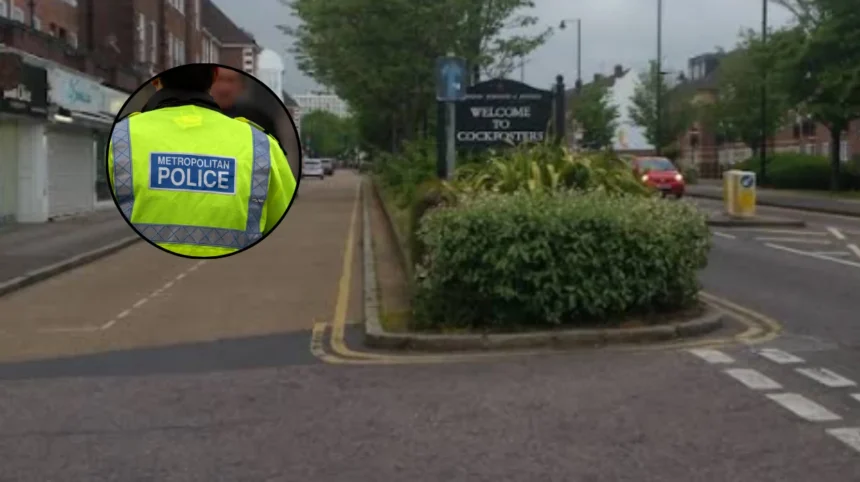
Cockfosters (North London News) October 1, 2026 – A 56-year-old man has appeared before Westminster Magistrates’ Court charged with wounding with intent to cause grievous bodily harm to resist arrest, following the stabbing of a Metropolitan Police officer during an early-morning search warrant in Cockfosters. The incident occurred as part of a sweeping, multi-agency operation involving more than 800 officers targeting a suspected organised crime network across London and four surrounding counties.
- Key Points
- What Happened During the Cockfosters Dawn Raid?
- How Far Did the Five-County Police Raids Extend?
- What Specific Allegations Are the Suspects Facing?
- What Was the Role of HMRC and the Financial Conduct Authority?
- What Is the Background to This Regional Organised Crime Investigation?
- What Is the Prediction for How This Development Will Affect the Local Community and Wider Public?
As reported by police reporting staff at the Metropolitan Police Service media bureau, the injured officer was taken to hospital in the early hours of Tuesday, 29 September, with a leg injury that was subsequently described as non-life-changing and non-life-threatening. The officer is expected to make a full recovery. The suspect, identified as Charles Charalambous of Claremont Road, Cockfosters, was remanded in custody ahead of his scheduled court hearing on Wednesday, 30 September. Police authorities emphasised that the criminal charge represents an allegation and does not constitute a finding of guilt.
What Happened During the Cockfosters Dawn Raid?
The search warrant in Cockfosters was executed during the early hours of Tuesday, 29 September, in the London Borough of Barnet. Detectives and specialist entry personnel entered the residential property as part of a coordinated series of strikes designed to dismantle a complex criminal network. However, during the execution of the warrant, an officer was stabbed in the leg.
Following the containment of the scene, officers arrested Charalambous and brought him into custody alongside two other men present at the address. As noted in official statements released by Metropolitan Police news officers, Carl Robinson, 49, was subsequently charged with possessing three knives in a private place under recent offensive weapons legislation. Bradley Byford, 37, was charged with possessing a weapon capable of discharging a noxious substance, specifically identified in court papers as electricity.
While Charalambous remained remanded in custody due to the severity of the wounding charge, both Robinson and Byford were granted bail regarding their specific weapon offences. Officers confirmed that all three individuals remain under investigation in relation to the broader organised crime inquiry, although the weapon and assault charges remain procedurally distinct from the wider financial allegations.
How Far Did the Five-County Police Raids Extend?
As reported by crime correspondents tracking the regional scale of the operation, police actions on Tuesday morning spanned 24 separate properties located across London, Essex, Hertfordshire, Cambridgeshire, and Suffolk. The scale of the deployment required more than 800 police officers, alongside specialist search dogs, forensic teams, and financial investigators.
Seventeen individuals were arrested during the coordinated morning raids across the five regions. A further suspect was located and detained later on Tuesday afternoon, bringing the total number of arrests to 18.
The complex investigation has been developed over several months through a formal partnership involving the Metropolitan Police, His Majesty’s Revenue and Customs (HMRC), and the Financial Conduct Authority (FCA). The joint inquiry focuses on an alleged organised crime group suspected of committing both violent and large-scale financial offences.
What Specific Allegations Are the Suspects Facing?
As detailed by law enforcement agencies involved in the case, those arrested across the multi-county raids are suspected of a range of serious criminal offences, including:
- Involvement in the activities of an organised crime group
- Money laundering through shell entities and personal accounts
- Large-scale tax evasion and fraudulent returns
- False accounting and corporate misrepresentation
- Conspiracy to cause grievous bodily harm
Law enforcement spokespersons reiterated that these matters remain active allegations under detailed investigation. Evidence gathered during the search warrants—including seized electronic devices, physical documentation, financial registers, and physical weapons—will undergo rigorous forensic and ledger analysis as the legal proceedings move forward.
What Was the Role of HMRC and the Financial Conduct Authority?
The operation represents a significant convergence of traditional policing with specialist regulatory and tax enforcement expertise. Officers from HMRC supported search operations at multiple business and residential addresses to gather evidence related to suspected tax evasion and concealed assets.
Simultaneously, the FCA executed targeted regulatory interventions alongside the physical raids. As stated by regulatory officials, the FCA’s involvement resulted in the immediate disruption of seven financial firms suspected of facilitating or engaging in illicit financial flows. Furthermore, investigators are conducting formal inquiries into an additional 30 entities linked to the network.
The combination of police powers, regulatory interventions, and tax audits was structured to dismantle both the operational capability and the financial backing of the suspected criminal group. Authorities noted that search teams were scheduled to remain at several properties for multiple days to complete thorough forensic examinations of the premises.
What Is the Background to This Regional Organised Crime Investigation?
The raid in Cockfosters and the accompanying multi-county operations represent the culmination of months of covert intelligence-gathering by law enforcement agencies targeting sophisticated crime syndicates operating across the Home Counties and the capital. Organised crime groups in the South East of England have increasingly integrated traditional criminal activity, such as violence and illegal weapons possession, with complex financial schemes including money laundering, VAT fraud, and tax evasion.
In response to this evolution, UK law enforcement has shifted towards multi-agency task forces that unite the frontline enforcement capabilities of police forces with the statutory powers of HMRC and the FCA. By tackling financial infrastructure alongside physical criminality, investigators aim to freeze criminal assets, revoke regulatory permissions, and prevent illicit funds from re-entering the legal economy. The operation on 29 September illustrates the operational scale required to simultaneously execute dozens of search warrants while managing high-risk physical arrests.
What Is the Prediction for How This Development Will Affect the Local Community and Wider Public?
This development is likely to have immediate and long-term implications for local residents in Cockfosters, commercial partners within the financial services sector, and the broader UK public.
For the local community in Cockfosters and the London Borough of Barnet, the heavy police presence and multi-day forensic searches serve as a visible reminder of high-risk law enforcement activity in suburban areas. Residents can expect continued disruption around search locations while police secure physical evidence. The incident also highlights the operational dangers faced by frontline police officers, which may prompt renewed public debate regarding officer safety equipment and prosecution guidelines for assaults on emergency workers.
For the regulated financial services sector, the FCA’s disruption of seven firms and ongoing scrutiny of 30 others signals an aggressive stance on regulatory compliance and anti-money-laundering (AML) controls. Financial institutions, compliance officers, and professional service providers will likely face heightened regulatory scrutiny regarding client due diligence and suspicious transaction reporting, particularly where entities operate across multiple regional jurisdictions.
Finally, for the general public, the ongoing court proceedings for Charalambous, Robinson, and Byford will demonstrate the legal process required when complex financial investigations intersect with violent criminal charges. As the evidence is examined in court, the case will test the capacity of multi-agency frameworks to successfully secure convictions spanning both violent and financial crime.