Key Points
- Enfield Council has begun eviction proceedings against the Toby Carvery restaurant operating at Whitewebbs Park in north London over the partial felling of an ancient oak tree thought to be up to 500 years old.
- The restaurant is operated by pub and restaurant group Mitchells & Butlers under a lease with Enfield Council, which owns the land.
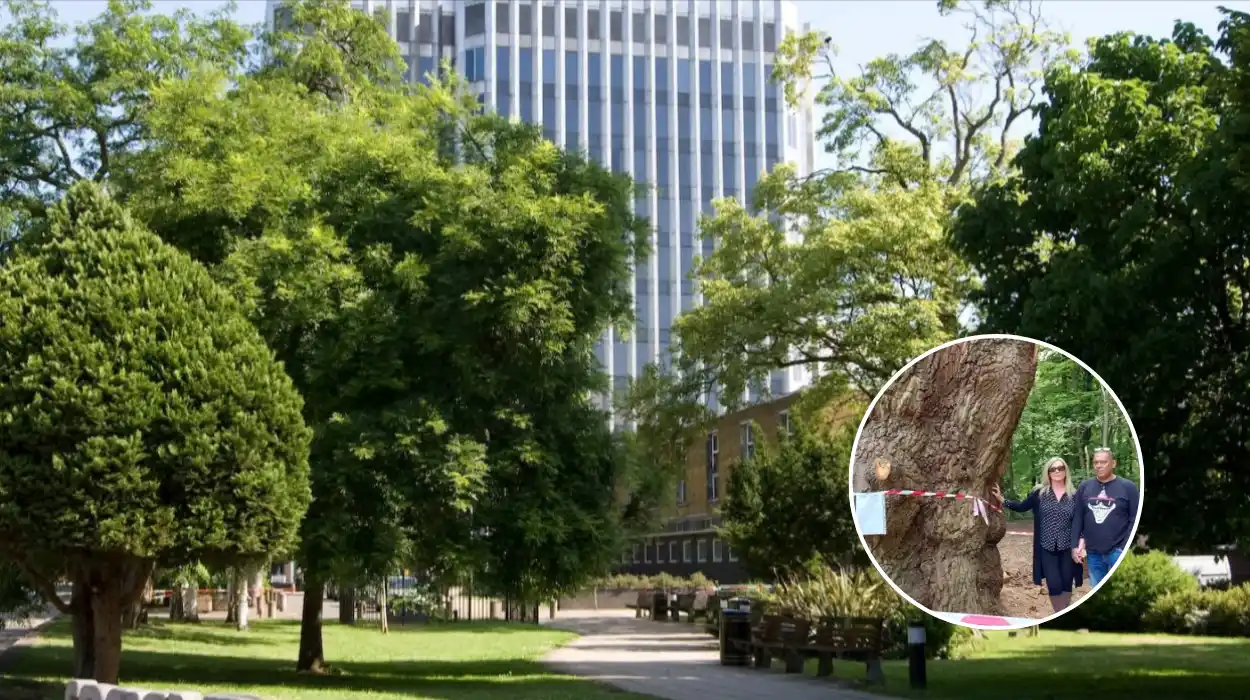
- Council workers discovered the remains of the ancient oak, known locally as the Whitewebbs Oak or the Guy Fawkes Oak, with its trunk and branches felled in April last year.
- Residents described themselves as “devastated” by the damage and called the loss of the historic tree a serious blow to the area’s natural heritage.
- Enfield Council has said it is treating the felling of the Whitewebbs Oak as an incident of criminal damage.
- The authority alleges “serious breaches” of the lease by Mitchells & Butlers and says the company has “failed to engage meaningfully” since the incident.
- The council says the tree was an “irreplaceable part” of Enfield’s natural heritage and was felled without the council’s knowledge or consent, contrary to the lease conditions.
- Enfield Council’s deputy leader, Councillor Tim Leaver, condemned the “reckless act” and said the destruction had “cut its expected lifespan” and “shocked and angered our entire community”.
- Cllr Leaver said the council would “do everything within our power to ensure justice for the Whitewebbs Oak” and to show that “such reckless disregard for our borough will never be tolerated”.
- The council is demanding a public apology from Mitchells & Butlers, financial reparations for the “irreversible damage” to the tree, and compensation for the significant costs it says it has incurred.
- The Whitewebbs Oak, sometimes referred to as the Guy Fawkes Oak, had long been regarded as a landmark tree and a symbol of the borough’s historic landscape.
- The case has reignited debate in Enfield over the protection of mature trees, the responsibilities of commercial leaseholders on public land and how environmental damage should be sanctioned.
Enfield Toby Carvery faces eviction proceedings after ancient Whitewebbs Oak – believed to be up to 500 years old – was felled without council consent, prompting Enfield Council to allege serious lease breaches and demand reparations while vowing to secure justice for what it calls an irreplaceable part of the borough’s natural heritage.
- Key Points
- Why is the Toby Carvery in Enfield facing eviction?
- What is known about the ancient Whitewebbs Oak?
- How did Enfield Council and residents react to the felling?
- What has Enfield Council said about Mitchells & Butlers’ response?
- What specific demands is the council making?
- How has the council framed the legal and environmental issues?
- Why does the council say the Whitewebbs Oak matters so much?
- What wider message is Enfield Council trying to send?
- What happens next for the Toby Carvery site and the investigation?
EnfieldToby Carvery (North London News) January 21, 2026 – An Enfield Council–owned Toby Carvery site at Whitewebbs Park is at the centre of a mounting row after the authority launched eviction proceedings against operator Mitchells & Butlers over the felling of a centuries‑old oak that officials and residents regarded as a cornerstone of the area’s natural and historic landscape.
Why is the Toby Carvery in Enfield facing eviction?
Enfield Council has stated that it has begun formal eviction action against Mitchells & Butlers, the company behind the Toby Carvery restaurant at Whitewebbs Park, citing what it describes as “serious breaches” of the lease following the felling of the ancient Whitewebbs Oak. According to the council, the tree was felled without its knowledge or consent, which it argues placed the operator in clear breach of the lease conditions governing occupation and use of the site.
The remains of the oak – its trunk section and severed branches – were found by council workers in April last year, prompting an immediate investigation into how a tree believed to be between several hundred and around 500 years old had been reduced to a stump. Enfield Council has repeatedly underlined that the tree had been regarded as a defining feature of Whitewebbs Park and that any work on such a specimen would have required explicit approval, which it says was never given.
What is known about the ancient Whitewebbs Oak?
Local accounts and council statements describe the Whitewebbs Oak as an ancient tree, thought to be up to half a millennium old and sometimes referred to as the Guy Fawkes Oak, reflecting the folklore and historical associations attached to it in Enfield. The tree stood within Whitewebbs Park, close to the Toby Carvery site, and had long been considered a living link to the borough’s past as well as a prominent visual landmark for visitors and residents.
In official comments, Enfield Council has called the oak “an irreplaceable part of Enfield’s natural heritage”, emphasising that its age, size and cultural resonance meant it carried significance well beyond its immediate setting in the park. The authority has further stated that the damage to the tree has “cut its expected lifespan”, underscoring that even partial felling of an ancient specimen can fundamentally compromise its survival and ecological value.
How did Enfield Council and residents react to the felling?
When council workers discovered the felled trunk and scattered branches last April, Enfield Council publicly characterised the incident as “criminal damage” and confirmed it was treating the matter with the seriousness usually reserved for deliberate destruction of protected or high‑value assets. Residents speaking after the discovery said they were “devastated” by the sight of the ruined tree and expressed anger that such a longstanding symbol of the local environment could be cut without public consultation or oversight.
As reported in the council’s own statement, deputy leader Councillor Tim Leaver said the destruction of the ancient Whitewebbs Oak was “a reckless act which caused huge damage to the tree and cut its expected lifespan”, adding that it had “shocked and angered our entire community”. Cllr Leaver stressed that the incident had struck a nerve across Enfield, in part because of the tree’s age and status and in part because it raised wider questions about how robustly public bodies and private operators protect shared natural heritage.
What has Enfield Council said about Mitchells & Butlers’ response?
Enfield Council has accused Mitchells & Butlers of having “failed to engage meaningfully with the council or to make reparations” since the incident, saying that this lack of substantive engagement formed part of the rationale for starting eviction proceedings. In the authority’s view, the combination of the alleged breach of lease terms and the company’s subsequent stance has left it with little option but to seek possession of the site to uphold its responsibilities to residents and the local environment.
As reported in the council’s statement, Cllr Tim Leaver said that the oak “was felled without the council’s knowledge or consent, in clear breach of the lease governing the site”, before calling publicly for Mitchells & Butlers to “issue a public apology and provide financial reparations for the irreversible damage they have caused as well as compensate the council for the significant costs incurred”. He framed these demands as necessary steps toward accountability, rather than as mere gestures, arguing that the financial and symbolic cost of destroying an ancient tree must be properly recognised.
What specific demands is the council making?
In its formal comments, Enfield Council has set out three central expectations of Mitchells & Butlers: a full public apology, financial reparations for the damage inflicted on the Whitewebbs Oak itself and compensation for what it describes as “significant costs incurred” in dealing with the aftermath. The reparations sought are framed not only as a response to the physical loss of much of the tree, but also as a way of reflecting the broader ecological, cultural and community impact associated with the destruction of such a long‑standing natural feature.
As reported by Cllr Tim Leaver in the council’s statement, the deputy leader insisted that “The people of Enfield deserve accountability”, linking the financial and reputational consequences the authority is pursuing to its duties as custodian of the borough’s parks, heritage and biodiversity. He further stated that “This case is about upholding our duty to protect our environment and our shared heritage”, making clear that, from the council’s perspective, the response to the felling must send a wider message about how similar incidents will be handled.
How has the council framed the legal and environmental issues?
Enfield Council has repeatedly described the incident as “criminal damage”, signalling that it regards the felling of the Whitewebbs Oak as a potential offence in law rather than just a contractual issue between landlord and tenant. This language also reflects the council’s view that the oak constitutes a public asset whose destruction has deprived the wider community of a unique living structure that cannot simply be replaced through new planting.
At the same time, the authority is using the lease enforcement route, including eviction proceedings, to address what it calls “serious breaches” by Mitchells & Butlers, thereby combining possible criminal and civil or contractual avenues. By linking environmental protection, heritage concerns and lease compliance in this way, the council is positioning the Whitewebbs Oak case as a test of how strongly local authorities can act when they believe private operators have damaged significant natural features on public land.
Why does the council say the Whitewebbs Oak matters so much?
In his statement, Cllr Tim Leaver described the felled tree as a “centuries‑old tree, sometimes known as the Guy Fawkes Oak”, underlining the idea that it embodied both ecological and historical value for Enfield. The nickname hints at the local stories and associations that had grown up around the tree over time, contributing to its status as more than just a large oak but as a recognised part of the borough’s identity.
Enfield Council’s description of the tree as “an irreplaceable part of Enfield’s natural heritage” captures its argument that even if new trees are planted elsewhere in Whitewebbs Park, they cannot replicate five centuries of growth or the cultural associations built around this particular specimen. In stressing the oak’s age, the council is also highlighting broader concerns about the loss of ancient trees in urban and suburban areas, where such specimens support diverse wildlife and play an outsized role in carbon storage, shade and landscape character.
What wider message is Enfield Council trying to send?
Cllr Tim Leaver has explicitly linked the council’s actions in this case to a broader commitment to environmental protection and heritage preservation, stating that “We will do everything within our power to ensure justice for the Whitewebbs Oak and seek to make it clear that such reckless disregard for our borough will never be tolerated”. By using such direct language, he is signalling that the authority wants the outcome of this dispute to deter similar conduct by other tenants or contractors operating on council‑owned land.
The deputy leader has also framed the incident in terms of public trust, asserting that “The people of Enfield deserve accountability” and that the council must be seen to act decisively when a much‑loved part of the local environment is damaged or destroyed. In doing so, he is connecting the legal and financial steps the authority is taking with its broader promise to residents that it will defend the borough’s green spaces, especially where centuries‑old features are at risk.
What happens next for the Toby Carvery site and the investigation?
With eviction proceedings now under way, Mitchells & Butlers faces the prospect of losing its Toby Carvery site at Whitewebbs Park if the council’s action succeeds, though the precise legal timetable and any potential challenge from the company have not yet been detailed publicly. The case will likely hinge on the interpretation of the lease terms, the evidence around decision‑making and responsibility for the felling, and the extent to which the operator can be held directly accountable for the works carried out.
Separately, the description of the incident as “criminal damage” means that the council and any relevant enforcement agencies may continue to examine whether offences have been committed under applicable environmental, planning or criminal law, though no detailed charging decisions have been announced in the information currently available. Whatever the legal outcome, Enfield’s handling of the Whitewebbs Oak case is already feeding into a broader discussion, locally and nationally, about how ancient trees on leased public land are valued, monitored and protected from irreversible harm.