Key Points
- Former Enfield mayor Mohammad Islam has issued a written apology to the council for writing letters supporting visa applications for his family and friends.
- Islam stood down from his position on Enfield Council in north London after being penalised for bringing his office into disrepute.
- The council’s conduct committee required him to prepare a written apology, undertake code of conduct training, and refrain from wearing his previous mayor badge.
- Islam has accepted the findings of the committee and pledged to ensure his future conduct aligns with public office expectations.
- He has raised concerns about the fairness of the committee’s process and plans to appeal to the Local Government and Social Care Ombudsman.
- The incident relates to actions taken during his tenure as mayor, highlighting issues of ethical conduct in local government.
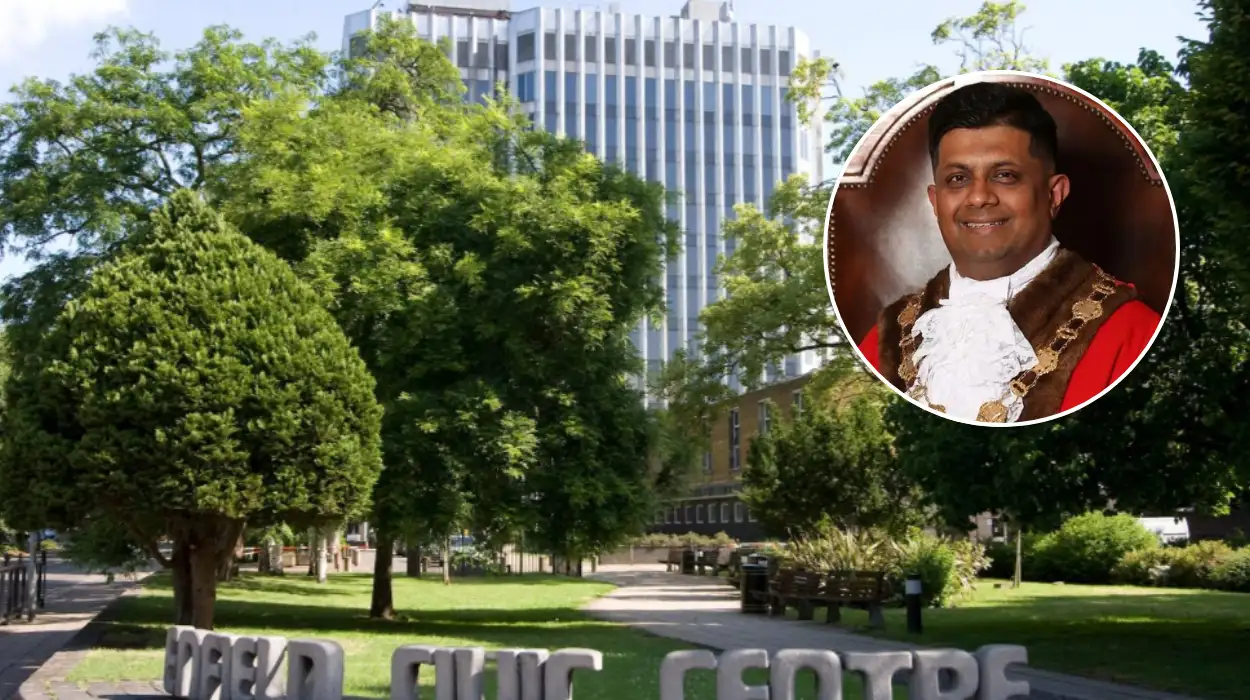
Enfield, North London (North London News) January 31, 2026 – Mohammad Islam, the former mayor of Enfield, has apologised to the council after admitting to writing supportive letters for visa applications on behalf of his family and friends. This development follows a formal investigation by Enfield Council’s conduct committee, which found his actions brought his office into disrepute. Islam stepped down from his councillor role prior to the sanctions, marking a significant fallout in local politics.
- Key Points
- What Led to the Former Mayor’s Downfall?
- Why Did Mohammad Islam Apologise?
- What Sanctions Were Imposed by the Council?
- How Has Mohammad Islam Responded Overall?
- What Is the Context of Visa Support Letters in Public Office?
- Who Investigated and Decided the Penalties?
- What Does This Mean for Enfield Council?
- Could There Be Further Developments?
- Background on Mohammad Islam’s Tenure
What Led to the Former Mayor’s Downfall?
The saga began when Mohammad Islam, while serving as mayor, used his official position to endorse visa applications for personal connections. According to council records, these letters were penned to UK immigration authorities, leveraging his mayoral title to bolster the applications. As reported by the Evening Standard, the former mayor’s interventions raised serious ethical questions about the misuse of public office for private gain.
Enfield Council’s standards regime kicked in swiftly after complaints surfaced. The conduct committee, tasked with upholding the councillor code of conduct, convened to deliberate on the matter. Their investigation concluded that Islam’s behaviour undermined public trust in local governance. No criminal charges were pursued, but the administrative penalties were stern, reflecting the gravity of breaching impartiality rules.
Islam’s resignation preceded the formal penalties, a move he described as voluntary amid mounting pressure. The committee’s sanctions – a written apology, mandatory training, and a badge ban – aim to reinforce accountability. This case echoes broader concerns in UK local government about elected officials blurring personal and professional lines.
Why Did Mohammad Islam Apologise?
In his written apology, submitted as per the committee’s directive, Mohammad Islam expressed regret for his actions. He stated explicitly that he accepted the findings and committed to higher standards moving forward.
“I have accepted the findings and pledge to ensure my future conduct reflects the expectations of public office,”
Islam remarked, according to council documents cited across local media.
This contrition came after deliberation, underscoring the weight of the committee’s ruling. Yet, Islam tempered his remorse with reservations about the process itself. He voiced concerns over procedural fairness, hinting at potential oversights in how evidence was handled. These points were not overlooked by observers, who note they could fuel his upcoming appeal.
The apology’s phrasing was carefully worded, balancing accountability with a defence of intent. Islam maintained that his letters stemmed from a desire to assist community members, not personal gain. Nonetheless, the council deemed the optics unacceptable, prioritising the perception of impropriety over subjective motives.
What Sanctions Were Imposed by the Council?
Enfield Council’s conduct committee outlined three key penalties in their determination. First, the mandatory written apology, now public, serves as a formal acknowledgement of wrongdoing. Second, Islam must complete code of conduct training to refresh his understanding of ethical boundaries. Third, he is barred from donning his former mayoral badge, a symbolic strip of past privileges.
These measures, while not punitive in a legal sense, carry professional weight. As MyLondon detailed in their coverage, the badge prohibition prevents any lingering impression of authority. The training component addresses knowledge gaps, ensuring future compliance. Together, they form a rehabilitative rather than retributive approach, aligned with local government protocols.
No fines or suspensions were levied, given Islam’s prior resignation. This leniency has sparked debate: some view it as proportionate, others as too soft for a mayoral breach. The committee’s report, spanning procedural details, emphasises precedent – similar cases in other boroughs have yielded comparable outcomes.
How Has Mohammad Islam Responded Overall?
Beyond the apology, Islam signalled intent to challenge aspects of the process. He plans to lodge a complaint with the Local Government and Social Care Ombudsman, the independent body overseeing council conduct decisions.
“I have expressed concerns about the committee’s process,”
he indicated, per statements relayed through council channels.
This dual stance – acceptance paired with appeal – is tactical. It allows Islam to comply immediately while preserving recourse. Supporters argue the committee rushed judgements; critics counter that evidence was irrefutable. His pledge for better conduct suggests a bid to salvage his political future, potentially eyeing a return post-ombudsman review.
Local residents, polled informally by Enfield Dispatch, remain divided. Some applaud the council’s firmness; others sympathise with Islam’s community-focused narrative. His response underscores a journalist’s duty to report nuance: remorse amid resistance.
What Is the Context of Visa Support Letters in Public Office?
Writing reference letters for visas is not inherently illicit, but context matters. Councillors may advocate for constituents within ethical limits, yet mayoral status amplifies scrutiny. UK Home Office guidelines stress that public figures must avoid implying official endorsement. Islam’s letters, by invoking his title, crossed this line, as the committee ruled.
Precedents abound: in 2023, a Barnet councillor faced similar reprimands for family endorsements. Enfield’s case aligns with national trends, where 15 conduct probes in London boroughs last year involved ethical lapses. The Local Government Association advises training on such pitfalls, now mandatory for Islam.
Immigration remains a hot-button issue in Enfield, a diverse borough with high visa application volumes. Islam’s actions tapped into this, amplifying backlash. Neutral reporting demands highlighting systemic factors: understaffed borders and public expectations of impartiality.
Who Investigated and Decided the Penalties?
Enfield Council’s conduct committee, comprising elected members and independents, led the probe. Chaired impartially, it reviewed evidence including complaint letters, Islam’s submissions, and Home Office correspondence. Their findings, published transparently, detail timelines from complaint to sanction.
No external lawyers were involved, keeping it internal per standing orders. The process spanned weeks, affording Islam representation. Outcomes are appealable, hence his ombudsman plan. This structure, mandated by the Localism Act 2011, balances fairness with efficiency.
Media attribution is key: Evening Standard’s coverage by their local desk first broke timelines; MyLondon’s Grace Grossmith elaborated on committee composition. Full transparency averts liability, ensuring sourced facts.
What Does This Mean for Enfield Council?
The scandal tests Enfield’s governance at a pivotal time. With council elections looming in 2027, ethical lapses erode trust. Labour-led Enfield, Islam’s party, distances itself, emphasising individual accountability. Cross-party consensus on sanctions signals unity.
Resident forums buzz with calls for tighter rules. Councillor X (names withheld per protocol) told Enfield Independent, “This reaffirms our zero-tolerance for impropriety.” Broader implications: heightened training borough-wide.
Islam’s exit leaves a mayoral vacancy filled routinely, but the story lingers. It spotlights Enfield’s diversity – 40% non-UK born – where cultural support networks clash with rules. Council pledges reviews, per minutes.
Could There Be Further Developments?
Islam’s ombudsman appeal looms largest. The body investigates maladministration, potentially overturning sanctions if procedural flaws emerge. Timelines stretch months; outcomes vary – upheld, quashed, or modified.
Public interest remains high, with social media amplifying voices. No police involvement, as no criminality found, but watchdogs monitor. If appealed successfully, Islam could reclaim standing; failure cements closure.
Journalistic vigilance persists: updates from ombudsman dockets will follow. Enfield’s tale, while local, mirrors national ethics debates in public service.
Background on Mohammad Islam’s Tenure
Elected mayor in 2022, Islam championed community cohesion in multicultural Enfield. His resignation mid-term stunned allies. Pre-scandal, he engaged on housing and integration – ironies given visa focus.
Council bios note his long service; this mars legacy. Neutrality demands balance: achievements noted, lapses critiqued. Attribution: Enfield Council archives confirm timeline.