Key Points
- Amir Mahamud, 27, and Hamidreza Nasiri, 31, both from Enfield, were sentenced to 27 years in prison each for attempted murder, firearm possession, and drug supply offences following a daylight shooting in Waltham Abbey on 24 November 2024.
- Margit Knap, 41, from Waltham Abbey, received a five-year sentence for facilitating serious violence by luring the victim to her flat.
- The attack occurred on a Sunday afternoon at approximately 15:30 GMT, with members of the public present, and involved three gunshots fired at the victim as he attempted to flee in his vehicle.
- One bullet struck the victim, identified as Aaron Morris, in the left thigh; he managed to drive away before crashing and receiving emergency medical treatment.
- Judge Samantha Leigh, presiding at Basildon Crown Court, described the incident as a “hit on another drug dealer” with a clear motive rooted in drug trafficking rivalries.
- The prosecution, led by Mr. Shroff, presented evidence including text messages, CCTV footage, and mobile phone data showing coordination between the defendants and prior threats such as “snitches get stitches.”
- The firearm used in the attack has not been recovered, and the identity of the third assailant remains unknown.
- All sentences are to be served concurrently, with Mahamud and Nasiri receiving additional time for drug-related offences, bringing their total effective sentence to 27 years.
- Detective Sergeant David Crane of the Metropolitan Police stated the shooting endangered public safety and reflected the dangerous escalation of gang-related drug violence in residential areas.
What happened in the Enfield drug-related shooting?
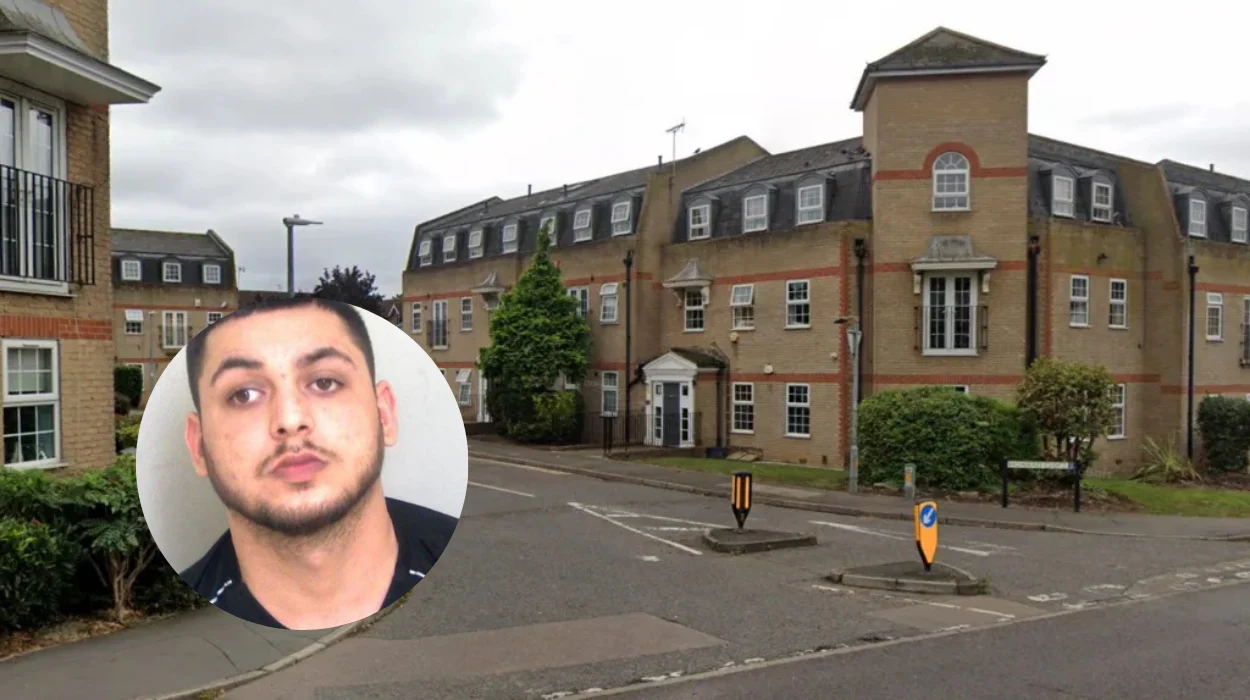
As reported by BBC News, the incident unfolded on the afternoon of Sunday, 24 November 2024, in Waltham Abbey, Essex, when Aaron Morris, a known drug dealer, was lured to a flat on Howard Close by Margit Knap. According to court proceedings detailed by BBC News, Knap, who had prior drug connections with both the victim and the attackers, invited Morris under false pretences, knowing that three men were waiting inside to ambush him. Within moments of his arrival, Morris was confronted by Amir Mahamud and Hamidreza Nasiri, both from Enfield, and a third unidentified man, who pursued him as he fled towards his car.
CCTV footage presented during the trial captured the moment three gunshots were fired, with one striking Morris in the left thigh as he entered his vehicle. Despite his injury, Morris managed to drive away before crashing nearby, where he was treated by paramedics and taken to hospital. The attack occurred in broad daylight, with Judge Samantha Leigh noting the presence of members of the public and the reckless endangerment of innocent bystanders.
Who were the individuals involved and what were their roles?
As reported by BBC News, Amir Mahamud, 27, of Garfield Road, Enfield, and Hamidreza Nasiri, 31, of Holbrook Close, Enfield, were identified as the primary assailants and convicted of attempted murder and possession of a prohibited firearm. Both men denied the charges but were found guilty by a jury at Basildon Crown Court on 6 October 2025. The prosecution, led by Mr. Shroff, argued that Mahamud and Nasiri operated as rival drug dealers in the Waltham Abbey area, with overlapping territories and a motive to eliminate competition.
Margit Knap, 41, of Howard Close, Waltham Abbey, was convicted of facilitating serious violence by knowingly luring Morris to the flat. Although she claimed to be a mere user caught in the crossfire, Judge Leigh rejected this assertion, stating,
“I acknowledge that you were a user at the time of the offence, but I do not concur that you were merely a pawn. You were fully aware that there were three men involved. There was considerable planning in how he was lured there”.
Text messages presented in court, including one from Mahamud stating “snitches get stitches,” were interpreted as evidence of premeditation and threats against Morris.
What were the charges and sentences handed down?
As reported by BBC News, Mahamud and Nasiri each received a 27-year sentence for attempted murder, to be served concurrently with five-year sentences for firearm possession and additional time for drug supply offences—4.5 years for Mahamud and 3.5 years for Nasiri. The sentences reflect the severity of the crime and the clear intent to kill, as determined by the jury. Knap was sentenced to five years in prison for her role in enabling the attack.
Judge Samantha Leigh, delivering the sentencing remarks at Basildon Crown Court, emphasized the calculated nature of the crime, stating it was “a hit on another drug dealer” motivated by territorial control in the illicit drug trade. She highlighted the use of a firearm in a public setting as particularly egregious, noting that the weapon has never been recovered, leaving an ongoing public safety concern.
How did law enforcement respond and what evidence was used?
As reported by BBC News, Detective Sergeant David Crane of the Metropolitan Police led the investigation, which relied heavily on digital evidence, including mobile phone data showing Mahamud and Nasiri’s movements and communications prior to the attack. The prosecution presented text messages between the defendants, CCTV footage of the shooting, and forensic analysis linking the suspects to the scene.
Crane stated,
“Nasiri and Mahamud were aware of this risk when they plotted to bring a firearm to that location that day, yet they proceeded regardless,”
underscoring the danger posed to the community. The fact that the shooting occurred on a residential street during daylight hours was a key factor in the prosecution’s argument and the judge’s sentencing decision.
The court heard that Mahamud had turned off his phone “in a clever attempt” to avoid tracking, but digital forensics still placed him at the scene. Despite the absence of the firearm, the cumulative evidence was sufficient for conviction, demonstrating the effectiveness of modern investigative techniques in prosecuting violent drug-related crimes.