Key Points
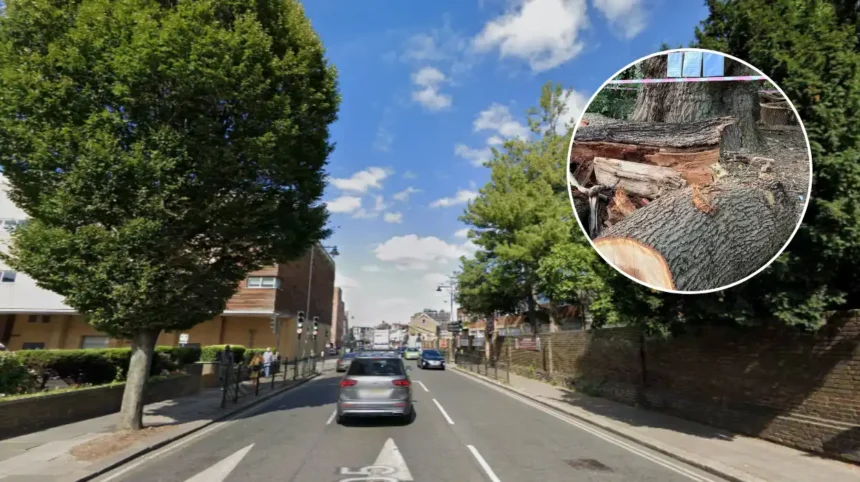
- An ancient oak tree, known as the Whitewebbs Oak, was chopped down last year by Mitchells & Butlers, owners of the Whitewebbs House Toby Carvery pub in Enfield, North London.
- The tree grew on council-owned land leased to the pub company.
- An arboreal consultant employed by Mitchells & Butlers deemed the tree dead prior to felling.
- A Forestry Commission investigation at the end of 2025 confirmed the tree was alive, evidenced by “green shoots” present at the time of cutting and still observable.
- The investigation has sparked calls for accountability amid comparisons to the Sycamore Gap tree felling.
- Enfield Council had leased the land to Mitchells & Butlers, raising questions over permissions and oversight.
- Police previously investigated the incident but no further updates on legal actions as of early 2026.
Enfield (North London News) February 20, 2026 – An ancient oak tree chopped down by the owners of Toby Carvery’s Whitewebbs House last year was confirmed alive at the time of felling, following a detailed investigation by the Forestry Commission.
- Key Points
- What Led to the Felling of the Whitewebbs Oak?
- What Did the Forestry Commission Investigation Reveal?
- Why Was the Tree Deemed Dead Initially?
- Who Owns the Land and What Role Did Enfield Council Play?
- How Does This Compare to the Sycamore Gap Incident?
- What Are the Legal Implications for Mitchells & Butlers?
- What Have Locals and Campaigners Said?
- What Steps Are Proposed to Prevent Future Fellings?
- Broader Context: Toby Carvery and Environmental Scrutiny
The Whitewebbs Oak, a historic landmark on land owned by Enfield Council and leased to pub operator Mitchells & Butlers, was felled after an arboreal consultant hired by the company declared it dead. This revelation, emerging from the Commission’s probe concluded at the end of 2025, has ignited public outrage and demands for clarity on the decision-making process.
What Led to the Felling of the Whitewebbs Oak?
The incident unfolded on land adjacent to the Whitewebbs House Toby Carvery in Enfield, a site steeped in local history. As reported by Phoebe Powell and Tristan Kington of Evening Standard, the oak was removed last year following the consultant’s assessment that it posed no ecological value due to being dead. The tree’s demise drew parallels to the high-profile Sycamore Gap tree felling in Northumberland, prompting initial police involvement.
Enfield Council, which owns the land, had leased it to Mitchells & Butlers, the parent company of Toby Carvery. According to The Times, as cited in multiple outlets, the consultant’s report was pivotal.
“The oak was cut down after an arboreal consultant employed by M&B said that it was dead,”
stated the report, underscoring the reliance on this professional judgement.
Local residents and environmentalists expressed dismay, viewing the Whitewebbs Oak as a symbol of Enfield’s natural heritage. The Forestry Commission’s findings directly contradicted the initial assessment, confirming “green shoots” on the tree both at felling and in subsequent checks.
What Did the Forestry Commission Investigation Reveal?
The Forestry Commission’s probe, finalised by late 2025, provided unequivocal evidence of the tree’s vitality. Investigators noted green shoots emerging from the trunk, a clear indicator of life that persisted post-felling. This directly challenged Mitchells & Butlers’ basis for removal.
As detailed in coverage by Evening Standard journalists Phoebe Powell and Tristan Kington, the Commission’s confirmation means “the tree was, and still is, alive.” No official response from Mitchells & Butlers on these findings has been publicly detailed in available reports, though the company previously defended the action on safety grounds.
The investigation’s timing, at the end of 2025, aligns with heightened scrutiny on tree protections following national incidents. Enfield Police had launched an inquiry last year, but updates remain pending as of February 2026.
Why Was the Tree Deemed Dead Initially?
The arboreal consultant’s verdict formed the cornerstone of the felling decision. Employed by Mitchells & Butlers (M&B), the expert evaluated the Whitewebbs Oak and concluded it was lifeless, justifying removal to mitigate potential hazards near the pub.
The Times reporting, referenced across sources, highlighted this reliance:
“An arboreal consultant employed by M&B said that it was dead.”
This assessment occurred amid routine site maintenance on the leased council land, where the tree stood.
Critics question the thoroughness of the inspection, especially given the oak’s ancient status. Environmental groups argue that veteran trees like this warrant non-destructive testing, such as resistograph sampling, before felling. Mitchells & Butlers has not elaborated further on the consultant’s methodology in public statements.
Who Owns the Land and What Role Did Enfield Council Play?
Enfield Council owns the land hosting the Whitewebbs Oak, leasing it to Mitchells & Butlers for the Toby Carvery operation. This arrangement places responsibility for site management, including tree care, squarely with the lessee.
Council statements post-felling expressed regret but deferred to the lease terms. As per Evening Standard coverage, the authority initiated the police probe alongside public concern. Sadiq Khan, Mayor of London, was referenced in related tree protection discussions, though not directly quoted on this case.
The lease likely included clauses on arboricultural decisions, but specifics remain undisclosed. Residents have called for a review of such agreements to prevent future losses of ancient trees on public land.
How Does This Compare to the Sycamore Gap Incident?
Comparisons to the 2023 Sycamore Gap tree felling in Northumberland are rife, with both cases involving protected or iconic oaks removed under disputed circumstances. Enfield’s incident, like Sycamore Gap, prompted police investigation and national media attention.
Evening Standard noted the parallels explicitly: “Enfield oak: Sycamore Gap comparisons.” Both trees held cultural significance, and post-felling analyses questioned initial reports of death or danger. The Whitewebbs Oak’s confirmed vitality amplifies calls for stricter veteran tree protocols akin to those post-Sycamore Gap.
Public backlash in both instances underscored a growing protectiveness over Britain’s ancient woodlands. Campaigns for replanting and legal reforms have gained traction since.
What Are the Legal Implications for Mitchells & Butlers?
Potential breaches of tree preservation orders or lease conditions loom large. The Forestry Commission’s findings could trigger fines or restoration orders under the Forestry Act 1967, which safeguards trees showing signs of life.
Police investigation, as reported by Evening Standard, focused on possible criminal damage. Mitchells & Butlers faces scrutiny over due diligence in hiring the consultant and acting on the report. No charges have been filed as of February 2026, but the alive status strengthens campaigners’ cases.
Environmental law experts advocate for Tree Works Applications (TWAs) in such scenarios, mandatory for certain protected species. Whether M&B sought council consent remains a key unanswered question.
What Have Locals and Campaigners Said?
Local sentiment runs high, with Enfield residents labelling the felling “vandalism.” Groups like the Woodland Trust have amplified the story, urging protection for remaining ancient oaks.
As per The Times attribution, the consultant’s error has “outraged conservationists.” Sadiq Khan’s office, while not directly commenting, supports broader London tree initiatives. Community petitions demand a memorial plaque or replacement planting.
What Steps Are Proposed to Prevent Future Fellings?
Campaigners push for mandatory second opinions on veteran trees and advanced diagnostics like sonic tomography. Enfield Council faces pressure to revise lease terms, incorporating eco-clauses.
Nationally, the incident bolsters arguments for a Veteran Tree Strategy, enhancing legal safeguards. Mitchells & Butlers could adopt voluntary audits, signalling corporate responsibility.
The saga highlights tensions between commercial interests and heritage preservation. With green shoots persisting, the Whitewebbs Oak’s stump serves as a poignant reminder.
Broader Context: Toby Carvery and Environmental Scrutiny
Mitchells & Butlers, operator of over 1,700 Toby Carvery venues, now navigates reputational fallout. Past environmental critiques of pub chains include waste management, but tree felling marks new territory.
Enfield’s green spaces, including Whitewebbs Wood, are vital lungs for North London. This loss compounds urban deforestation concerns amid climate goals.