Key Points
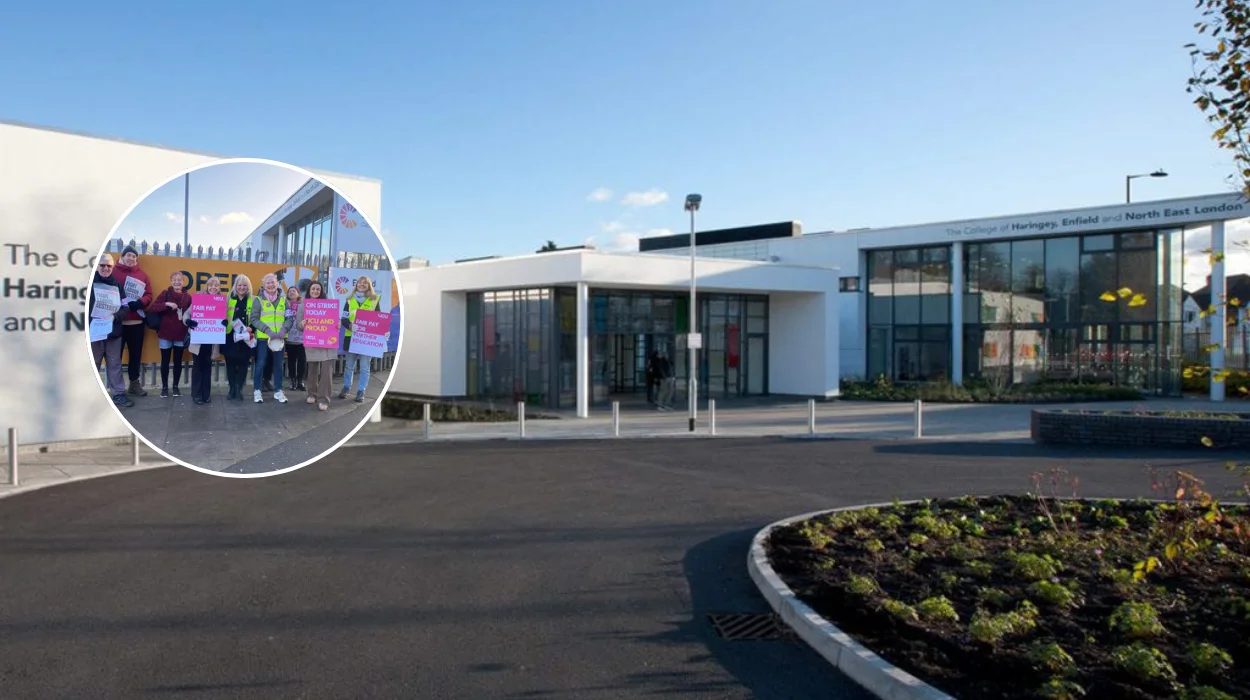
- UCU members at Enfield College in north London held a lively picket line on 10 December, chanting “CCCG, shame on you! You need to listen to the UCU!” to protest against Capital City College Group (CCCG), an amalgam of Further Education (FE) colleges across London.
- Cars and trucks tooted in support during the picket.
- Strike reasons: Fair pay, sustainable workload, enforcement of the FE national binding agreement; support for National Education Union (NEU) in sixth form colleges facing erosion and lack of fair pay.
- Anne, UCU rep at Enfield College, stated: “We’re on strike for fair pay, a sustainable workload – and for the FE national binding agreement. We’re also out in support of the National Education Union fighting in the sixth form colleges, which are slowly being eroded. They haven’t got fair pay. I think eventually, if it carries on like this, it will lead to the destruction of the sixth form colleges.”
- Anne added: “Further Education is so important. The staff work so hard. The teachers work so hard. They really care about the students. It’s so important for the local communities. It’s vital. You want teachers to be supported and valued and it all filters down to the students. The courses we offer are a vital aspect of the community.”
- Supporters from the Socialist Party distributed a bulletin calling for UCU to join other education unions and student organisations for democratic and student control of FE sectors, run in the interests of staff, students, and communities, not financiers and profiteers.
- The picket featured an impressive group of women workers who gained confidence through collective action; a hairdressing teacher recalled turning a delivery lorry around during the previous strike.
- Experienced FE workers criticised cuts to student support, imposition of admin tasks on teachers, and high executive pay.
- Underlying issues: Salaries worth 40% less in real terms than in 2010; severe understaffing costing staff dearly.
- Enthusiasm for next strikes on 14-16 January across UCU FE colleges nationwide.
- Article authored by Sarah Sachs-Eldridge of Enfield and Lea Valley Socialist Party, providing on-the-ground reporting from the picket line.
What Sparked the Enfield College Picket Line?
The protest erupted with strikers chanting “CCCG, shame on you! You need to listen to the UCU!”, as captured in vivid detail by Sarah Sachs-Eldridge of Enfield and Lea Valley Socialist Party. This bold message rang out from a “fantastic lively picket line” of UCU members at Enfield College, part of CCCG’s network of FE colleges spanning London. Passing cars and trucks tooted their support, amplifying the workers’ resolve.
- Key Points
- What Sparked the Enfield College Picket Line?
- Why Is Further Education So Vital to Communities?
- Who Supported the Strikers on the Picket Line?
- What Makes This Group of Strikers Stand Out?
- How Severe Are the Pay and Staffing Crises in FE?
- When and Where Is the Next Phase of Strikes?
- What Broader Context Surrounds the CCCG Dispute?
- How Does This Fit into National FE Struggles?
- Why Are Women Workers Leading This Charge?
- What Tactics Have Strikers Employed So Far?
- Could This Lead to FE Sector Reforms?
- What Do Experts Say About FE’s Future?
Anne, the UCU rep at Enfield College, provided clear insight into the strike’s motivations. As reported by Sarah Sachs-Eldridge of Enfield and Lea Valley Socialist Party, Anne explained:
“We’re on strike for fair pay, a sustainable workload – and for the FE national binding agreement. We’re also out in support of the National Education Union fighting in the sixth form colleges, which are slowly being eroded. They haven’t got fair pay. I think eventually, if it carries on like this, it will lead to the destruction of the sixth form colleges.”
This solidarity extends beyond Enfield, linking FE lecturers with NEU members in sixth form colleges, where pay disparities and structural erosion threaten viability.
Why Is Further Education So Vital to Communities?
Anne emphasised FE’s indispensable role. According to Sarah Sachs-Eldridge of Enfield and Lea Valley Socialist Party, Anne stated:
“Further Education is so important. The staff work so hard. The teachers work so hard. They really care about the students. It’s so important for the local communities. It’s vital. You want teachers to be supported and valued and it all filters down to the students. The courses we offer are a vital aspect of the community.”
Strikers portrayed FE as a cornerstone for local areas, where dedicated teachers deliver essential courses. Yet, they warned that undervaluing staff risks the entire ecosystem, from student outcomes to community cohesion.
Who Supported the Strikers on the Picket Line?
Socialist Party members bolstered the picket by distributing a bulletin. As detailed by Sarah Sachs-Eldridge of Enfield and Lea Valley Socialist Party, the publication urged UCU to unite with other education unions and student organisations. It advocated for a powerful union voice pushing democratic and student control over FE sectors, ensuring they serve staff, students, and communities rather than “financiers and profiteers.”
This call reflects growing militancy among educators seeking systemic change.
What Makes This Group of Strikers Stand Out?
The picket showcased
“an impressive group of women workers who have clearly gained confidence through their collective action,”
per Sarah Sachs-Eldridge of Enfield and Lea Valley Socialist Party. A hairdressing teacher recounted turning a delivery lorry around during the previous strike, illustrating hands-on tactics.
Workers with “decades of experience in FE” voiced unfiltered critiques. They decried cuts to student support, the burden of admin tasks diverting teachers from classrooms, and exorbitant pay for executive teams – all amid stagnant wages for frontline staff.
How Severe Are the Pay and Staffing Crises in FE?
The stark facts fuel the unrest. Salaries in FE are now worth 40% less in real terms compared to 2010, as highlighted by Sarah Sachs-Eldridge of Enfield and Lea Valley Socialist Party. Severe understaffing imposes huge costs on remaining workers, exacerbating workloads and burnout.
These conditions demand a robust union response, with strikers showing “big enthusiasm” for the upcoming national action.
When and Where Is the Next Phase of Strikes?
Building momentum, UCU plans strikes across FE colleges nationwide on 14-16 January. Enfield’s picket buzzed with anticipation for this escalation, signalling coordinated resistance against CCCG and broader FE woes.
What Broader Context Surrounds the CCCG Dispute?
CCCG, as an amalgam of London FE colleges, stands at the dispute’s centre. Strikers target its leadership for ignoring pleas on pay, workloads, and agreements. The action aligns with national patterns, where FE funding squeezes mirror austerity’s long tail.
No responses from CCCG were available in the reporting by Sarah Sachs-Eldridge of Enfield and Lea Valley Socialist Party, leaving management’s position unclear amid the chants and honks.
How Does This Fit into National FE Struggles?
Enfield’s fight mirrors wider battles. UCU’s push for the national binding agreement seeks to standardise protections, while support for NEU underscores inter-union solidarity. The Socialist Party bulletin, distributed on-site, frames this as a class struggle against profit-driven education.
Veteran workers’ testimonies – on admin overload, student support cuts, and executive excess – paint a sector strained by policy failures. Real-terms pay erosion since 2010 quantifies the toll, with understaffing compounding misery.
Why Are Women Workers Leading This Charge?
The “impressive group of women workers” at Enfield exemplifies empowerment through unity, as noted by Sarah Sachs-Eldridge. Their confidence, honed by prior actions like lorry turnarounds, challenges stereotypes and highlights female-dominated FE roles under pressure.
What Tactics Have Strikers Employed So Far?
Beyond chants and pickets, strikers have disrupted operations creatively. The hairdressing teacher’s lorry intervention from the last strike demonstrates tactical savvy, turning public spaces into battlegrounds for visibility.
Could This Lead to FE Sector Reforms?
Enthusiasm for January strikes suggests potential for escalation. If UCU heeds calls for broader alliances, as in the Socialist bulletin, it could amplify pressure for democratic control. Yet, without CCCG concessions, fears of sixth form collapse loom large.
What Do Experts Say About FE’s Future?
While specific expert commentary is absent from on-site reporting, Anne’s warnings – echoed by Sarah Sachs-Eldridge – align with sector analyses: unsupported teachers mean diminished students and communities. National strikes may force dialogue.