Key Points
- Fundraising Goal: A £10,000 crowdfunding campaign has been initiated to construct a new timber boardwalk.
- Location: The project is situated in the south-east corner of Alexandra Park, North London.
- Partnership: The initiative is a joint venture between the Alexandra Park and Palace Charitable Trust and the Friends of Alexandra Park.
- Match Funding: All donations received during the campaign period will be matched pound-for-pound.
- Deadline: The fundraising window is scheduled to close on 15 June.
- Objectives: To provide safe, inclusive access to wildlife habitats while protecting sensitive ecosystems.
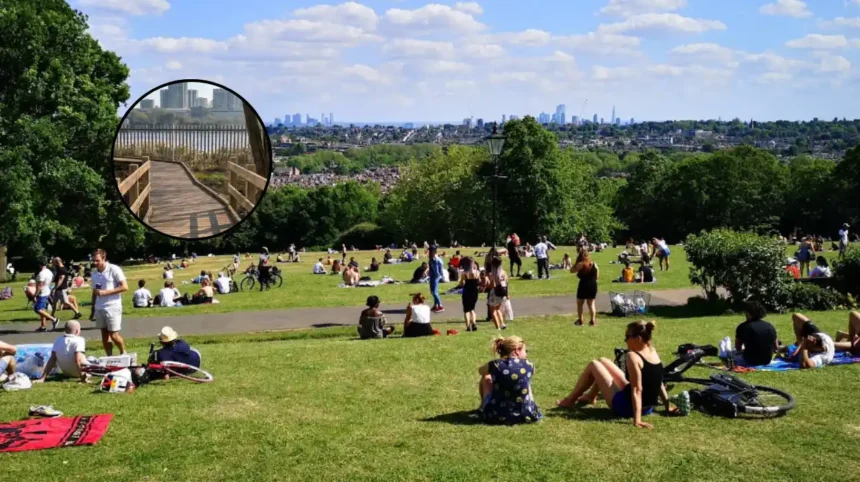
Alexandra Park (North London News) 14 May 2026 — A crowdfunding initiative seeking to raise £10,000 for the installation of a new wetland boardwalk has been officially launched to enhance public access to nature within Alexandra Park. The Alexandra Park and Palace Charitable Trust, in collaboration with the Friends of Alexandra Park, announced the campaign this week, setting a firm deadline of 15 June to reach their financial target. The proposed infrastructure aims to bridge the gap between park visitors and the flourishing wildlife habitat located in the park’s south-east corner, ensuring that the local community can observe native species without disrupting the delicate balance of the marshland.
- Key Points
- Why is a new boardwalk being built in Alexandra Park?
- How does the match funding scheme work for this campaign?
- What do the project leaders say about the wetland development?
- How does this boardwalk fit into the wider rewilding programme?
- What previous support has the Alexandra Park wetlands received?
- Background of the Alexandra Park Wetland Development
- Prediction: How will this development affect park visitors and local biodiversity?
Why is a new boardwalk being built in Alexandra Park?
According to reporting by local government correspondents, the project is a response to the increasing demand for accessible green spaces that do not compromise environmental integrity. As noted by Mark Evison of the Alexandra Park and Palace Charitable Trust, the primary driver behind the boardwalk is the creation of a “safe and accessible route” to primary birdwatching areas.
Currently, certain sections of the south-east corner can become difficult to navigate, particularly during wetter seasons, limiting the ability of visitors with mobility requirements or families with pushchairs to engage with the park’s biodiversity.
The Trust has emphasised that by elevating the walkway, the park can manage foot traffic more effectively, preventing the trampling of rare flora and the disturbance of ground-nesting insects. This structural intervention is viewed as a vital component of the park’s long-term environmental strategy.
How does the match funding scheme work for this campaign?
A significant incentive for potential donors is the “doubling” effect of their contributions. The Alexandra Park and Palace Charitable Trust and the Friends of Alexandra Park have confirmed that all donations made during the designated campaign period will be match-funded. Effectively, every £1 donated by a member of the public becomes £2 for the project.
This financial structure is designed to galvanise community support quickly, providing a sense of shared ownership over the park’s development.
The organisations have stated that this collective effort is essential to meeting the 15 June deadline, ensuring that construction can proceed according to the seasonal ecological window.
What do the project leaders say about the wetland development?
The leadership of both involved organisations has expressed high levels of optimism regarding the project’s impact on North London’s environmental landscape.
Patricia Moody, Chair of the Friends of Alexandra Park, stated her hope that the route would be enjoyed “for generations to come,” highlighting the sustainable nature of the development.
From the perspective of the Trust, the emphasis remains on the intersection of education and conservation. Mark Evison underscored that providing a vantage point for birdwatching is not merely about leisure, but about fostering a deeper connection between urban residents and the natural world.
How does this boardwalk fit into the wider rewilding programme?
The boardwalk is not an isolated project but rather a pivotal chapter in the park’s broader wetlands and rewilding programme. This overarching initiative aims to create healthier, more resilient habitats for a wide variety of species, including:
- Amphibians (such as frogs and newts)
- Aquatic wildlife and macroinvertebrates
- Native and migratory birds
- Pollinating insects
- Indigenous plant species
By directing visitors along a specific, elevated path, the park management can allow the surrounding land to undergo natural regeneration with minimal human interference. This strategy follows the success of earlier phases of the wetlands project, which garnered significant institutional support.
What previous support has the Alexandra Park wetlands received?
The ongoing transformation of the park’s water systems has previously been recognised at the mayoral level. Earlier phases of the wetlands project received funding and technical support from the Mayor of London’s Rewild London Fund.
This fund is specifically designed to help land managers across the capital create and restore priority habitats and sites of importance for nature conservation. The current crowdfunder represents the “grassroots” continuation of these larger, city-wide environmental goals.
Explore More Alexandra Park News
Ally Pally Rooftop Upgrade: UK’s Highest Walk Launches Feb 2026
Sky Sports Mutes Keir Starmer Chant in Littler Darts Final Win
Background of the Alexandra Park Wetland Development
Alexandra Park, often referred to as “The People’s Palace” grounds, covers 196 acres of Grade II listed parkland.
While historically known for its panoramic views of the London skyline and the iconic palace building, the 21st-century focus has shifted significantly toward ecological restoration.
The south-east corner of the park has long been identified as a site of ecological potential due to its natural drainage patterns and existing vegetation. However, for many years, these areas remained largely “wild” in a way that precluded public interaction.
The move toward a structured wetland began as part of a strategic plan to combat biodiversity loss in urban environments.
The Rewild London Fund’s involvement in previous years allowed for the initial desilting of ponds and the planting of reed beds, which act as natural filters for water runoff.
The boardwalk represents the final stage of “inclusive conservation”—the idea that for conservation to be successful in a city, it must be visible and accessible to the tax-paying public who utilise the space.
Prediction: How will this development affect park visitors and local biodiversity?
For the Public: The most immediate impact will be the democratisation of the park’s “wild” zones. Currently, birdwatching and nature photography in the wetlands are activities largely reserved for those capable of traversing uneven, often muddy terrain. The boardwalk will likely see an uptick in visits from local schools, elderly residents, and individuals with disabilities. This increased footfall, if managed correctly via the boardwalk, will likely enhance local mental health outcomes by providing a “blue-green” space for quiet reflection.
For local Biodiversity: Paradoxically, by bringing people closer to the wildlife, the boardwalk is predicted to protect the habitat. By confining human activity to a 1.5-metre-wide timber path, the “desire lines” (unofficial paths created by people walking through grass) will be allowed to grow over. This will reduce soil compaction and allow the “marshy” characteristics of the wetland to thrive. Specialists predict that within two years of the boardwalk’s completion, there will be a measurable increase in the sightings of dragonflies and damselflies, as well as a more stable population of grey herons and kingfishers, who will no longer be startled by erratic human movement throughout the brush.