Key Points
- David Ross, a 37-year-old father from Finsbury Park in North London, developed severe symptoms including relentless coughing after returning from a work trip to India in March 2025.
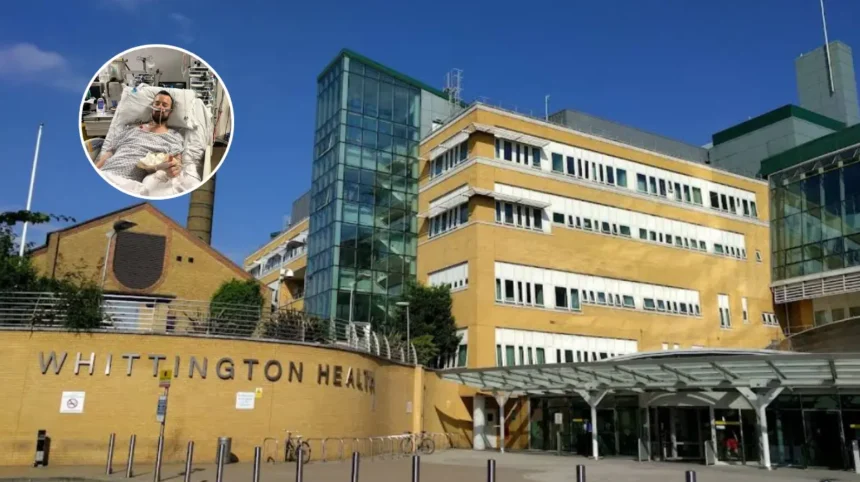
- He was rushed to the Whittington Hospital’s A&E where doctors diagnosed him with pneumonia in both lungs leading to septic shock, a life-threatening condition.
- Despite being given survival odds of 60/40 by a consultant, David was intubated and placed on a ventilator in intensive care.
- His partner was 37 weeks pregnant at the time, adding emotional strain during his ordeal.
- David made a remarkable recovery and returned to the Whittington Hospital just a week and a half later for the birth of his son, Ari.
- He initially dismissed symptoms as the “world’s worst chesty cough” but later experienced coughing up blood and peeing blood, feeling like his body was shutting down.
- David’s brother-in-law, a doctor, urged him to seek hospital care, which he initially resisted.
- Post-recovery, David took up Couch to 5k rehabilitation, progressing from exhaustion after one-minute runs to training for the London Marathon in April 2026.
- He has raised nearly £3,000 for the Whittington Hospital’s charity and aims to inspire his son Ari by turning adversity into good.
- Whittington Hospital CEO Selina Douglas described David’s efforts as “deeply inspiring.”
Finsbury Park,(North London News) March 31, 2026 – David Ross, a 37-year-old father from Finsbury Park, faced a life-or-death battle after a seemingly innocuous “chesty cough” following a flight back from India turned out to be deadly sepsis triggered by double pneumonia.
- Key Points
- What Triggered David Ross’s Sudden Illness?
- How Did Doctors at Whittington Hospital Respond?
- What Role Did David’s Family Play During the Crisis?
- How Has David Ross Recovered from Septic Shock?
- Why Is David Ross Running the London Marathon?
- What Lessons Can Be Learned from David Ross’s Sepsis Ordeal?
- How Does Septic Shock Develop from Pneumonia?
- What Support Exists for Sepsis Survivors Like David?
This dramatic turn of events unfolded as reported across multiple outlets, highlighting the rapid progression of septic shock and the critical role of swift medical intervention at the Whittington Hospital.
What Triggered David Ross’s Sudden Illness?
David Ross was travelling from India in March last year when he started experiencing relentless coughing episodes on his flight back to London. As detailed by Sam Turner of the Islington Tribune,
“Last March, 37-year-old David Ross returned from a work trip to India feeling unwell, and rapidly deteriorated over the next few days.”
The symptoms escalated quickly upon his return home. Mr Ross told the Tribune,
“I was coughing all the time, and it was the worst I’d ever felt.”
He initially brushed it off as the “world’s worst chesty cough,” a phrase echoed in coverage from SWNS, underscoring how deceptive early signs of sepsis can be.
His condition worsened to the point of coughing and peeing blood, prompting alarm. As Mr Ross recounted to Sam Turner of the Islington Tribune,
“My brother-in-law is a doctor, and he told me I should go to hospital. I resisted initially, but I was coughing and peeing blood – it felt like my body was shutting down.”
This rapid deterioration aligns with medical descriptions of septic shock, where pneumonia in both lungs leads to systemic overwhelm.
How Did Doctors at Whittington Hospital Respond?
Upon arrival at the Whittington Hospital’s A&E in North London, close to his Finsbury Park home, doctors diagnosed David with pneumonia in both lungs and septic shock – a life-threatening condition where the immune system overwhelms the body, blood pressure collapses, and organs begin to fail.
Septic shock, as explained in medical resources, involves sepsis with persistent hypotension requiring vasopressors, often stemming from pulmonary infections like pneumonia. Mr Ross was immediately moved to intensive care and intubated on a ventilator.
As reported by Sam Turner of the Islington Tribune, he was given merely a 20 per cent chance of survival in some accounts, though Mr Ross clarified to the outlet,
“I asked the consultant what my survival odds were, and he said 60/40.”
The consultant later confided to Mr Ross that he had thought he might die.
Despite the gravity, medical staff recognised the issue swiftly, which Mr Ross credits for his survival. “I count myself really lucky that medical staff recognised quickly what was wrong with me,” he stated.
What Role Did David’s Family Play During the Crisis?
At the time of his hospitalisation, David’s partner was 36 weeks pregnant, heightening the emotional stakes.
“I was massively helped knowing that I was going to be a dad in a few weeks,”
Mr Ross told the Islington Tribune.
Remarkably, just a week and a half after his discharge, David returned to the Whittington Hospital for the arrival of his son, Ari. He even found one of the nurses who had helped him and gave the newborn a present, sharing a poignant moment.
Mr Ross reflected on family support: “My family, friends, and colleagues were all amazing.” This network, combined with his impending fatherhood, provided crucial motivation amid the 60/40 odds.
How Has David Ross Recovered from Septic Shock?
David’s recovery has been nothing short of extraordinary. When he first left hospital, just walking across the room left him out of breath, as detailed in the Islington Tribune.
He took up Couch to 5k as part of his rehabilitation last summer.
“At first, even a one-minute run was exhausting,”
Mr Ross shared with Sam Turner. Yet, persistence paid off, transforming his physical limits.
By March 2026, a year after his illness, David was preparing for the London Marathon in April. This milestone underscores his journey from septic shock survivor to endurance athlete.
Why Is David Ross Running the London Marathon?
David’s marathon effort is a tribute to the Whittington Hospital that saved his life. He has raised nearly £3,000 for the hospital’s charity, with a fundraising link shared widely.
“Our NHS is under pressure and I want to do what I can to help – and also for my baby boy,” Mr Ross told the Islington Tribune. He aims to teach Ari resilience:
“When he grows up, I want him to know that, although you can’t stop bad things happening to you, you can still try and turn them into something good.”
Whittington Hospital CEO Selina Douglas praised him:
“It is deeply inspiring not only to see patients recover, but go on to achieve extraordinary things,”
What Lessons Can Be Learned from David Ross’s Sepsis Ordeal?
David emphasises the impact of kindness in crisis. “When you’re at your lowest the smallest acts of kindness make a big difference, like someone bringing you a glass of water, or helping wipe your face, or just sitting to talk,” he said.
His story highlights sepsis dangers, often misattributed to minor ailments like a chesty cough, especially post-travel from regions like India where infections can trigger pneumonia.
Medical experts note most septic shock cases arise from gram-negative bacilli or gram-positive cocci in pulmonary sites, urging prompt A&E visits for severe coughs with blood.
How Does Septic Shock Develop from Pneumonia?
Septic shock follows sepsis, a dysregulated response to infection causing organ dysfunction. In David’s case, pneumonia likely contracted during travel led to bloodstream invasion.
Symptoms include relentless cough, blood in urine or sputum, and collapse – all evident in Mr Ross’s account. Early antibiotics and ventilation are critical, as he received.
What Support Exists for Sepsis Survivors Like David?
The Whittington’s charity, bolstered by David’s £3,000, aids such recoveries. His marathon (support at https://tinyurl.com/david-ross) exemplifies community fundraising for the NHS.
David’s gratitude endures: “I’ll never forget the care and the kindness they gave,” he concluded.