Key Points
- Former Haringey Council leader Peray Ahmet has publicly endorsed Andy Burnham to succeed Sir Keir Starmer as the next Prime Minister.
- Peray Ahmet directly blamed Prime Minister Sir Keir Starmer for Labour’s “absolute disaster” during the May local elections.
- Andy Burnham won the Makerfield parliamentary by-election last Thursday, defeating Reform UK by a wide margin to secure 54.8% of the vote.
- Burnham’s transition back to Westminster automatically triggers a special election for the Greater Manchester mayoral office, scheduled for 30 July.
- Prime Minister Sir Keir Starmer congratulated Burnham on social media, asserting that voters chose hope over division, despite mounting intra-party criticism.
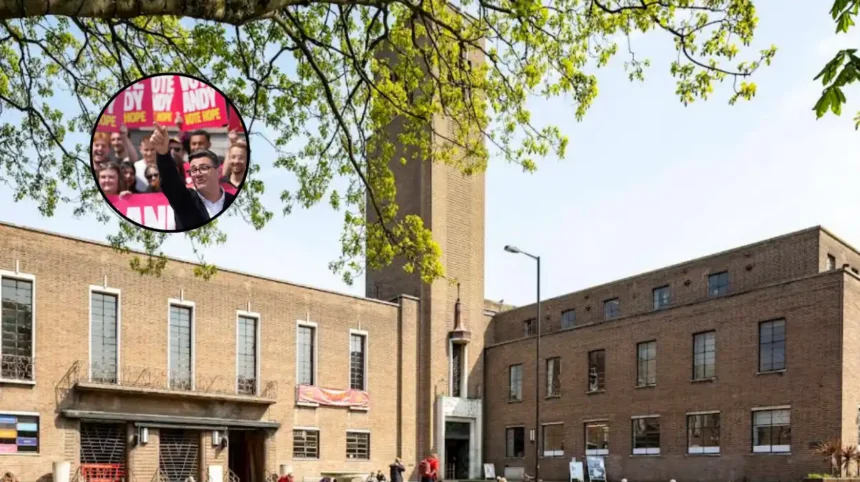
Haringey Council (North London News) June 23, 2026 leader Peray Ahmet has publicly endorsed the newly elected Member of Parliament for Makerfield, Andy Burnham, as the next Prime Minister of the United Kingdom, following his decisive victory in last Thursday’s parliamentary by-election. The endorsement comes amidst severe internal turbulence within the Labour Party, with Ahmet openly pointing the finger at the incumbent Prime Minister, Sir Keir Starmer, for what she described as an “absolute disaster” during the local government elections in May. Burnham, who concluded a nine-year tenure as the Mayor of Greater Manchester to return to Westminster, is now widely viewed by party figures and political commentators as the leading frontrunner to mount a leadership challenge against Starmer.
- Key Points
- Why Is Peray Ahmet Backing Andy Burnham For No. 10?
- How Did Sir Keir Starmer Oversee an ‘Absolute Disaster’ in the Local Elections?
- What Were the Key Numbers From the Makerfield By-election?
- What Did Political Figures Say Following the Vote Count?
- Background of the Makerfield By-election and Regional Leadership
- Prediction: How This Development Can Affect the British Electorate and Local Council Authorities
Why Is Peray Ahmet Backing Andy Burnham For No. 10?
As reported by political correspondents covering the fallout of the Makerfield by-election, former Haringey Council leader Peray Ahmet hailed the return of Andy Burnham to Parliament as “brilliant news for all of us.” In a series of public statements that have sent shockwaves through the broader Labour movement, Ahmet linked her endorsement to a deep-seated frustration with the current direction of the national party leadership under Sir Keir Starmer.
Ahmet argued that the electorate is seeking a distinct change in approach, framing Burnham as a figure capable of bridging the widening gap between Westminster and working-class communities, particularly across traditional industrial heartlands.
Her vocal support underscores a growing sentiment among localized Labour factions that a shift in the party’s central leadership may be necessary to stabilize its national electoral platform.
How Did Sir Keir Starmer Oversee an ‘Absolute Disaster’ in the Local Elections?
According to data compiled from official electoral declarations during the local elections in May, the Labour Party suffered severe losses across multiple English councils, dropping over two hundred local authority seats.
In contrast, the populist Reform UK party, led by Nigel Farage, emerged as the most significant victor of the night, capturing more than three hundred seats and penetrating deeply into traditional Labour strongholds. Councils such as Hartlepool, Tameside, Redditch, and Tamworth slipped completely from Labour’s control.
As reported by broadcasters covering the morning declarations in west London, Sir Keir Starmer accepted responsibility for the poor showing, describing the local outcomes as “tough”.
However, the Prime Minister insisted that he would continue to lead Labour into the next general election.
The scale of the defeat immediately prompted several unnamed backbench Labour MPs to issue calls for his resignation, a sentiment that Peray Ahmet has now effectively echoed by classifying the performance as an “absolute disaster”.
What Were the Key Numbers From the Makerfield By-election?
As announced by the returning officer at the Edge venue in Wigan on Friday morning, Andy Burnham secured a commanding victory by winning 24,927 votes, representing 54.8% of the total ballots cast.
His closest challenger, Robert Kenyon of Reform UK, captured 15,696 votes, translating to a 34.5% vote share.
While Burnham’s margin of victory remains substantial, political analysts noted that Reform UK’s second-place surge represents a continuation of the shifting trends observed during the May local elections. Makerfield has historically been an unassailable safe seat for Labour since 1906; however, recent electoral cycles have demonstrated a visible erosion of voter trust in Westminster’s conventional management.
What Did Political Figures Say Following the Vote Count?
Following the formal declaration of the poll results, prominent political figures across the ideological spectrum issued statements reacting to the development:
- Andy Burnham, Labour MP for Makerfield: In his formal victory speech on the podium, Burnham stated: “This result will bring about a country that works fairly for everywhere and for everybody. People here have voted for change. They have voted for more power for the North and everywhere forgotten by Westminster”. He further reflected on his departure from regional governance, adding: “It is with some sadness that this result brings an end to my wonderful nine years as Mayor of Greater Manchester, but I seek to go back to Westminster to complete that unfinished business so that Makerfield and Greater Manchester and the North of England can fulfill their potential”.
- Sir Keir Starmer, Prime Minister and Labour Leader: Writing on the social media platform X, Starmer offered congratulations to the winning candidate, stating that “voters chose Labour’s campaign of hope and optimism over division and hate,” attempting to present a unified front despite the intense intra-party criticism surrounding his leadership.
- Nigel Farage, Leader of Reform UK: Commenting broadly on the performance of his party in recent contests, Farage declared an “historic change in British politics,” pointing to the consistently high vote shares obtained by candidates like Robert Kenyon in working-class constituencies as evidence that Reform UK is now the primary challenger to Labour.
Background of the Makerfield By-election and Regional Leadership
The vacancy in Makerfield was created when the sitting Labour MP stepped down, prompting a high-stakes by-election that was quickly identified by Westminster insiders as a defining moment for the party’s internal balance of power.
Andy Burnham’s decision to contest the seat marked a significant pivot in his political career; he previously served as the MP for Leigh between 2001 and 2017 and held prominent cabinet positions under Prime Ministers Tony Blair and Gordon Brown, before launching two unsuccessful bids for the Labour leadership in 2010 and 2015.
Burnham’s transition from local government to national parliamentary politics is legally constrained. Because regional metro-mayoral positions in England incorporate the formal duties of a Police and Crime Commissioner, sitting Members of Parliament are statutorily barred from holding both offices simultaneously.
Consequently, Burnham’s victory automatically triggers a separate, highly consequential special election to select the next Mayor of Greater Manchester, which regional authorities have tentatively scheduled to take place on 30 July.
Prediction: How This Development Can Affect the British Electorate and Local Council Authorities
This political realignment is poised to exert a multi-layered impact across specific sectors of the British public, most notably local council authorities and regional electorates.
For municipal councils across the United Kingdom, the public fracturing of the Labour leadership—exemplified by senior figures like Peray Ahmet openly breaking ranks—is highly likely to disrupt local governance and budgetary planning.
With the Prime Minister facing active internal dissent, local authorities may experience delays or shifts in central government funding allocations, urban regeneration partnerships, and devolution deals, as Westminster remains preoccupied with managing leadership speculation.
For the regional electorate, particularly voters residing within the North of England, Burnham’s return to the House of Commons signals a highly combative phase in regional advocacy. Electorates will find themselves navigating an intensified ideological battleground.
As Reform UK continues to consolidate its position as a formidable second-place political force in working-class seats, voters will likely see both main parties radically alter their policy offerings on immigration, industrial investment, and local public services in an attempt to capture or retain traditional heartland areas.
Furthermore, the impending 30 July Greater Manchester mayoral election will test whether the regional electorate wishes to continue with Burnham’s established policy framework or pivot toward alternative political alignments under new executive leadership.