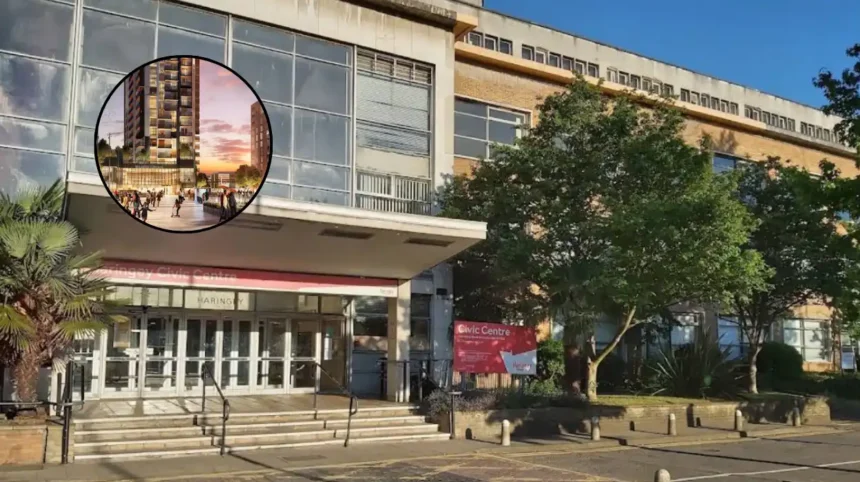
Key Points
- Contract Breakthrough: Haringey Council’s cabinet is set to approve a crucial contract to advance the stalled Love Lane Estate redevelopment scheme.
- Immediate Scope: The contract authorises the demolition of Whitehall Lodge and the construction of 61 new council homes on the site, representing “Phase 1A” of the broader project.
- Housing Breakdown: The 61 new homes will consist of a mix of 20 one-bedroom flats, 19 three-bedroom flats, and eight maisonettes containing three to four bedrooms.
- Future Phases: The contract also includes the demolition of a tower block at 2–32 Whitehall Street to pave the way for “Phase 1B,” which will be delivered by the multinational construction company Lendlease.
- Strategic Goal: The local authority hopes this move will “unlock delivery” of the long-delayed and troubled £1 billion High Road West masterplan in Tottenham.
Tottenham (North London News) July 11, 2026 – Haringey Council is positioning itself to breakthrough years of stagnation on one of its most controversial housing projects. Next Tuesday, 14th July, cabinet members at the local authority are expected to formally execute a new development contract designed to kickstart the long-delayed, currently stalled Love Lane Estate redevelopment in Tottenham. The critical step involves awarding a contract for Phase 1A of the project, which will trigger the immediate demolition of Whitehall Lodge and the subsequent construction of 61 new council homes in its place.
The decision comes at a pivotal moment for the borough’s housing strategy. As reported by Joe Ives, a Local Democracy Reporter covering the borough, the council explicitly hopes that securing this agreement will finally “unlock delivery” of the wider High Road West regeneration scheme.
Alongside the direct construction of council properties, the package includes the demolition of a nearby tower block at 2–32 Whitehall Street.
This clearance is required to prepare the ground for Phase 1B, a portion of the development that will be executed by Lendlease, the Australian multinational construction and real estate company.
Why is the Love Lane Estate Contract Being Awarded Now?
The decision to bring the contract to the cabinet table follows a prolonged period of inactivity and structural delays that have left the High Road West scheme “currently stalled.” Local government officials have acknowledged that the regeneration project has faced significant friction, resulting in frustration for local residents living in deteriorating estate conditions.
By stepping in to directly award the contract for the initial phase, the executive leadership aims to demonstrate tangible momentum and restore confidence in the viability of the masterplan.
The delivery of 61 council homes on the Whitehall Lodge site is intended to serve as a catalyst. According to local authority briefing documents, the targeted mix of housing includes 20 one-bedroom flats, 19 three-bedroom flats, and eight large family maisonettes ranging from three to four bedrooms.
This specific composition has been designed to address acute overcrowding issues within the existing estate, ensuring that current tenants can be rehoused locally in high-quality, modern accommodation before wider demolition across the estate continues.
What is the Role of Lendlease in High Road West?
While Haringey Council is driving the initial council housing phase on the Whitehall Lodge footprint, the long-term execution of the broader masterplan relies on its partnership with private industry.
The contract under consideration next Tuesday explicitly links public sector delivery with private sector progression.
By including the demolition of the tower block at 2–32 Whitehall Street within this immediate scope of works, the council is actively clearing physical roadblocks for its development partner.
Once the Whitehall Street tower block is demolished, the site will be handed over to Lendlease to spearhead Phase 1B.
The multinational firm is contracted to deliver a substantial portion of the mixed-use development, which is slated to eventually include thousands of new homes, commercial spaces, and community facilities running adjacent to the Tottenham Hotspur Stadium.
The coordination between the council’s direct delivery of social housing and Lendlease’s market-led construction has been a central tenet of the High Road West strategy, though it remains a focal point for intense local debate regarding the balance of tenure.
Background of the Love Lane Estate Redevelopment
The High Road West scheme, within which the Love Lane Estate redevelopment sits, has been one of the most heavily contested regeneration projects in North London for over a decade.
Conceived as part of the post-2011 riot regeneration strategy for Tottenham, the overarching masterplan aims to transform the area into a new high-density residential and commercial district.
However, the project has been beset by an array of political, financial, and legal challenges that have repeatedly altered its trajectory.
A central point of friction has historically been the relocation and rights of existing estate residents. In 2021, a formal ballot of Love Lane Estate residents saw a majority vote in favour of the redevelopment, following promises from Haringey Council that all secure tenants would be guaranteed a new council home on the redeveloped site under a “right to return” policy.
Despite the democratic mandate from residents, inflation in the construction sector, rising interest rates, and shifting design regulations—particularly surrounding post-Grenfell fire safety mandates requiring second staircases in tall buildings—severely disrupted the financial models of the project, causing the delivery timeline to slip by several years and forcing renegotiations between the council and Lendlease.
How This Development Can Affect Love Lane Residents and the Wider Tottenham Community
The progression of Phase 1A is poised to have immediate, tangible effects on several distinct groups within the Tottenham area, primarily centered around housing security and local economic stability.
For the secure tenants currently residing on the Love Lane Estate, the cabinet’s approval of the Whitehall Lodge contract represents the first concrete proof of housing delivery after years of uncertainty.
The inclusion of larger three- and four-bedroom maisonettes directly addresses families suffering from severe overcrowding.
However, for the high volume of temporary accommodation residents currently placed on the estate, the progression of the scheme brings heightened anxiety.
Temporary tenants do not possess the same robust “right to return” guarantees as secure tenants, meaning the commencement of demolition will likely trigger their relocation to other temporary dwellings across or outside the borough, disrupting local schooling and community networks.
For the broader community, the unlocking of the High Road West scheme signals a massive influx of construction activity, which will bring both short-term disruption and long-term economic shifts.
The physical footprint of the project sits directly opposite the Tottenham Hotspur Stadium, meaning construction logistics will have to carefully interface with match-day crowds and local transport infrastructure.
Over the long term, the successful transition from Phase 1A into Lendlease’s subsequent phases is expected to radically alter the demographic and commercial makeup of the High Road, potentially driving up local property values and living costs, while introducing new public spaces and retail opportunities to the area.