Key Points
- A burst water main on Woodside Avenue in Muswell Hill disrupted water supplies across North and North-West London.
- Households in six postcode areas—N6, N19, NW2, NW3, NW6, and NW11—lost tap water entirely or faced low pressure.
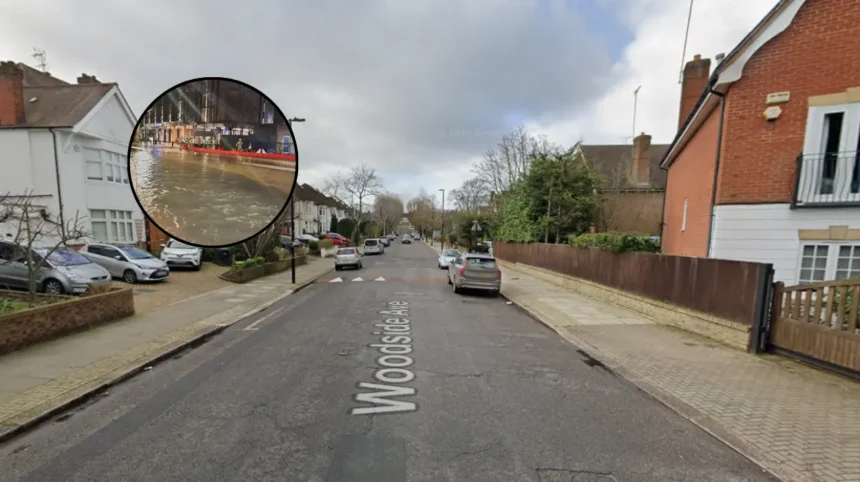
- The pipe breach damaged the road surface on Woodside Avenue, forcing police and highways crews to close the street and set up traffic diversions.
- Thames Water engineers worked through the night to alter network flows, expose the damaged main for repairs, and deliver bottled water to residents.
- Affected residents called the situation “unprecedented” and “crazy,” with some tower blocks experiencing outages for more than 24 hours.
North London (North London News) August 27, 2026 – Thousands of households across North and North-West London have suffered severe water supply outages or low pressure following a major trunk main failure in Muswell Hill. As reported by Louis Dargavel Corbett of MyLondon, emergency engineers from utility provider Thames Water were deployed to Woodside Avenue to isolate the ruptured pipe and begin complex structural repairs after the failure was initially reported. The incident has caused widespread disruptions to residential properties, local businesses, and road traffic networks across six postal codes.
- Key Points
- What Caused the Massive North London Water Outage?
- Which Areas and Postcodes Are Affected by the Pipe Burst?
- How Have Thames Water and Local Authorities Responded?
- How Are Local Residents Coping With the Water Supply Loss?
- Background of Water Infrastructure Developments in North London
- Future Impact Analysis: How This Development Affects London Residents and Ratepayers
What Caused the Massive North London Water Outage?
The disruption stems directly from a high-pressure trunk main rupture beneath Woodside Avenue in Muswell Hill. The pressure released during the breach burst through the tarmac, resulting in significant structural damage to the carriageway.
As documented in reporting by The Evening Standard, Thames Water engineers arrived at the scene to carry out emergency excavations. The physical location of the burst required local authorities to enforce an immediate and total road closure along Woodside Avenue, establishing diversion routes for local vehicle traffic while heavy machinery exposed the underground pipework.
MyLondon
Which Areas and Postcodes Are Affected by the Pipe Burst?
The impact of the pipe failure extended far beyond the immediate vicinity of Muswell Hill. Disruption has been logged by utility operators across six major London postcodes:
- N6 (Highgate)
- N19 (Archway, Upper Holloway)
- NW2 (Cricklewood, Neasden)
- NW3 (Hampstead, Swiss Cottage)
- NW6 (Kilburn, West Hampstead)
- NW11 (Golders Green)
Municipal authorities confirmed the scale of the issue across boroughs. As highlighted in public operational statements, a spokesperson for Camden Council stated:
“We’re aware some residents in Camden may currently be without water – we’re in contact with Thames Water about this issue”.
How Have Thames Water and Local Authorities Responded?
Thames Water initiated an emergency operational response involving both on-site repairs and broad network reconfigurations to divert water supplies around the breach.
In an official public update, a spokesperson for Thames Water stated:
“Our teams remain on site and are continuing work to repair a burst water main on Woodside Avenue. Teams worked overnight and made several network changes to help restore supplies, significantly reducing the number of customers without water. Most customers remain in supply, although some may experience lower pressure than usual”.
The utility representative further added:
“As excavation continues, engineers are exposing the damaged section of the main to fully assess the extent of the damage and determine the most effective repair… We understand how disruptive it is to be without water and we are sorry for the inconvenience this is causing. Please be assured that our teams are working around the clock to complete this repair and restore normal water supplies as quickly and safely as possible”.
To assist vulnerable residents, Thames Water confirmed the mobilization of emergency measures: “We are also arranging bottled water deliveries for customers on our Priority Services Register who may need additional assistance”.
How Are Local Residents Coping With the Water Supply Loss?
The sudden loss of water left thousands of households without essential services for cooking, sanitation, and drinking, raising significant concern among residents in multi-storey residential buildings.
As reported by Noah Vickers and factual coverage from The Evening Standard, Nigel Rumble, a resident living in the Swiss Cottage area (NW3), described the situation in his block as an “unprecedented” and “crazy” situation.
Nigel Rumble stated to The Evening Standard that the vast majority of the 161 flats within his tower block had been left entirely without water supply. He explained that the water had gone out on Monday morning, briefly returned for roughly half an hour on Tuesday morning, before cutting off again. He noted:
“The water was out all day and all last night”.
Local social media channels were similarly filled with reports from affected residents, with several stating they had been completely without tap water since the early morning hours of Monday.
Background of Water Infrastructure Developments in North London
The trunk main rupture on Woodside Avenue is part of a broader, systemic issue facing London’s aging water distribution network. Much of the underground pipe infrastructure across central and northern London dates back to the Victorian era or the mid-20th century, rendering mains susceptible to stress, pressure fluctuations, and structural degradation.
North London has experienced multiple high-profile main bursts in recent years. Major pipe failures in areas such as Islington, Camden, and Stoke Newington have previously caused severe surface flooding, property damage, and multi-day outages for thousands of residents.
Regulator Ofwat and public scrutiny groups have consistently pressured Thames Water to accelerate investment in replacing Victorian cast-iron mains. However, the complexity of urban excavation in high-density areas, combined with financial constraints and logistical traffic challenges, has slowed the pace of total pipe replacement across the capital. Consequently, temporary network diversions and emergency repairs remain the primary immediate response when major mains fail.
Future Impact Analysis: How This Development Affects London Residents and Ratepayers
The incident on Woodside Avenue carries both immediate and long-term implications for local communities, commuters, and Thames Water customers.
Local Residents and Businesses
In the immediate term, affected households face continued inconvenience regarding basic sanitation and hygiene until full system pressure is stabilized. Businesses—particularly hospitality venues, cafes, and healthcare practices reliant on uninterrupted running water—face potential revenue loss or temporary closures. Priority service registrants will remain dependent on bottled water distributions until high-pressure flow is fully restored.
Commuters and Local Transport
The structural destruction of the road surface on Woodside Avenue will prolong local traffic disruptions well past the point of pipe repair. Diversions for public buses and personal vehicles through Muswell Hill are likely to cause localized congestion during peak commuting hours while road resurfacing and structural safety checks take place.
Regional Utility Customers and Policy
For the broader population of Greater London, this infrastructure breach reinforces expectations of rising utility costs. To fund the replacement of vulnerable legacy mains and reduce the frequency of catastrophic bursts, Thames Water’s long-term business plans necessitate substantial capital expenditure. Ratepayers can anticipate continued upward pressure on household water bills in future regulatory pricing cycles to finance essential network modernization.