Key Points
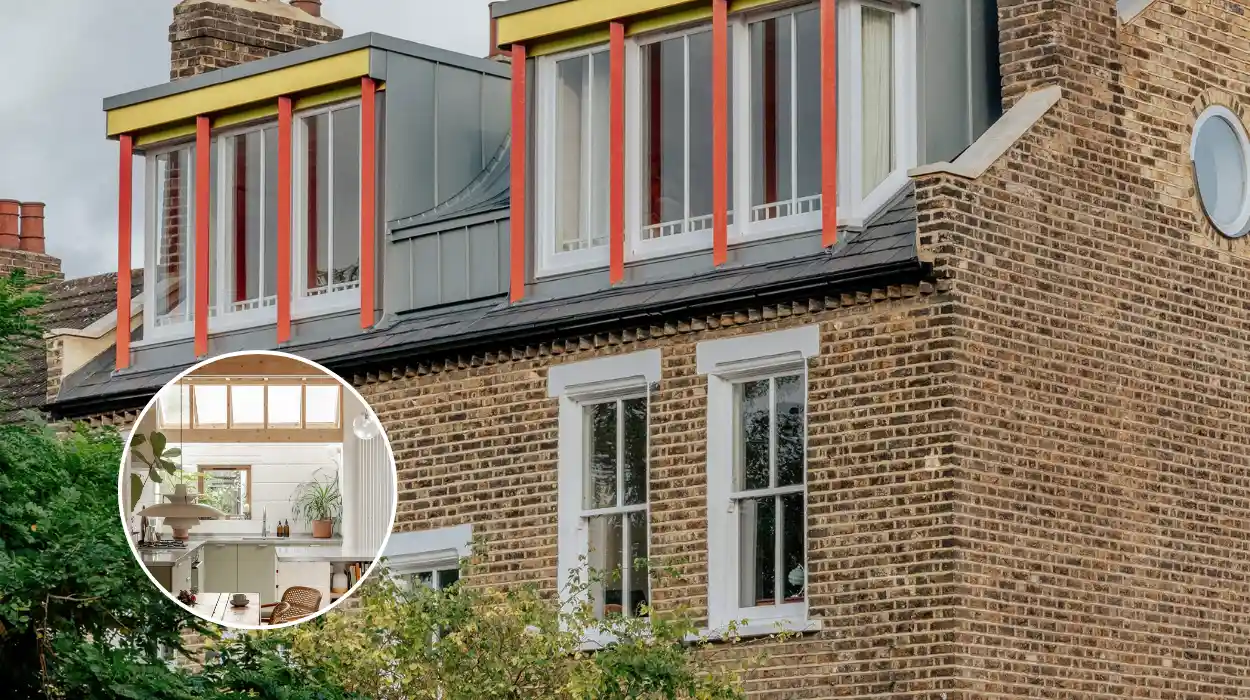
- OEB Architects has completed a “full-width shed” extension named “A Simple Addition” on a semi-detached, two-storey Victorian family home in Tottenham, north London.
- The 30-square-metre extension replaces the typical L-shaped or wraparound design common in London’s Victorian terraces, extending wider than the original house structure.
- It adds a generous new kitchen and dining room, built from simple, low-cost materials to serve as a “blank canvas” for the clients and their two young children.
- The design addresses the common issue of reduced ceiling height under the first-floor outrigger in small Victorian houses, which limits the spaciousness of traditional wraparound extensions.
- David Eland, co-founder of OEB Architects alongside Tessa Baird, led the project, emphasising that the full-width approach avoids a “weight pressing down” on the open-plan space.
- The extension offers an alternative to prevalent extension styles in London, prioritising functionality and cost-effectiveness over elaborate forms.
Inverted Pyramid Structure
As reported by Ellen Hancock of Dezeen on 10 December 2025, OEB Architects has unveiled “A Simple Addition”, a full-width house extension in north London that departs from conventional L-shaped designs by spanning the entire width of the original structure, providing a spacious kitchen and dining area for a family home in Tottenham.
- Key Points
- Inverted Pyramid Structure
- What Makes This Extension Different from Typical London Rear Additions?
- Why Did OEB Architects Choose Low-Cost Materials for the Project?
- How Does the Extension Enhance Family Living in a Victorian Terrace?
- What Challenges Do Victorian Houses in London Face with Extensions?
- Who Are OEB Architects and What Is Their Design Philosophy?
- Where Is the Project Located and What Is Tottenham’s Architectural Context?
- When Was the Extension Completed and What Are Its Dimensions?
- Why Is This Project Relevant to London’s Housing Market?
- How Can Homeowners Replicate This Design Approach?
The project transforms a semi-detached, two-storey Victorian terrace, adding 30 square metres of flexible space crafted from low-cost materials to act as a versatile blank canvas. David Eland, who co-founded OEB Architects with Tessa Baird, explained the rationale behind avoiding a wraparound layout.
“With a small Victorian house, there is often the issue of a reduced ceiling under the first-floor outrigger, limiting how spacious a wraparound extension can feel,”
Eland told Dezeen.
This approach ensures an open-plan area free from oppressive low ceilings, maximising light and volume for the clients and their two young children. The extension’s simplicity contrasts with the ornate additions often seen on London’s Victorian properties, offering a practical solution tailored to modern family needs.
What Makes This Extension Different from Typical London Rear Additions?
Traditional extensions on London’s Victorian terraces frequently adopt L-shaped or wraparound forms to incorporate side returns, but these can compromise headroom due to the protruding first-floor outrigger. As detailed by Ellen Hancock of Dezeen, OEB Architects opted for a “full-width shed” that extends beyond the original house’s footprint, realising it as
“the best way to give the clients and their two young children the space they needed”.
“We felt this lower section of ceiling would have had too much of an impact on any open-plan space, like a weight pressing down on it,”
Eland told Dezeen, highlighting the design’s focus on spatial generosity over incremental side expansions. The result is a clean, rectangular volume that integrates seamlessly with the existing structure, prioritising usability in a compact urban setting.
This innovation aligns with broader trends in London architecture, where architects seek efficient ways to expand period homes amid rising property demands and planning constraints.
Why Did OEB Architects Choose Low-Cost Materials for the Project?
The extension employs basic, economical materials to create a neutral “blank canvas”, allowing future adaptations without prescriptive aesthetics. Ellen Hancock of Dezeen noted that this pared-back palette avoids the decorative flourishes of many contemporary additions, emphasising affordability and longevity.
David Eland underscored the intentional restraint: the design’s simplicity ensures it serves the family’s immediate requirements while remaining adaptable for their evolving needs. In Tottenham’s context, where housing pressures drive frequent modifications, such pragmatism resonates with homeowners balancing budgets and aspirations.
OEB Architects’ ethos, as reflected in this project, favours understated interventions that enhance daily life over showy transformations.
How Does the Extension Enhance Family Living in a Victorian Terrace?
“A Simple Addition” introduces a light-filled kitchen and dining room at the rear, directly addressing the spatial shortcomings of the original layout. According to Dezeen’s coverage by Ellen Hancock, the full-width format floods the space with natural light and maintains consistent ceiling heights, fostering an open-plan environment ideal for young children.
Tessa Baird and David Eland’s studio recognised the clients’ need for communal areas that support family routines without the constraints of narrower designs. Eland elaborated to Dezeen on the psychological benefits: eliminating the “pressing down” effect of low ceilings creates a sense of expansiveness in an otherwise modest home.
This extension exemplifies how targeted rear additions can revitalise terraced houses, common across north London boroughs like Haringey, where Tottenham resides.
What Challenges Do Victorian Houses in London Face with Extensions?
Small Victorian properties often feature outriggers—protrusions housing bathrooms or stairs—that lower ceiling heights in side-return areas, hampering open-plan ambitions. As reported by Ellen Hancock of Dezeen, OEB Architects identified this as a key limitation:
“With a small Victorian house, there is often the issue of a reduced ceiling under the first-floor outrigger”.
The full-width solution circumvents these structural quirks by projecting outward uniformly, preserving volume throughout. Eland’s insight to Dezeen reveals a thoughtful response:
“We felt this lower section of ceiling would have had too much of an impact on any open-plan space”.
Such challenges are ubiquitous in London’s conservation areas, where planning rules favour sympathetic extensions that respect heritage while meeting contemporary standards.
Who Are OEB Architects and What Is Their Design Philosophy?
OEB Architects, founded by David Eland and Tessa Baird, specialises in residential projects that blend practicality with sensitivity to existing buildings. Their website (oebarchitects.co.uk) showcases a portfolio attuned to London’s dense urban fabric, as referenced in Dezeen’s article by Ellen Hancock.
In “A Simple Addition”, the duo’s philosophy shines through: prioritising client needs over stylistic excess. Eland’s comments to Dezeen affirm this: the extension was conceived to deliver essential space efficiently for the Tottenham family.
The studio’s work contributes to ongoing discussions in UK architecture about sustainable, cost-effective home improvements amid the housing crisis.
Where Is the Project Located and What Is Tottenham’s Architectural Context?
Situated in Tottenham, north London, the home exemplifies the semi-detached Victorian terraces prevalent in Haringey borough. Ellen Hancock of Dezeen pinpointed the location as a typical two-storey property ripe for sensitive expansion.
Tottenham’s building stock, largely from the late 19th century, faces intense modification pressures due to population growth and limited land. OEB’s intervention offers a model for neighbours, diverging from the “typical L-shaped extension” dominating the area.
Local planning authorities encourage such innovations to improve living standards without altering streetscapes dramatically.
When Was the Extension Completed and What Are Its Dimensions?
Unveiled on 10 December 2025 via Dezeen, the project spans 30 square metres, forming a compact yet impactful rear addition. As covered by Ellen Hancock, “A Simple Addition” was built to integrate a new kitchen and dining room seamlessly.
The timeline reflects OEB Architects’ efficient process, delivering a functional space amid London’s protracted planning cycles. David Eland’s involvement ensured timely realisation of the full-width concept.
Precise dimensions underscore its modesty: wider than the host building but restrained in depth to suit the garden plot.
Why Is This Project Relevant to London’s Housing Market?
With London’s population nearing 10 million and Victorian homes comprising much of the stock, extensions like this address acute space shortages affordably. Dezeen’s Ellen Hancock highlighted its role as an
“alternative to the wraparound extensions that are commonly added to London’s Victorian terraces”.
For families in areas like Tottenham, where average house prices exceed £500,000, such designs democratise enlargement. Eland’s strategy—eschewing complexity for a “shed” form—lowers costs while maximising utility.
The project informs SEO-optimised discussions on sustainable retrofits, appealing to homeowners researching “London house extensions”.
How Can Homeowners Replicate This Design Approach?
Prospective clients should consult architects versed in period properties, prioritising site-specific assessments of outriggers and light paths. OEB’s model, as detailed by Dezeen, starts with client briefs focused on family dynamics.
Engage professionals like David Eland and Tessa Baird early to model full-width options via software. Budget for low-cost materials to maintain the blank canvas appeal, ensuring RIBA-chartered oversight for planning compliance.