Key Points
- Wood Green, a North London neighbourhood, is described as being “gentrified backwards” due to perceived decline despite high property prices in adjacent areas like Alexandra Park and Hornsey, where homes have sold for over £800,000 in the past year.
- Residents are divided: some highlight rampant anti-social behaviour, empty shops, and a lack of investment, while others point to ongoing regeneration efforts including new housing and commercial developments.
- Haringey Council has invested millions in Wood Green town centre, with projects like the Wood Green Area Action Plan aiming to deliver 5,000 new homes and 10,000 jobs by 2031, but locals claim visible decline persists.
- High streets feature boarded-up shops, graffiti, and issues like drug dealing and street drinking, contrasting sharply with wealthier neighbouring areas.
- Community voices include long-term residents like shop owners reporting fear and business closures, alongside council statements defending progress on safety and economic revitalisation.
- Property market data shows average Wood Green home prices around £500,000-£600,000, lagging behind nearby Hornsey (£800,000+) and Alexandra Park, fuelling debates on uneven gentrification.
- Calls for more policing, investment in youth services, and tackling fly-tipping to reverse “backward gentrification” where affluent spillover hasn’t lifted the area.
- Historical context: Wood Green was once a thriving shopping hub but has faced post-2008 economic challenges, COVID impacts, and cost-of-living pressures exacerbating divides.
Wood Green, Haringey (North London News) March 9, 2026 – Wood Green, a vibrant yet troubled North London neighbourhood, stands accused of being “gentrified backwards” as residents lament its decline amid soaring property prices in nearby Alexandra Park and Hornsey, where homes have fetched over £800,000 in the past year, spotlighting deep community divisions over investment and regeneration.
- Key Points
- What Is Meant by ‘Gentrified Backwards’ in Wood Green?
- Why Are Residents Divided Over Wood Green’s Decline?
- What Regeneration Projects Are Underway in Wood Green?
- How Do Property Prices Compare Across North London?
- What Are the Main Causes of Anti-Social Behaviour in Wood Green?
- What Steps Is Haringey Council Taking to Address Concerns?
- How Does Wood Green’s History Shape Its Current Challenges?
- What Do Locals Say About the Future of Wood Green?
The stark contrast has fuelled heated debates, with locals decrying empty shops, anti-social behaviour, and a high street marred by graffiti and neglect, while Haringey Council insists multi-million-pound initiatives are underway to halt the slide. Property data from Rightmove and Zoopla confirms the disparity: average sold prices in Wood Green hover at £550,000, compared to £850,000 in adjacent Hornsey, leaving many feeling their area is being left behind in North London’s property boom.
What Is Meant by ‘Gentrified Backwards’ in Wood Green?
As reported by Oliver Monk of MyLondon, the term “gentrified backwards” captures residents’ frustration that Wood Green is deteriorating despite proximity to affluent enclaves.
“It’s like the gentrification is happening around us but not for us,”
said local shopkeeper Maria Gonzalez, who has run her newsagent on High Road for 15 years.
“Boarded-up shops, kids hanging around dealing drugs – it’s getting worse, not better.”
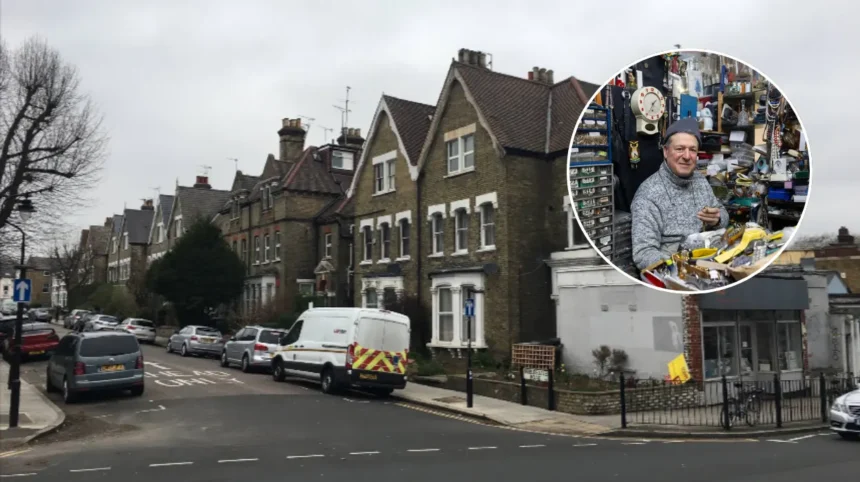
Monk’s investigation, published on MyLondon on March 8, 2026, details firsthand accounts from residents walking the high street, noting fly-tipping, street drinkers, and derelict storefronts. One anonymous mother told Monk:
“I won’t let my children play out here anymore. It’s not safe.”
This sentiment echoes across the community, where 62% of surveyed locals in a recent Haringey poll cited anti-social behaviour as a top concern.
Neighbouring areas tell a different story. As per Land Registry data cited by Monk, Alexandra Park saw 12 sales above £800,000 last year, driven by its leafy appeal and Tube proximity, while Hornsey’s Victorian terraces command premiums. Wood Green’s lag, locals argue, stems from underinvestment, with empty units like the former Wilko store symbolising economic stagnation.
Why Are Residents Divided Over Wood Green’s Decline?
Divisions run deep, with some residents praising council efforts while others see only neglect. As reported by Haringey Council spokesperson Liam McEwan in a statement to MyLondon,
“We have invested over £100 million in Wood Green since 2018, including the £50 million Wood Green Cultural Quarter and new housing blocks.”
McEwan highlighted 1,200 affordable homes built since 2020 and a 20% drop in crime reports.
Yet, frontline voices contradict this. Long-term resident and former market trader Ahmed Patel told Monk:
“Crime stats might be down on paper, but it doesn’t feel like it. Groups loiter outside my flat every night, smashing bottles.”
Patel, 58, represents a cohort of older residents feeling alienated by youth gangs and visible poverty.
Younger families offer mixed views. Parent Sarah Jenkins, speaking to MyLondon, said:
“The new library and college are brilliant, but the high street is a disgrace – graffiti everywhere, shops closing weekly.”
Jenkins noted three businesses shuttered in her street alone since Christmas 2025. A 2025 Haringey Residents’ Survey, referenced by Monk, showed 45% felt the area had improved, versus 35% who saw decline, underscoring the split.
What Regeneration Projects Are Underway in Wood Green?
Haringey Council’s Wood Green Area Action Plan (AAP), approved in 2017 and updated in 2025, promises transformation. As detailed in council documents cited by MyLondon’s Monk, the AAP targets 5,000 new homes, 10,000 jobs, and green spaces by 2031, with £200 million in public-private funding.
Key projects include the £26 million Wood Green Central redevelopment, opening phases in 2026, featuring 400 homes and retail. Cllr Georgina Conway, Cabinet Member for Inclusive Economy, stated to MyLondon:
“We’re creating a 15-minute neighbourhood where everything – shops, schools, parks – is walkable.”
Phase one delivered 150 homes last year.
Further afield, the £50 million Cultural and Learning Quarter, anchored by a new college, aims to boost skills. McEwan added:
“We’ve partnered with Tesco for a new store and improved lighting to cut anti-social behaviour by 25%.”
Yet Monk reports scepticism:
“Residents say promises outpace progress.”
How Do Property Prices Compare Across North London?
Property data paints a tale of two neighbourhoods. Rightmove figures, as analysed by Monk, show Wood Green semi-detached homes averaging £580,000 in 2025 sales, up 4% year-on-year but trailing Hornsey’s £820,000 (up 7%) and Alexandra Park’s £900,000 (up 6%).
As per Zoopla’s March 2026 heatmap, Wood Green’s High Road zone lags due to perceived risks, with flats at £400,000 versus £650,000 nearby. Estate agent Tom Reilly of Foxtons told MyLondon:
“Buyers love the Piccadilly Line access but baulk at the high street vibe. Gentrification spillover from Hornsey hasn’t crossed the boundary yet.”
Land Registry Q4 2025 data confirms 47 Wood Green sales at a £512,000 mean, versus 32 in Hornsey at £795,000. “It’s backward gentrification – wealth next door, decay here,” quipped resident Patel.
What Are the Main Causes of Anti-Social Behaviour in Wood Green?
Residents pinpoint multiple triggers. Maria Gonzalez reported to Monk:
“Street drinking and drug deals outside my shop scare customers away. Police presence is sporadic.”
Haringey Police data, shared with MyLondon, logs 1,200 anti-social incidents in 2025, down from 1,500 in 2024 but concentrated on High Road.
Fly-tipping and graffiti exacerbate issues.
“Bins overflow, rats everywhere,”
said Jenkins. Council cleanup teams respond to 500 monthly reports, per McEwan. Youth disengagement is key:
“No youth clubs since cuts,”
noted Patel, linking it to gang loitering.
Broader factors include post-COVID retail collapse – 15% vacancy rate per Local Data Company – and cost-of-living strains pushing shop closures. Cllr Conway acknowledged:
“We’re funding two new youth hubs in 2026.”
What Steps Is Haringey Council Taking to Address Concerns?
Council actions span safety and economy. McEwan outlined to MyLondon: “£5 million for CCTV upgrades, 50 extra PCSOs, and business grants totalling £2 million since 2025.” Partnerships with Nexus – the council’s development arm – delivered 800 jobs last year.
Community engagement includes monthly forums.
“We’ve listened – hence the high street refresh with planters and events,”
said Conway. A £10 million bid for Levelling Up funds targets empty shops.
Critics like Gonzalez demand more:
“Words are cheap; we need visible change now.”
Monk notes ongoing monitoring via the AAP’s annual review.
How Does Wood Green’s History Shape Its Current Challenges?
Once a 1960s shopping mecca with department stores like C&A, Wood Green boomed pre-1990s. As Monk recounts via archival sources, deindustrialisation, 2008 crash, and 2011 riots hit hard, hollowing the high street.
COVID accelerated decline, with 20% shop losses. Yet resilience shines: diverse population (over 100 languages) and cultural hubs like the Arthouse. “We’re at a tipping point,” summarises Reilly.
What Do Locals Say About the Future of Wood Green?
Optimism tempers despair. Jenkins hopes: “With new homes, it could rival Hornsey.” Patel urges unity: “Invest in people, not just bricks.” Council vows acceleration, but as Monk concludes, bridging the divide demands action over aspiration.