Key Points
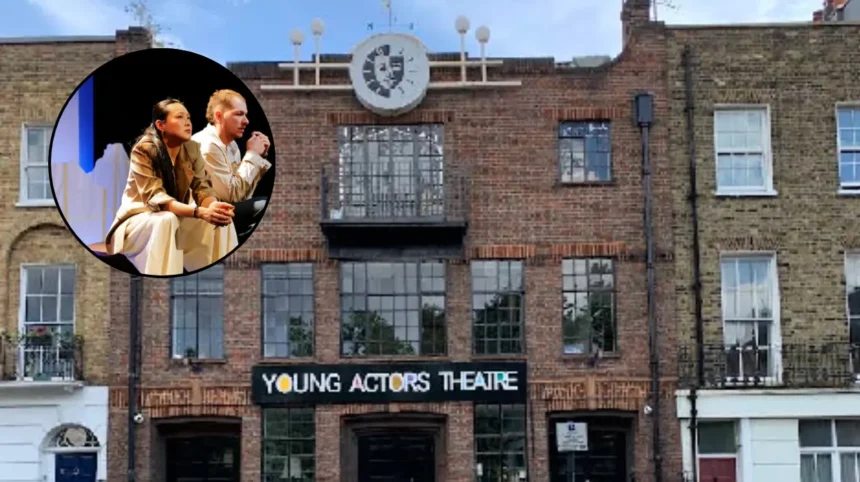
- Writer and director Jay Yu-Chieh Chiu’s play Island Tides ran at the Young Actors Theatre Islington until 30 August 2026 as part of the Camden Fringe.
- Scenographer Tzung-Hui Lauren Lee built a jagged torn-paper backdrop for the stage, paired with lighting designed by Felix Weis.
- The show uses a TV studio setup where audience members use QR codes to vote on whether a couple in a failing marriage should stay together.
- The cast includes Chia-Yi Chan as divorce lawyer June, Daniel Popescu as intimacy consultant Ian, and Pedro Monteiro as the TV host, with Pauline Chabosseau and Iacopo Farusi playing Mr and Mrs Smith in pre-recorded video segments.
- Writing for The Reviews Hub, critic Phoebe Taplin noted that while the production features skilled work and strong individual elements, the overall play is less than the sum of its parts.
North London (North London News) August 31, 2026 – Experimental theatre production Island Tides, written and directed by Jay Yu-Chieh Chiu, concluded its scheduled run at the Young Actors Theatre Islington as part of the Camden Fringe 2026 festival. As reported by theatre critic Phoebe Taplin of The Reviews Hub, the multidisciplinary piece incorporates live performance, audience voting, pre-recorded cinematic sequences, and multi-genre dialogue to examine modern communication and romantic relationships.
- Key Points
- How Was the Stage Designed for the TV Studio Setting?
- How Do the Central Characters Interact on Stage?
- What Role Does the Audience Play in the Narrative?
- How Are Mr and Mrs Smith Portrayed in the Production?
- Background of the Particular Development
- Prediction: How This Development Can Affect Emerging Theatre Creators and Fringe Audiences
How Was the Stage Designed for the TV Studio Setting?
The physical layout of the production is configured to replicate a television broadcasting space, featuring two central chairs positioned before a projected backdrop. As noted by Phoebe Taplin of The Reviews Hub, scenographer Tzung-Hui Lauren Lee constructed a low, jagged physical landscape made of torn paper. This sculptural design changes colour throughout the staging, synchronized with a sunset-vibrant lighting scheme designed by Felix Weis.
Beyond the live stage presentation, the overall output brings together a ensemble of five cast members, twelve creative team members, and a secondary production crew dedicated strictly to filming the cinematic portions that run parallel to the live performance.
How Do the Central Characters Interact on Stage?
The live narrative centres on a structured debate between two relationship professionals before the audience. As detailed by Phoebe Taplin of The Reviews Hub, actress Chia-Yi Chan plays divorce lawyer June (styled as the “Queen of Divorce”) with commitment and focus, wearing a wide-legged ensemble designed by Diana Dublewicz. Chan’s character engages in spirited debate against intimacy consultant Ian, warmly portrayed by actor Daniel Popescu.
Taplin notes that Ian’s role operates essentially as a relationship counsellor seeking reconciliation through therapy, establishing a conceptual clash between his approach and June’s legalism. Taplin observed that Chiu’s script mixes multiple stylistic choices, including rhyming verse, rap-battle formats, Socratic-style philosophical exchanges, and prose drawn from psychological self-help literature, interspersed with moments of expressive dance.
What Role Does the Audience Play in the Narrative?
The performance structures romantic relationship breakdown into a piece of public entertainment. As highlighted by Phoebe Taplin of The Reviews Hub, actor Pedro Monteiro plays an energetic television host who enters the stage to prompt audience interaction. Patrons are asked to cast votes using QR codes distributed upon entry to decide whether the central married couple—Mr and Mrs Smith—should undergo therapy to remain together or permanently end their relationship.
Taplin reported that the show evokes popular reality broadcasting frameworks such as Love Island and Love is Blind, contrasting binary studio decisions against complex human situations. Throughout the discussions, June and Ian repeat the core phrase “We are not communicating” as a mantra, moving from rigid TV tropes toward more nuanced real-life options over the course of the hour-long dialogue.
Explore More Local North London News
Tenant Wins £8k Rent Repayment Over Unlicensed Muswell Hill HMO 2026
Neasden Waste Facility Fire Triggers Major London Rail Chaos 2026
How Are Mr and Mrs Smith Portrayed in the Production?
The subjects of the debate, Mr and Mrs Smith, appear exclusively through filmed segments set inside a real suburban house. As reported by Phoebe Taplin of The Reviews Hub, actors Pauline Chabosseau and Iacopo Farusi play the couple. Taplin observed that while Chabosseau delivers an emotionally engaging individual performance, the depicted marriage appears severely strained, with both characters spending time hiding in cupboards to record personal vlogs.
The narrative references an underlying tragedy involving a son named Henry, though Taplin indicated this specific plot line remains unexpanded. Metaphorically, the production derives its name in part from 17th-century poet John Donne’s work (“No man is an island entire of itself; every man is a… part of the main”), exploring themes of social connection and isolation.
Background of the Particular Development
The Camden Fringe festival, established in 2006, serves as an annual performing arts festival held across various venues in the London Borough of Camden and surrounding areas such as Islington. Designed as an accessible platform for experimental, work-in-progress, and fringe performing arts, the event showcases hundreds of alternative comedy, dance, musical, and theatrical productions each August.
Island Tides represents an extension of contemporary fringe theatre trends that merge live stage performance with digital interactive elements and cinematic media. The integration of audience smartphone voting via QR codes reflects an ongoing movement within experimental theatre to break down the traditional “fourth wall” and mirror screen culture. Hosted at the Young Actors Theatre Islington (YATI)—a venue known for cultivating emerging talent and experimental work—the play reflects the growing inclination of contemporary playwrights to critique reality television and social media’s impact on interpersonal relationships.
Prediction: How This Development Can Affect Emerging Theatre Creators and Fringe Audiences
The staging of hybrid, multi-media productions like Island Tides at fringe festivals provides key indicators for the future direction of independent theatre, impacting both creators and audiences in specific ways:
- For Independent Theatre Producers and Creatives: The ambitious scope of Island Tides—utilising separate film crews, complex set designs, and interactive tech integration—demonstrates how small-scale fringe budgets are increasingly used to deliver multi-platform experiences. However, critical responses highlighting script fragmentation suggest that creative teams will need to focus on balancing technical experimentation with coherent storytelling. Future creators will likely refine how digital tools (such as live QR polling) are integrated so they enhance rather than distract from core character development.
- For Fringe Audiences and Theatre Patrons: Viewers attending fringe events are increasingly expected to transition from passive observers to active participants. The incorporation of real-time polling and familiar pop-culture formats (like reality TV framing) lowers the barrier of entry for younger or non-traditional theatregoers. As this trend continues, audiences can expect a higher prevalence of media-blended productions across London’s fringe network, encouraging greater direct engagement with live performances.