Key Points
- Weekend Exit-Only Operational Plan: Transport for London (TfL) has announced that Angel Tube station will operate as exit-only on Saturdays, Sundays, and bank holidays starting 2 January 2027 to preserve its aging escalators.
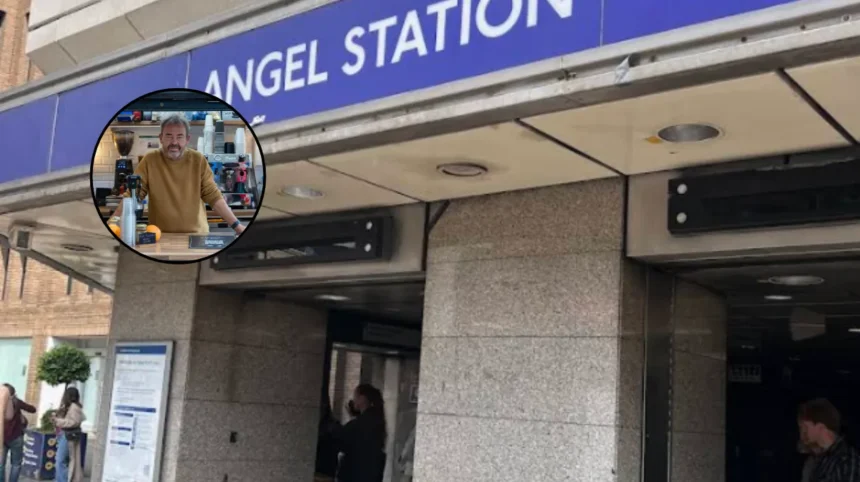
- Local Business Impact: Local trader Jerry Lay, who has operated Jerry’s coffee kiosk opposite the station entrance for six years, projects an immediate revenue drop of at least 10 per cent due to reduced weekend footfall.
- Escalator Maintenance Crisis: Angel station relies on three escalators—the longest on the London Underground network—which have been in service for nearly 35 years. The central escalator has been out of service since April, leaving concerns that the remaining two could fail within the next couple of years.
- Political Backlash: Islington Council Leader Una O’Halloran has openly criticised Transport for London, accusing the transport authority of waiting until the escalators failed before establishing a mitigation plan.
- Projected Operational Lifetime: The weekend restriction will reduce escalator running time by 38 hours a week (28.6 per cent over four weeks), taking pressure off the mechanism while TfL conducts design work for full replacement.
- Passenger Diversions: Transport for London advises passengers who normally enter at Angel on affected days to use King’s Cross St Pancras station, located 1km away, or utilise local bus routes including the 30, 73, 205, 214, and 476.
Islington (North London News) October 31, 2026 — Transport for London (TfL) faces mounting criticism from local business owners and council leadership following its decision to convert Angel Tube station to exit-only operation on weekends and bank holidays beginning 2 January 2027. The operational alteration, designed to stretch the remaining working lifespan of the station’s heavily degraded escalators, has sparked fears of severe commercial disruption across the Islington high street. Small business operators, including local coffee vendor Jerry Lay, warn that turning away entry passengers at one of North London’s busiest transport hubs will suppress essential weekend commerce, while local authority leaders allege that transport executives failed to prepare adequate structural contingencies in advance of mechanical failure.
- Key Points
- Why Are Local Traders Concerned About the Angel Tube Station Exit-Only Plan?
- Why Has Islington Council Criticised Transport for London’s Handling of the Escalator Upgrades?
- What Led to the Infrastructure Crisis at Angel Underground Station?
- Background of the Escalator Modernisation and Station Redevelopment
- Prediction: How This Development Can Affect Local Traders, Passengers, and Property Owners
Why Are Local Traders Concerned About the Angel Tube Station Exit-Only Plan?
The announcement of partial weekend operational restrictions has triggered immediate alarm among independent businesses operating in the immediate vicinity of Upper Street and Islington High Street.
As reported by Agenda Editor Luke Donnelly of MyLondon, Jerry Lay, who has managed Jerry’s coffee kiosk directly opposite the station entrance for six years, stated:
“How long will the station be exit-only at weekends? Is there a plan to increase this? This is what I haven’t heard. I’m already facing high taxation, so I could do without 10 per cent losses, particularly on a Saturday, which can be extremely good. The area becomes a lot more unattractive if you can’t come to it easily and leave easily”.
Mr Lay pointed out that while weekday commuter footfall should remain stable, weekend trading conditions represent a significant portion of local retail margin. Concerns have also been expressed regarding TfL’s long-term communication strategy and whether partial closures presage a total closure of the station for escalator replacement works in future years.
Why Has Islington Council Criticised Transport for London’s Handling of the Escalator Upgrades?
The decision by TfL to impose partial station restrictions has brought public pushback from local political representatives, who argue that public consultation and inter-agency planning were delayed until physical infrastructure had already broken down.
As reported by Islington Council News, Councillor Una O’Halloran, Leader of Islington Council, issued a statement regarding TfL’s management of the asset crisis:
“Angel is one of Islington’s most vibrant and important neighbourhoods, with a thriving mix of independent businesses, cultural venues, and a strong local community. We understand the need for TfL to carry out essential maintenance to ensure Angel tube station remains safe, but we are deeply concerned about the impact of TfL’s decision to make it exit-only at weekends for a prolonged period. Making it harder for people to reach Angel risks affecting local businesses, jobs, and the wider area”.
Councillor O’Halloran further highlighted administrative friction regarding the timing of notification, adding:
“We have raised our concerns directly with TfL regarding the handling of the situation, and the way that the council and local community were brought into the conversation at a late stage. We now want to see TfL work closely with the council, local businesses, and the community to minimise disruption, and to explore what more can be done to support Angel during this period”.
What Led to the Infrastructure Crisis at Angel Underground Station?
The operational crisis stems from the age and physical dimensions of the station’s vertical transport system. Angel Tube station features three escalators measuring 60 metres in length with a vertical rise of 27.5 metres, making them the longest escalators on the entire London Underground network.
As reported by London Centric and Islington Tribune, the central escalator at Angel has been out of service due to mechanical failure since April, putting full operational demand onto the remaining two units. Infrastructure assessments indicate that without operational intervention, the two functioning escalators face potential mechanical breakdown within the next two years.
By switching to exit-only operation on 52 Saturdays, 52 Sundays, and seven bank holidays—totaling 111 operational days in 2027—TfL estimates it will reduce overall escalator operational time by 38 hours per week, representing a 28.6 per cent reduction in wear over four-week cycles.
As reported by Islington Tribune, a spokesperson for Transport for London stated:
“The escalators at Angel have been in service for almost 35 years and are becoming less reliable and increasingly difficult to maintain. Their size means renewal or replacement is a challenging, expensive project and we are currently exploring all options possible to extend their working life”.
The spokesperson added:
“Making the station exit-only during specific periods will allow us to extend the working life of the escalators and give us more time to plan our next steps, with design work on replacing the escalators to begin this autumn. I understand that any disruption to the station will have an impact on customers, businesses and the local community and we will do all we can to work closely with local stakeholders to ensure that we mitigate the disruption as much as possible”.
During the exit-only periods, passengers seeking to join the Northern line are directed to travel 1km west to King’s Cross St Pancras station via local bus connections, including routes 30, 73, 205, 214, and 476.
Background of the Escalator Modernisation and Station Redevelopment
The underlying infrastructure challenges at Angel originate from the station’s major reconstruction during the late 1980s and early 1990s. Originally opened in 1901 by the City and South London Railway, Angel was built with a narrow island platform design and deep-level lifts.
To resolve extreme platform overcrowding, London Underground executed a comprehensive structural overhaul between 1989 and 1992. The project involved excavating a new large-diameter tunnel to accommodate a wide northbound platform, converting the old tunnel into a dedicated southbound platform, and constructing a new ticket hall with a 60-metre incline shaft for three parallel escalators.
When re-opened in May 1992, these escalators were the longest on the Underground system (a record subsequently shared in length scale across deep-level Northern line stations). Operating up to 19 hours a day, seven days a week, the assets have processed an estimated 12 million passengers annually.
Because the escalator shaft was engineered precisely around the 1990s mechanical assemblies, complete replacement requires custom structural design, heavy component extraction, and extensive civil engineering. Unlike standard station escalators, full replacement cannot be executed during overnight maintenance windows, presenting transport planners with a choice between long-term partial restrictions or full, continuous station closures.
Prediction: How This Development Can Affect Local Traders, Passengers, and Property Owners
The implementation of exit-only operations at Angel station starting in 2027 is projected to create multi-faceted operational and financial impacts across key local stakeholder groups:
1. Independent Retailers and Hospitality Operators
For small businesses operating adjacent to the station—such as street kiosks, independent cafes, bars, and retail shops—the reduction in weekend entry access will alter pedestrian movement patterns. While visitors arriving in Angel will still exit through the station, returning visitors will be forced to walk to alternative stations (such as King’s Cross St Pancras or Highbury & Islington) or use surface transport. This dynamic threatens to truncate leisure visits, reduce impulse purchasing along Upper Street, and decrease total weekend dwell time. Venues reliant on evening and weekend night-economy trade may experience margin compression alongside ongoing fixed cost pressures, such as business rates and commercial rent.
2. Local Residents and Commuters
Islington residents accustomed to direct Northern line entry at weekends will experience increased journey times and reduced transport convenience. Passengers with mobility limitations or heavy luggage will face added friction, as reliance shifts toward local bus connections to reach King’s Cross St Pancras. If weekend congestion on surrounding bus routes increases, overall journey reliability across North London transport corridors may deteriorate during peak weekend shopping hours.
3. Transport for London Infrastructure Management
By implementing exit-only restrictions, TfL gains operational buffer time to finalize engineering designs for complete escalator replacement. However, if the remaining operational escalators suffer unforeseen mechanical faults prior to the formal replacement phase, TfL may be forced to transition from partial weekend exit-only rules to an unplanned, total station closure. Proactive stakeholder management and clear engineering timelines will determine whether public confidence in local transport management can be maintained during the multi-year refurbishment process.