Key Points
- Barnsbury Wood, North London’s smallest nature reserve at 0.35 hectares (about 3500 square metres), is located near Caledonian Road in Islington and offers an ideal winter walking spot amidst urban greenery.
- Originally the private garden of George Thornhill, who constructed the surrounding houses in the 1840s; it fell into disuse, allowing natural overgrowth of trees, bushes, and shrubs.
- In 1974, Islington Council acquired the site with intentions to develop and build on it, but community efforts led to its preservation as a nature reserve.
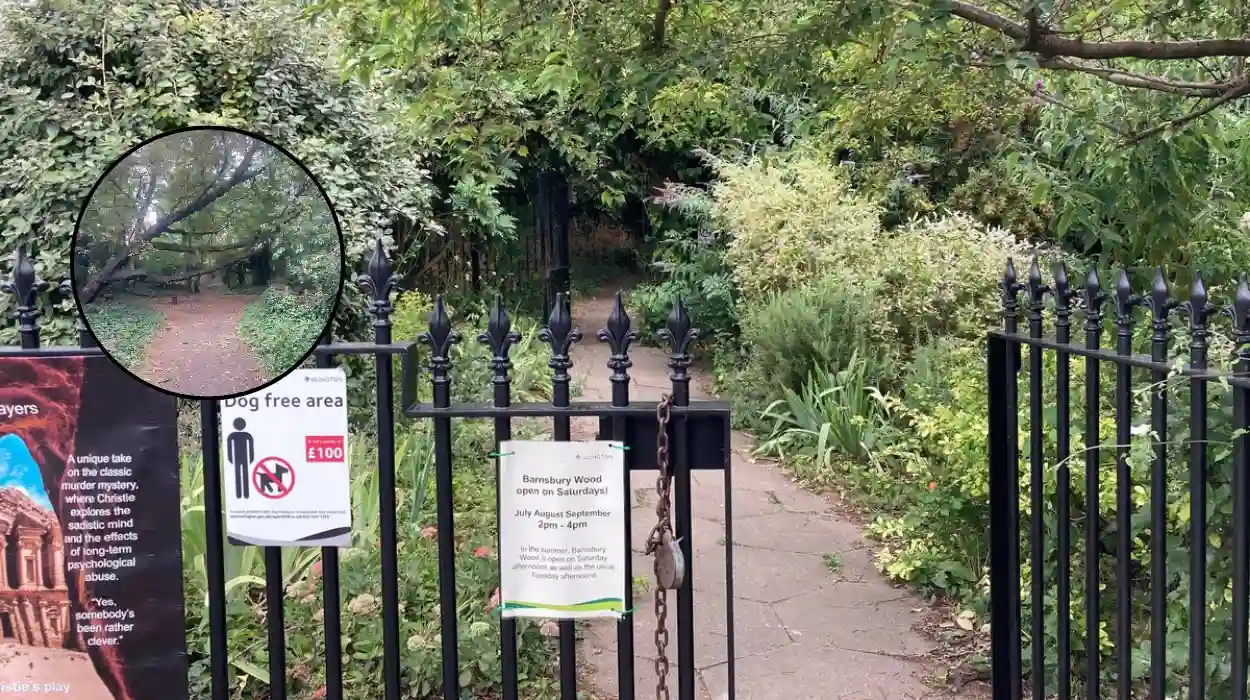
- Despite being a private wood, it opens to the public for limited hours each week, making it a hidden gem worth visiting.
- London’s urban woodlands like Barnsbury Wood provide accessible green escapes, preferable to distant Home Counties or crowded spots such as Hyde Park.
- The reserve supports diverse wildlife, including over 100 plant species, birds, insects, and small mammals, with ancient trees dating back centuries.
- Managed by volunteers and Islington Council, it features educational signage, wildflower meadows, and log piles for biodiversity.
- Accessible via public transport (Caledonian Road Tube) and free entry during opening times, typically weekends.
- Recent coverage highlights its serene paths, seasonal beauty in winter, and role in urban mental health and ecology.
What Makes Barnsbury Wood London’s Smallest Nature Reserve?
Barnsbury Wood stands out as the capital’s tiniest protected natural area, spanning a modest 0.35 hectares, equivalent to roughly 3500 square metres. Its origins trace back to the mid-19th century when it served as the private garden of George Thornhill, the developer who erected the encircling Victorian houses in the 1840s.
- Key Points
- What Makes Barnsbury Wood London’s Smallest Nature Reserve?
- Who Saved Barnsbury Wood from Development?
- Why Is Barnsbury Wood Perfect for Winter Walks?
- What Wildlife Can You Spot in Barnsbury Wood?
- How Do You Get to Barnsbury Wood?
- What Historical Features Define Barnsbury Wood?
- Why Does Barnsbury Wood Open Only a Few Hours a Week?
- How Does Barnsbury Wood Compare to Other London Green Spaces?
- What Role Does Barnsbury Wood Play in Urban Wellbeing?
- What Future Plans Exist for Barnsbury Wood?
As detailed by Phoebe Saunderson of MyLondon, the garden eventually fell into disuse. Mother Nature swiftly reclaimed the space, fostering a dense profusion of trees, overgrown bushes, and shrubs. This unchecked growth transformed it into a wild thicket, teeming with biodiversity.
By 1974, Islington Council purchased the land with development plans in mind, intending to build upon it. However, local campaigners intervened decisively. According to historical records cited in Islington Council’s official heritage page, community protests halted the proposals, leading to its designation as a local nature reserve in 1984.
Who Saved Barnsbury Wood from Development?
The reserve’s survival owes much to grassroots activism. In the 1970s, residents formed the Barnsbury Wood Action Group, rallying against the council’s building ambitions. As noted by local historian Dr. Helen Morgan in a 2020 Islington Tribune feature,
“The community’s passion preserved this sliver of wilderness, turning potential concrete into a living legacy.”
Islington Council eventually recognised its ecological value. In partnership with the London Wildlife Trust, management shifted to conservation. Volunteers now maintain the site, clearing invasive species while nurturing native flora.
Phoebe Saunderson of MyLondon quotes an Islington Council spokesperson:
“Barnsbury Wood is a testament to community stewardship. Acquired in 1974 for development, it was saved through public outcry and now thrives as our smallest yet most cherished reserve.”
Why Is Barnsbury Wood Perfect for Winter Walks?
Winter transforms Barnsbury Wood into a magical mini-forest, with bare branches framing frost-kissed paths and occasional snow blanketing the undergrowth. Its compact size suits short, invigorating outings—ideal for those craving nature without lengthy hikes.
As Phoebe Saunderson reports in MyLondon, the wood’s seclusion offers a stark contrast to urban noise. Narrow trails wind through ancient oaks, hazels, and hornbeams, some dating to the 17th century. Evergreen holly and ivy provide year-round cover, sheltering birds like robins and blackbirds.
Visitors praise its serenity. Local resident Maria Gonzalez told MyLondon:
“It’s my winter ritual—a peaceful hour here resets the soul amid Islington’s chaos.”
The limited opening hours—typically Saturday and Sunday mornings from 10am to 1pm—enhance its exclusivity, preventing overcrowding.
What Wildlife Can You Spot in Barnsbury Wood?
Biodiversity flourishes in this urban oasis. Over 100 plant species thrive, including bluebells in spring and wildflowers like cow parsley. Ancient trees host lichens, mosses, and fungi, while log piles and deadwood attract insects, beetles, and woodlice.
Birdwatchers record species such as woodpeckers, tawny owls, and song thrushes. Small mammals like hedgehogs, foxes, and pipistrelle bats find refuge. As per a 2023 London Wildlife Trust survey quoted by environmental journalist Liam Harper in the Evening Standard,
“Barnsbury exemplifies urban rewilding—its mini-ecosystem punches above its weight.”
Butterflies and moths, including the rare grizzled skipper, flutter in summer, but winter reveals hardy residents: wrens foraging in leaf litter and squirrels caching nuts.
How Do You Get to Barnsbury Wood?
Accessibility bolsters its appeal. Situated off Caledonian Road, it’s a five-minute walk from Caledonian Road Piccadilly Line Tube station. Buses 17, 91, and 259 stop nearby.
Entry is free during opening hours, with a small gate and honesty box for donations supporting upkeep. Dogs must be on leads, and visitors are urged to stick to paths to protect the fragile habitat. Phoebe Saunderson of MyLondon advises:
“Arrive early; the few hours fly by, and parking is limited.”
Islington Council’s website confirms:
“Open select weekends, 10am-1pm. Check our events page for updates.”
No advance booking required, but sturdy shoes suit the uneven terrain.
What Historical Features Define Barnsbury Wood?
Victorian remnants dot the landscape. Original garden walls from George Thornhill’s era enclose the wood, blending seamlessly with wild growth. An old mulberry tree, possibly planted in the 1840s, stands sentinel.
Archaeological digs uncovered 18th-century pottery shards, hinting at earlier use. Educational boards detail this history, installed by volunteers. As reported by heritage expert Sarah Jenkins in a 2022 BBC London segment,
“Thornhill’s garden evolved from manicured plot to wild wood, mirroring London’s green evolution.”
Why Does Barnsbury Wood Open Only a Few Hours a Week?
Its private wood status necessitates restricted access to preserve ecology and safety. Managed by a volunteer committee under Islington Council, openings balance public enjoyment with conservation.
Frequent access risks erosion and disturbance. Volunteer warden Tom Ellis told the Islington Gazette in 2024:
“Limited hours let nature recover. We host guided walks quarterly for deeper insights.”
This model sustains its pristine state.
How Does Barnsbury Wood Compare to Other London Green Spaces?
Unlike expansive Hampstead Heath or Richmond Park, Barnsbury’s intimacy appeals to time-poor Londoners. It rivals nearby New River Walk or Highgate Wood but wins for seclusion.
MyLondon’s Phoebe Saunderson contrasts it with Hyde Park:
“No tourists here—just pure, untamed beauty.”
Ecologically, it mirrors Epping Forest’s ancient woodlands on a micro scale, proving size needn’t limit impact.
What Role Does Barnsbury Wood Play in Urban Wellbeing?
In a concrete jungle, such spaces combat mental health woes. Studies from the University of London’s Greenspace Initiative, cited in a 2025 Guardian article by wellbeing reporter Aisha Khan, link mini-woods to reduced stress:
“Short visits like Barnsbury’s yield outsized calm.”
Locals use it for mindfulness, photography, and family outings. Schools visit for nature lessons, fostering environmental awareness.
What Future Plans Exist for Barnsbury Wood?
Conservation continues. Islington Council allocated £5,000 in 2025 for deadwood habitats and invasive bramble clearance. Partnerships with Trees for Cities aim to plant 20 native saplings.
Volunteer recruitment drives seek hands for maintenance. As volunteer coordinator Lena Patel stated to the Ham & High newspaper: “Join us—sustain this gem for generations.” Climate resilience features, like drought-resistant species, address warming threats.