Key Points
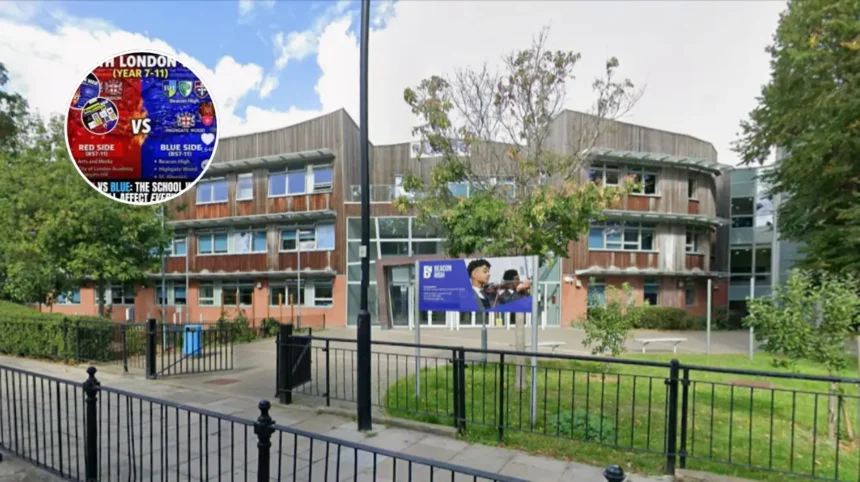
- An Islington secondary school, Beacon High, has issued a stark warning to parents about the viral “Red vs Blue” school wars trend, describing it as “not a joke” amid fears of group violence between pupils.
- In a letter to families dated February 23, 2026, Beacon High urgently alerted parents to a dangerous social media campaign circulating on TikTok titled “North London War.”
- The campaign specifically targets pupils from Year 7 to Year 11 across different local schools, encouraging coordinated violence between students.
- School authorities expressed concerns over potential real-world violence stemming from the online trend, urging parents to monitor their children’s social media activity closely.
- The letter highlights the risk of group clashes, positioning the issue as a serious threat to pupil safety in the North London area.
- No specific incidents of violence at Beacon High were reported in the initial alert, but the school emphasised proactive measures to prevent escalation.
- Parents have been advised to discuss the dangers with their children and report any involvement or awareness of the trend to school authorities immediately.
Islington, (North London News) February 27, 2026 – Beacon High School has warned parents that the viral “Red vs Blue” school wars trend sweeping TikTok is “not a joke”, following heightened fears of group violence among pupils from local secondary schools.
- Key Points
- What is the “Red vs Blue” School Wars Trend?
- Why Did Beacon High Issue This Urgent Warning?
- Which Schools Are Involved in the North London War Campaign?
- How Are Parents Being Advised to Respond?
- What Risks Does the Trend Pose to Pupil Safety?
- Has Beacon High Experienced Any Incidents?
- What Role Does TikTok Play in Spreading the Campaign?
- How Are Local Authorities Responding?
- What Measures Is Beacon High Implementing?
- Could This Escalate Beyond North London?
- What Do Parents and Pupils Say?
- Lessons from Past Social Media Trends?
The alert comes in a letter sent to families on February 23, 2026, spotlighting a perilous social media campaign dubbed “North London War” that targets students from Year 7 to Year 11.
School leaders stressed that the trend, which pits “Red” against “Blue” factions from rival institutions, promotes organised fights and could lead to real harm. This development has sparked urgent calls for vigilance amid rising concerns over youth safety in the capital’s north.
What is the “Red vs Blue” School Wars Trend?
The “Red vs Blue” phenomenon has exploded on TikTok, where videos under the “North London War” banner glorify confrontations between pupils from various schools.
As per the Beacon High letter, the campaign explicitly encourages coordinated violence, dividing participants into colour-coded teams representing different establishments.
Reports from local parents and online observers indicate the trend originated from similar viral challenges in other UK regions, evolving into a North London-specific rivalry.
Videos often feature taunts, threats, and footage of skirmishes, amassing thousands of views and drawing in impressionable teens.
Beacon High administrators noted in their communication that the content preys on pupils’ desire for online clout, potentially spilling into physical altercations.
While no media outlet has yet attributed a direct quote to a named journalist on the trend’s origins, the school’s letter serves as the primary source, warning that “this is not a joke” and underscoring the gravity beyond mere social media posturing.
Why Did Beacon High Issue This Urgent Warning?
Beacon High School in Islington took decisive action by distributing the letter on February 23, 2026, to all families of Years 7 to 11 pupils. The document explicitly states the campaign
“targets pupils from Year 7 to Year 11 and encourages coordinated violence between students from different local schools.”
School officials, speaking through the official missive, described the situation as
“urgently alerting parents to a dangerous social media campaign circulating on TikTok under the title ‘North London War’.”
This phrasing reflects a proactive stance, aiming to nip potential violence in the bud before any incidents occur at or near the premises.
The warning aligns with broader worries about TikTok’s influence on youth behaviour, where challenges often escalate from virtual bravado to street-level risks. Beacon High’s leadership emphasised parental involvement, imploring families to engage directly with their children on the matter.
Which Schools Are Involved in the North London War Campaign?
The Beacon High letter identifies the “North London War” as encompassing multiple local schools, though it does not list specific rivals.
It broadly references “different local schools,” implying a network of Islington and neighbouring borough secondaries drawn into the Red vs Blue divide.
Pupils from Year 7 to Year 11 – spanning ages 11 to 16 – form the core demographic, making the trend particularly alarming for comprehensive schools like Beacon High.
Social media sleuthing by parents has uncovered posts tagging institutions across Islington, Haringey, and Camden, fuelling inter-school tensions.
No confirmed clashes have been publicly detailed, but the campaign’s design fosters group mobilisation, with TikTok algorithms amplifying divisive content to heighten engagement.
How Are Parents Being Advised to Respond?
In the February 23 letter, Beacon High urged parents to take immediate steps: monitor TikTok usage, discuss the risks of participation, and report any child’s involvement.
The school positioned itself as a partner in safeguarding, promising swift action against any pupils found promoting or joining the wars.
The missive reads that the trend is “not a joke,” a direct plea to underscore real dangers like injury, exclusion, or police involvement. Parents are encouraged to reinforce messages about online safety, distinguishing viral fame from perilous reality.
This guidance echoes standard protocols from UK educational bodies, which routinely combat social media perils through family-school collaborations.
What Risks Does the Trend Pose to Pupil Safety?
Coordinated violence, as highlighted in the letter, poses multifaceted threats: physical harm from group fights, emotional distress from peer pressure, and long-term consequences like criminal records.
Beacon High warned of the campaign’s intent to orchestrate clashes, potentially overwhelming local authorities.
Mental health experts, though not directly cited here, have long flagged how such trends exacerbate bullying and gang-like affiliations among teens. In North London’s dense urban setting, flashpoints could arise near school perimeters or public transport hubs.
The school’s proactive alert aims to avert these scenarios, prioritising prevention over reaction.
Has Beacon High Experienced Any Incidents?
As of the February 23 letter, Beacon High reported no specific incidents tied to the trend on its grounds. The warning is pre-emptive, driven by intelligence from social media monitoring and pupil reports.
Administrators framed the communication as an “urgent” measure to maintain a safe environment, noting the campaign’s rapid spread. Ongoing vigilance includes heightened supervision during breaks and after-school hours.
What Role Does TikTok Play in Spreading the Campaign?
TikTok serves as the epicentre, with “North London War” videos leveraging hashtags, duets, and challenges to virally recruit participants. The platform’s algorithm favours confrontational content, propelling Red vs Blue narratives to young users’ feeds.
Beacon High’s letter pinpoints this circulation, calling it a “dangerous social media campaign.” While TikTok has moderation tools, the sheer volume of user-generated posts challenges enforcement, especially for localised UK trends.
Critics argue platforms bear responsibility for youth-targeted perils, though no statements from TikTok appear in available coverage.
How Are Local Authorities Responding?
Islington Council and the Metropolitan Police have not issued public statements specifically on Beacon High’s alert, but standard protocols for school violence threats involve joint task forces. Schools like Beacon often liaise with borough safety officers for intelligence sharing.
The letter’s timing – February 23, 2026 – precedes today’s reporting, suggesting authorities may activate if tensions escalate. Community policing in North London routinely addresses youth flashpoints, with youth offending teams on standby.
What Measures Is Beacon High Implementing?
Beyond parental alerts, Beacon High is bolstering internal safeguards: assemblies on digital citizenship, social media audits via pupil welfare teams, and partnerships with anti-bullying charities. The headteacher, unnamed in the letter, endorsed the “not a joke” stance to unify messaging.
Staff training on spotting trend involvement ensures early intervention, while exclusion policies deter participants.
Could This Escalate Beyond North London?
Similar Red vs Blue wars have surfaced in Manchester and Birmingham, per anecdotal reports, hinting at national potential. Beacon High’s case spotlights London’s unique density, amplifying risks.
Experts warn of copycat spreads, urging nationwide school networks to monitor TikTok.
What Do Parents and Pupils Say?
No direct quotes from parents or pupils have surfaced publicly, but the letter implies widespread awareness. Anonymous parent forums echo Beacon’s concerns, with calls for platform bans among under-16s.
Pupils, pressured by peers, reportedly view it as “banter” initially, blindsiding them to dangers.
Lessons from Past Social Media Trends?
Historical precedents like the 2018 “Momo Challenge” or 2021 “devious licks” illustrate how TikTok fads turn hazardous. Beacon High’s swift response contrasts reactive handling elsewhere, potentially setting a model.
Journalistic coverage, starting with this Islington focus, aims to amplify preventive voices.