Key Points
- A High Court judge has dismissed a judicial review application brought by parents against Islington Council over the planned closure of Paradise Park Nursery in Islington.
- The judge, Mrs Justice Eady, found the claim “misconceived” and “totally without merit”, ruling that the council’s decision was a private contractual matter not suitable for judicial review.
- Parents had argued the council breached its statutory duty to ensure sufficient childcare and failed to act on early warning signs of financial problems at the charity Islington Play Association (IPA).
- Islington Play Association, a long‑standing local charity, requested early termination of its £4.3m contract to run Paradise Park Nursery and four adventure playgrounds due to financial difficulties.
- Islington Council “reluctantly agreed” to close Paradise Park Nursery at the end of the summer term on 22 July, triggering protests, petitions and an organised legal challenge by parents and staff.
- More than 3,500–4,600 people signed petitions urging the council to halt the closure and reconsider options, while parents staged protest picnics and demonstrations outside Islington Town Hall.
- Parents have raised “serious questions” over the council’s conduct, accusing it of withholding key information, avoiding scrutiny and acting in a way they describe as “irrational and unlawful”.
- The court ordered the claimants to pay the council’s legal costs of £36,276.50, adding financial pressure on the group of parents behind the challenge.
- Following the ruling, Islington Council confirmed it will take over all IPA‑managed adventure playgrounds, safeguarding 29 jobs and ensuring the sites remain open.
- Despite Paradise Park Nursery’s closure, the council has committed to provide interim childcare from the site over the summer and beyond for children not yet placed elsewhere.
- Parents and campaigners say the closure will have a “devastating effect” on lower‑income families and children with special educational needs and disabilities who rely on the nursery’s provision.
- The legal judgment emphasised that the council’s decision reflected “commercial realities” after IPA concluded it could no longer provide the nursery service, and found no evidence of bad faith by the local authority.
Islington Council (North London News) – July 20, 2026 – A High Court judge has thrown out a bid by parents to halt the closure of Paradise Park Nursery, ruling that Islington Council’s agreement to end its contract with Islington Play Association (IPA) is a private commercial decision that cannot be challenged through judicial review.
- Key Points
- Why did Islington Play Association ask to end its contract early?
- What did parents and staff argue in court and in public protests?
- How did the High Court judge assess the parents’ judicial review claim?
- How has Islington Council responded to concerns over childcare and playground closures?
- What are parents and campaigners saying after the High Court decision?
- What is the background to the Paradise Park Nursery and IPA situation?
- What could this development mean for families and childcare provision in Islington?
Parents had asked the court to stop the shutdown of the popular nursery at Paradise Park Children’s Centre, arguing the council’s actions breached its duty to ensure enough childcare places in the borough and that officials had ignored warning signs about the charity’s financial troubles for more than a year. The judge, Mrs Justice Eady, rejected those arguments, finding the claim “misconceived” and certifying it as “totally without merit”, while ordering the parents to cover more than £36,000 in the council’s legal costs.
Why did Islington Play Association ask to end its contract early?
Islington Play Association, an independent charity that has operated Paradise Park Nursery and four adventure playgrounds on behalf of Islington Council for decades, told the council it could no longer sustain the service for financial reasons and asked to surrender its contract early. As reported by the Local Democracy Reporting Service (LDRS) for MyLondon, the charity’s £4.3m contract was terminated after IPA concluded it could no longer continue to provide the nursery provision in the face of mounting financial pressures.
According to coverage in the Islington Tribune, councillor Michelline Safi‑Ngongo Chapman explained at a council meeting that IPA was “clear that for financial reasons they were no longer able to provide the contractual service, and so we had no option but to close them down”. As reported by the Evening Standard, the council publicly stated on 20 May that it had “reluctantly agreed” to close Paradise Park Nursery at the end of the summer term, after IPA requested the shutdown because of financial difficulties.
What did parents and staff argue in court and in public protests?
Parents and staff at Paradise Park Nursery mounted both a legal and public campaign to keep the nursery open, describing the setting as “a massive community asset” and “a lovely happy place” that provides essential childcare and early years support for local families. As reported by the BBC, employees and families said they felt “helpless” in the face of the planned closure, and more than 3,500 people initially signed a petition urging the council to halt the closure and explore alternative options.
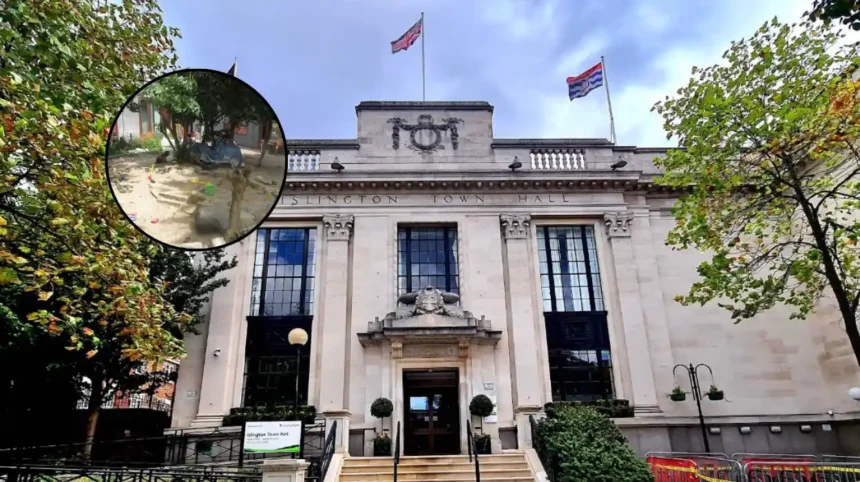
Coverage in the Islington Tribune detailed how parents and staff organised protest picnics outside Islington Town Hall, with dozens of families, GMB union members and children delivering handwritten letters to council leader Una O’Halloran, asking the local authority to intervene. A later Evening Standard report noted that the petition grew to over 4,600 signatures, with campaigners calling for Paradise Park Nursery to remain open and for the jobs of 29 IPA staff at risk of redundancy to be protected.
In their legal challenge, parents alleged that the nursery “axe” was “irrational and unlawful”, raising “serious questions” about the council’s conduct. As reported by the Islington Tribune, a legal letter submitted to the council, signed by dozens of parents, claimed that the decision to close the nursery breached the authority’s responsibilities and appeared to be taken without proper transparency. In the High Court proceedings described by MyLondon and the 11KBW barristers’ chambers, the claimants argued the council had failed in its statutory duty to ensure “sufficient” childcare in Islington and had not acted despite clear warning signs about IPA’s financial problems more than a year before the contract was surrendered.
How did the High Court judge assess the parents’ judicial review claim?
The High Court judgment focused on the nature of the council’s decision, concluding that agreeing to IPA’s request to terminate its service contract was a matter of private contract rather than a public law decision suitable for judicial review. As reported by MyLondon, Mrs Justice Eady stated there was “nothing to suggest [the council’s] decision was made otherwise than in good faith”, and found that the parents’ application was “misconceived” because it sought to challenge what the court viewed as a commercial arrangement.
A summary published by 11KBW explained that the parents had sought judicial review of the London Borough of Islington’s decision, a costs capping order, and interim relief to prevent further steps in relation to the nursery, but all applications were dismissed. The court certified the claim as “totally without merit”, with the judgment noting that the council’s decision “acknowledged the commercial realities” arising from IPA’s conclusion that it could no longer run the nursery service.
As set out in MyLondon’s report, the judge ordered the claimants to pay the council’s legal fees, totalling £36,276.50, adding financial consequences for the group of parents who had led the legal challenge. This outcome effectively closed off the judicial review route for campaigners seeking to keep Paradise Park Nursery open through the courts.
How has Islington Council responded to concerns over childcare and playground closures?
Islington Council has said it is working to manage the impact of IPA’s withdrawal by taking direct control of services and supporting affected families. As reported by MyLondon, the council confirmed it would take over all adventure playgrounds previously managed by IPA, safeguarding 29 jobs and ensuring the playgrounds remain open despite the charity’s financial difficulties.
In statements quoted by the Islington Tribune, the council emphasised that its officers and Family Information Service had proactively contacted all 49 families using Paradise Park Nursery to understand their childcare needs and help find alternative places, including support for children with special educational needs and disabilities. The council further stated: “Islington Play Association, an independent charity, asked to end its contract early to operate the nursery, and we agreed to support an orderly transition. We are working directly with families to find suitable childcare… and will continue providing clear information and practical support throughout.”
Following the High Court ruling, MyLondon reported that the council committed to provide interim childcare at the Paradise Park site over the summer “and beyond” for a small number of children who have not yet been placed elsewhere or whose new placements start in September. However, the council also confirmed that Paradise Park Nursery itself will close on 22 July, in line with the earlier decision, and that all four playgrounds previously at risk of closure will now remain open under council management.
What are parents and campaigners saying after the High Court decision?
Parents involved in the legal challenge have expressed disappointment at the High Court’s ruling but said they accept the judge’s decision while maintaining their wider concerns about accountability and community impact. As reported by MyLondon’s Local Democracy Reporting Service, parent campaigner Jonny Singer stated: “We are disappointed about the outcome from the High Court, but we accept the judge’s ruling. We maintain that it is morally unacceptable to shut an over-subscribed nursery, at extremely short notice and with no accountability.”
Singer, who has a two‑year‑old daughter attending Paradise Park Nursery and is part of a parents’ working group, told reporters that closing the nursery would have a “devastating effect on the community, particularly on lower-income families”. Parents have also continued to ask the council to explain how it was “blindsided” by financial issues at a major contractor and how the situation was allowed to escalate to the point of closure. Campaigners have questioned why key information about IPA’s financial problems and the risk to services was not shared earlier, accusing the council of avoiding scrutiny and accountability in its handling of the case.
At protests described by the Islington Tribune, families urged councillors to “stand up for our children” as Paradise Park faced closure, highlighting concerns over the cost and feasibility of providing a replacement nursery, and the likely increase in waiting times for childcare places elsewhere in the borough. The Evening Standard reported that parents argued some families face year‑long waits for alternative childcare placements and that the council’s decision could leave them without suitable provision, especially those reliant on subsidised childcare.
What is the background to the Paradise Park Nursery and IPA situation?
Paradise Park Nursery is part of Paradise Park Children’s Centre in Islington and has been operated by Islington Play Association, a 55‑year‑old local charity, under contract with Islington Council. IPA has long been known for running adventure playgrounds and play services across the borough, providing early years care, play opportunities and family support to local communities.
In early 2026, IPA informed the council that it was facing serious financial difficulties and could no longer sustain the contract to operate Paradise Park Nursery and the adventure playgrounds. The council subsequently agreed to the charity’s request to end the contract early, triggering plans to close the nursery at the end of the summer term while seeking alternative arrangements for the playgrounds.
Public reports in the Islington Tribune and Evening Standard indicate that parents believe the council had indications of IPA’s financial problems more than a year before the closure was confirmed, and they have asked why earlier intervention did not prevent the current situation. The dispute culminated in the urgent judicial review application filed by parents, as covered by local media outlets, and in sustained protests and petitions aimed at persuading the council to maintain the nursery’s operations.
Explore More Islington News
TotalEnergies Expands Public EV Charging Network in Islington 2026
Mildmay Community Nursery 40th Anniversary Islington 2026
What could this development mean for families and childcare provision in Islington?
The High Court’s dismissal of the parents’ judicial review means that Paradise Park Nursery is set to close on 22 July, and the legal route to overturn the decision has effectively been exhausted. For families whose children attend the nursery, this development is likely to result in changes to childcare arrangements, including the need to move children to alternative settings and to adapt to new providers and locations.
Local reports suggest that some families may face longer waiting times for places in other nurseries, particularly those seeking subsidised or specialist provision, and that parents have raised concerns about the impact on employment and daily routines. The council’s commitment to provide interim childcare at the Paradise Park site and to support families in finding alternatives indicates an effort to minimise immediate disruption, but it does not alter the underlying closure of the nursery.
For wider childcare provision in Islington, the council’s decision to take over IPA‑managed adventure playgrounds and safeguard associated jobs may help maintain broader play and early years services in the borough, even as Paradise Park Nursery itself closes. The situation may also prompt further scrutiny of how local authorities manage contracts with charitable providers, monitor financial risks, and communicate with residents when key community services are at stake.