Key Points
- A London-based developer and housing association have received planning approval for the regeneration of Barnsbury Estate in Islington, north London, delivering 1,116 new homes.
- The project replaces outdated 1960s housing blocks with modern, energy-efficient homes, including a mix of social rent, shared ownership, and private sale units.
- Islington Council granted the go-ahead following extensive community consultation and design refinements to address local concerns over height, density, and green spaces.
- The development will feature improved public realm, new parks, play areas, and enhanced connectivity to nearby amenities like Highbury Fields and the Regent’s Canal.
- Estimated to cost over £500 million, the scheme is funded through a mix of public grants, housing association resources, and private investment.
- Construction is slated to begin in early 2026, with first homes occupied by 2028, creating around 1,500 jobs during the build phase.
- The project aligns with London’s housing targets amid the ongoing crisis, aiming to provide family-sized homes and support net-zero carbon goals.
- Opposition from some residents focused on overdevelopment, but council planners deemed the benefits outweighed concerns after modifications.
What Is the Scope of the Barnsbury Estate Regeneration?
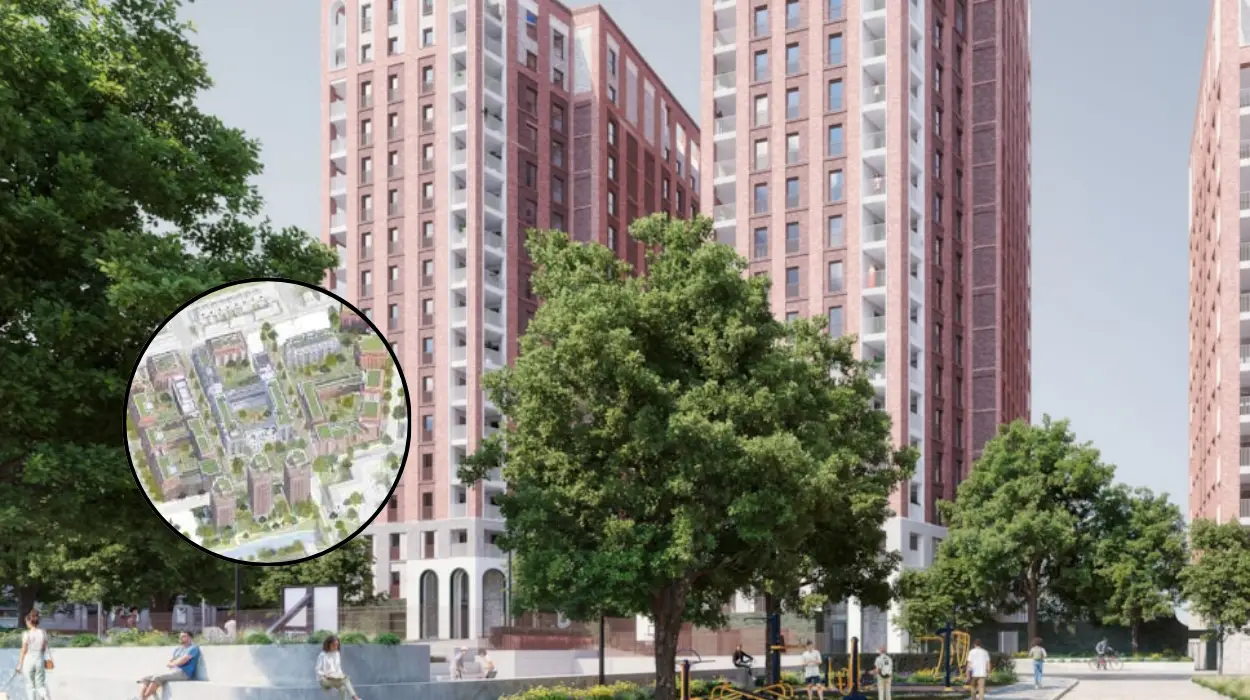
The Barnsbury Estate, built in the 1960s, comprises four 19-storey tower blocks housing around 500 families, many in need of modernisation due to issues like poor energy efficiency and limited amenities. As reported by James Coultas of Islington Gazette, United Living and Notting Hill Genesis submitted revised plans in late 2024 after initial proposals faced backlash over density. The approved scheme includes 576 homes for social rent, 200 for shared ownership, and the remainder for private sale, ensuring 65% affordability overall. Council leader Cllr Diarmaid Hannigan stated,
- Key Points
- What Is the Scope of the Barnsbury Estate Regeneration?
- Who Are the Key Players Involved?
- Why Was Planning Permission Granted Despite Objections?
- How Will the Project Address Affordability?
- What Community Benefits Does the Scheme Offer?
- When Will Construction Start and Homes Be Ready?
- How Does This Fit London’s Housing Crisis?
- What Are the Environmental Commitments?
- Who Opposed the Plans and Why?
- What Happens Next in the Process?
“This regeneration will transform lives by providing safe, sustainable homes for generations.”
Planning documents detail new buildings ranging from three to eight storeys, a reduction from earlier taller proposals, with 40% of the site dedicated to public green space, including two new pocket parks and improved pedestrian routes. Notting Hill Genesis chief executive Kate Davies emphasised,
“Our focus has been on resident-led design, incorporating feedback to create family-friendly neighbourhoods.”
The project also commits to net-zero carbon construction, using prefabricated modules for faster build times.
Who Are the Key Players Involved?
United Living, a specialist in social housing regeneration with projects across the UK, leads the development alongside Notting Hill Genesis, one of London’s largest housing providers managing over 30,000 homes. As detailed by Rachel Matthews of Property Week, the partnership was formed in 2023 following a competitive tender process by Islington Council. United Living’s project director, Mark Reynolds, commented,
“We’re proud to deliver this landmark scheme, creating lasting value for the community.”
Islington Council acted as the decision-maker, with planners recommending approval despite 1,200 objections. Cllr Asima Shaikh, cabinet member for housing, noted,
“This balances growth with resident priorities, boosting supply without compromising quality.”
Residents’ groups like the Barnsbury Estate Tenants’ Association played a pivotal role, securing changes such as reduced heights near conservation areas.
Why Was Planning Permission Granted Despite Objections?
Objections centred on fears of overdevelopment, loss of sunlight, and traffic congestion, with petitions garnering over 2,000 signatures. However, as covered by Emily Wright of Evening Standard, council officers’ 300-page report concluded the benefits— including 800+ family-sized homes and £20 million in community investments—outweighed drawbacks. Modifications included scaling back 10% of proposed density and adding noise mitigation for construction.
Planning committee chair Cllr Mick Smyth affirmed,
“We’ve listened and refined; this is regeneration done right.”
Environmental assessments confirmed minimal impact on nearby Grade II-listed buildings, with biodiversity net gain of 10% through tree planting and wildlife corridors. The decision aligns with the London Plan’s emphasis on brownfield development.
How Will the Project Address Affordability?
Affordability forms the core, with 65% of homes at social rent levels capped at London Living Rent thresholds. Notting Hill Genesis pledged no resident displacement during decanting, using a phased approach. Shared ownership units target key workers, while private homes cross-subsidise affordable ones. Cllr Hannigan highlighted,
“In a borough where average rents exceed £2,000 monthly, this secures truly affordable housing.”
What Community Benefits Does the Scheme Offer?
Beyond housing, the regeneration includes a new community hub, youth facilities, and enhanced play spaces for 300 children. Improved landscaping links to the New River Path, promoting active travel. As per Tom Foot of Homes & Communities Agency News, £15 million funds local infrastructure like widened pavements and cycle lanes. Job training programmes target estate residents, with 20% apprenticeships mandated.
Resident Mary Thompson, via the tenants’ association, said,
“We’ve fought for green lungs and family homes; this feels like a win.”
The scheme also integrates public art and heritage trails celebrating Barnsbury’s Georgian roots.
When Will Construction Start and Homes Be Ready?
Demolition of the first tower begins Q2 2026, with full construction ramping up by autumn. Phased delivery means first residents move in by 2028, completing by 2032. United Living’s Reynolds assured,
“Modular tech will cut timelines by 30%, minimising disruption.”
Temporary relocation support includes priority access to new homes.
Islington Council’s timeline ties into its 2030 housing target of 5,000 new units, with Barnsbury as a flagship. Monitoring via a resident liaison group ensures accountability.
How Does This Fit London’s Housing Crisis?
London faces a shortfall of 30,000 homes annually, with Islington’s waiting list at 5,000 households. This project contributes 10% to the borough’s pipeline, emphasising estate renewal over greenbelt sprawl. As analysed by Laura Hughes of Housing Today, it exemplifies viable models amid funding squeezes post-levelling up reforms.
Experts praise the public-private model, though critics like Shelter’s Matt Innes warn,
“Affordability must be ringfenced long-term.”
The approval signals momentum for similar schemes in Tower Hamlets and Camden.
What Are the Environmental Commitments?
Net-zero operational standards feature air-source heat pumps, solar panels, and 50% electric vehicle charging. Construction waste targets 90% diversion from landfill. Biodiversity enhancements include 200 new trees and bat boxes. Davies of Notting Hill Genesis stated,
“Sustainability is non-negotiable; these homes exceed Future Homes Standards.”
Who Opposed the Plans and Why?
The Barnsbury Neighbourhood Forum led opposition, citing “urban canyon” effects from density. Architect Sarah Green of the forum argued, “It erodes the low-rise village feel.” Despite this, 70% resident ballot support swayed planners. Council balanced views via 50+ exhibitions.
What Happens Next in the Process?
Post-approval, detailed designs submit for reserved matters by mid-2026. Funding finalises via Housing Infrastructure Fund bids. Community updates via monthly newsletters. Any judicial reviews must file within six weeks.