Key Points
- Islington Council remains a near‑one‑party authority, with Labour holding 47 out of 51 seats after the 2022 local elections, amounting to over 92 per cent of the total.
- Labour’s overwhelming majority on the council conceals sharp internal divisions in the borough, particularly around national figures including former Labour leader Jeremy Corbyn and current leader Sir Keir Starmer.
- The Green Party has been steadily building influence in Islington on the back of high‑profile campaigns for rent controls and housing reforms, despite remaining a small bloc on the council.
- Boundary changes in 2026 have adjusted ward structures and the total number of seats, but analysts still expect Labour to retain its dominant position in the upcoming 7 May elections.
- Experts and commentators highlight that, while challengers such as the Greens, Your Party and independents may draw attention, the structural dominance of Labour in Islington makes large‑scale change in the council chamber unlikely.
Islington (North London News) April 23, 2026 Labour’s hold on Islington Council may look almost totalitarian at first glance, but with the 2026 London local elections approaching on 7 May, the borough’s political scene is being scrutinised for potential cracks beneath the surface.
Following the 2022 local elections, Labour was returned with 48 of Islington’s 51 councillor seats, giving the party more than 92 per cent of the chamber and making the council effectively a one‑party authority. The Green Party holds the remaining three seats, all in the Highbury ward, while no other party occupies a council seat at present.
This pattern has persisted through boundary changes and by‑elections. The Local Government Boundary Commission has redrawn ward boundaries so that Islington is now divided into 17 wards, with 51 seats up for grabs. Subsequent by‑elections and resignations have occasionally shaken the political makeup, but Labour has consistently retained the vast majority of seats.
What explains Labour’s near‑total dominance?
Labour’s grip on Islington is rooted in long‑standing voting patterns and demographic shifts. The borough has shifted left‑ward over the past two decades, with a growing population of younger, liberal‑leaning professionals and renters who tend to favour Labour on housing and social‑policy issues.
The 2022 results reinforced that trend: Labour captured 48 seats, while the Green Party came in second in four of the wards and the Liberal Democrats and Conservatives in one each.
The Green councillor Caroline Russell, who also serves as a London Assembly member, retained her seat, underlining the environmental party’s persistent minority presence in the borough.
As reported by the BBC in its local‑elections profile of Islington, Professor Tony Travers of the London School of Economics has described the borough as the constituency of Jeremy Corbyn and Your Party, as well as the seat of significant Labour muscle.
Even so, Travers concluded that while Your Party, the Greens and independents might attempt to broaden their footprint, Labour is “poised to retain its hold in Islington.”
How deep are the divisions within Labour?
Labour’s dominance hides a more complicated picture. Internal tensions have surfaced repeatedly, both at the local level and in the wider Labour hierarchy.
In 2024, a “Labour revolt” in the Islington North constituency was reported by The Telegraph, with a majority of the local constituency‑party executive backing Jeremy Corbyn instead of the Labour‑selected candidate, Praful Nargund.
Eleven current or former members of the Islington North Labour Party executive signed an open letter expressing support for Corbyn and rejecting the official Labour candidate, highlighting a rift between the local party and national leadership.
Sir Keir Starmer, as Labour leader, responded publicly by insisting
“Jeremy Corbyn’s days of influencing Labour Party policy are well and truly over,”
according to The Telegraph’s coverage. Starmer defended the selection of Nargund, arguing that “first‑class Labour candidates” were being put forward in Islington North, where he himself holds the neighbouring seat.
The tension between Corbyn and Starmer has spilled into commentary beyond Islington. Guardian columnist Zoe Williams wrote that the dynamics of their rivalry are being played out across the country, with Islington North serving as a symbolic battleground.
Williams noted that while Starmer’s own seat is considered one of the safest in the UK, Corbyn’s independent candidacy in Islington North introduces uncertainty about voter loyalties and the party’s internal unity.
Locally, six by‑elections have been held in Islington since 2018 after Labour councillors resigned or left the group, but Labour has retained all six seats.
Critics have also pointed to resignations triggered by claims of racism and anti‑Semitism within Labour, such as former councillor Rakhia Ismail, who left the party in 2020 and later defected to the Conservatives.
Role of the Green Party and the rent‑control agenda
The Green Party’s strategy in Islington has increasingly centred on housing and rent‑control proposals, which have gained traction with many renters and younger voters.
In a social‑media post dated 29 March 2026, the Islington South Labour group itself highlighted the slogan:
“On 7th May vote for council homes, rent controls and an end to leaseholds,”
suggesting that rent‑control‑style rhetoric has diffused into sections of Labour’s local campaigning language. At the same time, the Green Party has lambasted the national Labour government for not devolving powers to introduce rent controls in London.
A spokesperson for the Green Party, quoted in a BBC feature on how upcoming laws might change renting in London, said the party was
“hugely disappointed that this Labour government refuses to devolve powers for rent controls”
and that the mayor of London has not done enough to push for such powers. The spokesperson added that the Greens would continue to pressure both Westminster and City Hall over rent‑control measures, which they see as a key issue among Londoners.
Within Islington, that agenda has helped the Greens maintain visibility despite their small council presence. The three Green councillors in Highbury ward, including Caroline Russell, have repeatedly used the council chamber and the London Assembly as platforms to argue for stricter renter protections and expanded social‑housing provision.
What might the 2026 local elections change?
As the 2026 London local elections approach, most analysts still expect Labour to dominate Islington’s council. However, the contest is being watched for signs of whether the Greens, Your Party, independents or smaller groups can chip away at Labour’s cushion of seats.
The BBC’s local‑elections profile notes that boundary revisions and the increased number of seats carry the theoretical possibility of a more fragmented council, but adds that structural and historic factors still favour Labour’s continued control.
The presence of multiple independents among Labour’s own ranks, following by‑elections and resignations, suggests that internal discipline could erode slightly, even if the party’s numerical majority remains intact.
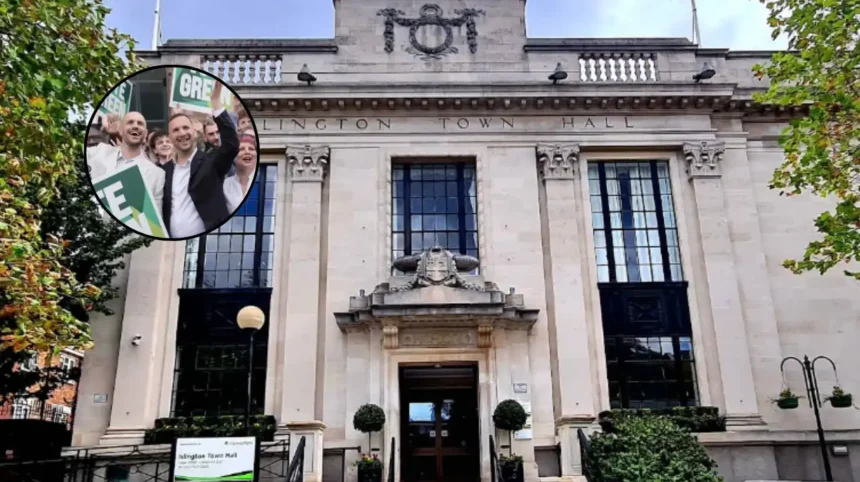
Campaign literature and local posters, including the Islington South Labour image calling for “council homes, rent controls and an end to leaseholds,” indicate that rent‑control themes will feature prominently in the 2026 campaign. Whether this rhetoric translates into a broader shift in voter behaviour or simply reshapes the internal debate within Labour remains to be seen in the May results.
Background to this development
The roots of Islington’s current political landscape lie in several intertwined developments over the past two decades. First, the borough’s demographic change has brought a more urban, diverse, and renter‑heavy population, which tends to favour centre‑left policies on housing and welfare.
Second, the long‑running parliamentary presence of Jeremy Corbyn in Islington North has made the area a focal point for debates over Labour’s left‑wing identity and the party’s relationship with its national leadership.
At the council level, repeated boundary changes and by‑elections have tested Labour’s cohesion, yet the party has managed to retain almost all seats it contests.
The Green Party’s steady foothold in Highbury, combined with its London‑wide campaigning on rent controls and climate policy, has given it a platform disproportionate to its numbers. Together, these factors have created a situation where one party overwhelmingly dominates the council chamber while multiple currents of dissent and reform circulate just below the surface.
Predictions for impact on the particular audience
For residents of Islington, the strong likelihood of continued Labour control suggests that overall council priorities—on housing, social‑care budgets, and local planning—will remain broadly consistent with recent years. However, ongoing pressure from the Green Party and other opposition figures on rent controls and social‑housing expansion may push Labour councillors to adopt more explicit rent‑protection language in their manifestos and policy statements, even if practical changes at the local level are constrained by national law.