Key Points
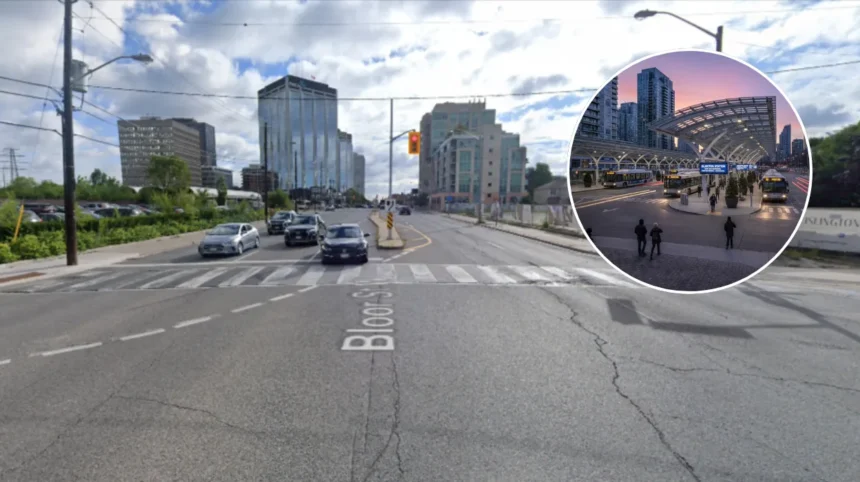
- A new bus terminal is under construction at Islington station on the western stretch of Bloor Line 2, as part of a multi-phased renovation and redevelopment of the transit hub’s site and facilities.
- The station is located at the northwest corner of Bloor Street West and Islington Avenue in Etobicoke, Toronto, featuring expansive commuter parking lots that are now surplus due to its aged condition.
- Opened in 1968 in the former Borough of Etobicoke, Islington served as the TTC’s westernmost rapid transit station until Kipling station opened in 1980.
- Construction of Islington station formed part of a larger subway expansion extending Line 2 west from Keele station and east from Woodbine to Warden, adding six stations to suburban Etobicoke.
- Designated as the primary “park and ride” location, most of the station grounds were paved for commuter parking from further west, a layout that persisted post-Kipling’s opening.
- Bus traffic originally used six “silos” and one outdoor platform for multiple routes; it declined in phases—most TTC routes shifted to Kipling in 1980, enabling MiWay buses to use more silos, followed by MiWay’s full move to Kipling’s new regional terminal in 2021.
- After decades of use, the station has aged noticeably with underused land, prompting renewal by CreateTO, the public agency tasked with developing subsidized and market homes on underutilized municipal land.
- In 2020, CreateTO proposed over 1,400 residential units across four new towers mainly along Bloor Street West’s southern frontage, with a new efficient, accessible bus terminal to the north to maximize buildable space.
- City Council approved the proposal in 2024.
- Construction on the new bus terminal began in late 2023, leading to the permanent closure of the northern commuter parking lot and the driveway off Islington Avenue for passenger pick-up and drop-off.
- Phased demolition of the existing bus terminal starts with northern silos, reworking the driveway into a western extension of Aberfoyle Crescent, running west through the site before turning south to connect with Bloor Street West opposite Green Lanes.
- The new road will provide vehicular access to the new bus terminal and future buildings.
- Once the new terminal opens, the remaining former bus terminal will be demolished to enable phased tower construction.
- Timelines for towers remain unclear, as CreateTO has not yet issued a formal market offering, a prerequisite for construction.
Islington, Etobicoke (North London News) February 4, 2026 – Along the western stretch of Bloor Line 2, Islington station is undergoing a transformative multi-phased redevelopment, with a new street entrance and bus terminal progressing steadily to modernise this aging transit hub. Situated at the northwest corner of Bloor Street West and Islington Avenue, the project addresses decades of wear, surplus parking lots, and evolving commuter needs by integrating efficient transit infrastructure with over 1,400 new residential units. Approved by City Council in 2024 following CreateTO’s 2020 proposal, construction on the new bus terminal commenced in late 2023, marking a pivotal step in revitalising this key Etobicoke gateway.
- Key Points
- What Is Driving the Redevelopment of Islington Station?
- How Has Bus Traffic Evolved at Islington Station?
- What Does the 2020 CreateTO Proposal Entail?
- When Did Construction Begin and What Are the Phases?
- Why Is a New Bus Terminal Essential for the Site?
- What Challenges Remain in Completing the Towers?
- How Will the New Infrastructure Benefit Commuters?
What Is Driving the Redevelopment of Islington Station?
The push for renewal at Islington station stems from its historical role and current underutilisation. Opened in 1968 as part of the TTC’s subway expansion in the then Borough of Etobicoke, the station was the westernmost rapid transit stop for 12 years until Kipling station’s debut in 1980. As detailed in the project overview, this expansion extended Line 2 west from Keele and east from Woodbine to Warden, introducing six new stations to serve suburban commuters.
Islington quickly became the prime “park and ride” facility, with vast paved lots catering to drivers from further west. Even after Kipling’s opening, these lots dominated the site, reflecting its terminus legacy. Bus operations, initially bustling across six silos and an outdoor platform, dwindled: TTC routes largely relocated to Kipling in 1980, freeing space for Mississauga’s MiWay buses, which themselves shifted fully to Kipling’s new terminal in 2021.
This left surplus land and an aging infrastructure ripe for intensification. CreateTO, the agency mandated to deliver affordable and market-rate housing on municipal surplus, identified the site as ideal. Their 2020 proposal envisioned drastic densification, approved unanimously by City Council in 2024 amid Toronto’s housing crunch.
How Has Bus Traffic Evolved at Islington Station?
Bus services at Islington have undergone significant contraction over decades. Originally, multiple TTC and later MiWay routes utilised six silos and one outdoor platform, handling peak commuter flows. The 1980 opening of Kipling station redirected most TTC buses there, allowing MiWay to expand its footprint at Islington.
A second shift occurred in 2021 with Kipling’s expanded regional terminal, prompting MiWay’s complete withdrawal. This dual exodus reduced demand on the existing terminal, underscoring the need for a compact, modern replacement. The new terminal, positioned north of the site, promises enhanced accessibility and efficiency, freeing southern land for residential towers.
Phased works ensure continuity: northern silos are first to be demolished, minimising disruption. The project incorporates a reworked driveway—previously for pick-up/drop-off—into an extended Aberfoyle Crescent, curving south to Bloor Street West opposite Green Lanes.
What Does the 2020 CreateTO Proposal Entail?
CreateTO’s ambitious 2020 plan targets over 1,400 units across four towers, aligned chiefly along Bloor Street West’s southern edge. By relocating the bus terminal northward, the design maximises floor space while preserving transit primacy. The towers will blend subsidized and market homes, aligning with municipal goals for diverse housing.
Approval came in 2024 after rigorous review, balancing density with infrastructure upgrades. A new street entrance enhances pedestrian flow, complementing the TTC’s accessibility mandates. Vehicular access via the extended Aberfoyle Crescent supports both terminal and residential needs.
Notably, the northern parking lot closed permanently in late 2023 to kick off construction, with the Islington Avenue driveway following suit. These changes pave the way for site reconfiguration without halting subway or residual bus services.
When Did Construction Begin and What Are the Phases?
Groundbreaking on the bus terminal occurred in late 2023, initiating the multi-phase timeline. Initial efforts sealed the northern parking lot and adjacent driveway, prioritising safety amid heavy commuter traffic.
Demolition proceeds incrementally: northern silos go first, enabling Aberfoyle Crescent’s extension westward then southward to Bloor. This new thoroughfare will service the terminal and future towers. Post-opening of the new facility, full terminal demolition clears tower footprints.
Residential construction awaits CreateTO’s market offering—a formal call for developers—leaving timelines fluid. Subway operations on Line 2 remain unaffected, with the station’s core facilities intact during works.
Why Is a New Bus Terminal Essential for the Site?
The existing terminal’s silos and platform, relics of 1968, are inefficient for modern demands. Post-MiWay’s 2021 exit, underuse amplified the case for consolidation. The northern placement optimises land value, yielding more housing while improving bus turnaround and accessibility features like level boarding.
This aligns with TTC’s push for seamless multi-modal hubs. The design mitigates past congestion, integrating with the Bloor-Islington intersection’s bustle. Commuter parking, once dominant, shrinks appropriately as urban density rises.
What Challenges Remain in Completing the Towers?
Uncertainty clouds residential timelines, hinging on CreateTO’s market call. Economic factors, developer interest, and approvals could delay phases beyond the terminal’s opening. Phased demolition post-terminal ensures orderly progression, but coordination with TTC and local traffic demands precision.
Community input shaped the 2024 approval, addressing parking loss and construction impacts. Etobicoke residents anticipate housing relief, yet construction noise and phasing may test patience.
How Will the New Infrastructure Benefit Commuters?
Enhanced accessibility defines the upgrades: a street-level entrance streamlines entries, while the compact terminal boosts bus efficiency. Aberfoyle Crescent’s extension eases vehicle flows, linking to Green Lanes opposite.
For Bloor Line 2 users, minimal disruptions promise continuity, with park-and-ride evolution favouring transit-oriented living. The 1,400 units foster walkable density, reducing car reliance in western Etobicoke.