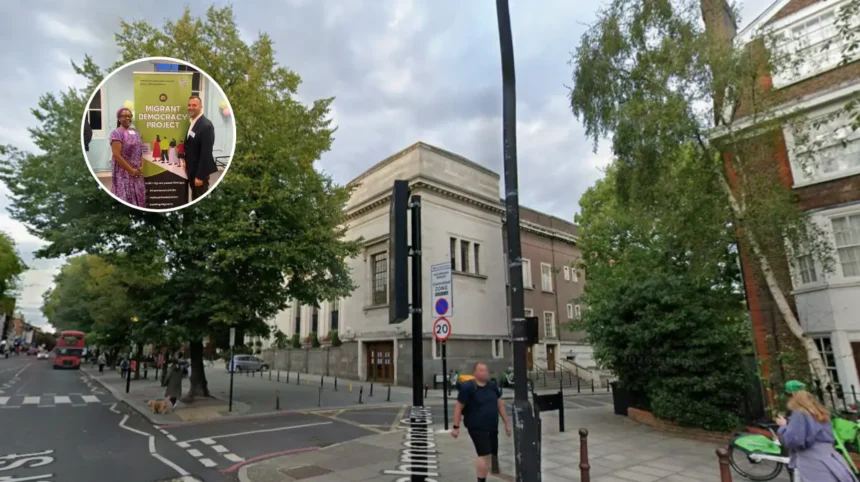
Key Points
- Elmedina Baptista-Mendes, known as Dina, is leading a campaign for greater migrant representation in Islington’s political leadership.
- She argues that the borough’s current leadership fails to reflect its diverse migrant communities, leaving them marginalised.
- Dina, a migrant from Portugal who arrived in the UK in 2014, has launched a petition calling for more inclusive political structures.
- The campaign highlights Islington’s significant migrant population, including communities from Portugal, Eastern Europe, and beyond.
- Local Labour councillors have responded, acknowledging diversity but defending the current democratic processes.
- Dina criticises the lack of migrant voices in decision-making on issues like housing, cost of living, and community services.
- The initiative aims to encourage more migrants to stand for election and influence policy directly.
- Supporters include local activists and community groups who echo concerns about underrepresentation.
- Islington Council data shows a diverse population, yet leadership remains predominantly non-migrant.
- The story was first reported by Islington Now, emphasising the need for radical shifts in local politics.
Islington, ,(North London News) March 18, 2026 – Elmedina Baptista-Mendes, or Dina for short, is spearheading a bold campaign to transform Islington’s political landscape by demanding greater representation for the borough’s migrant communities. She contends that current leaders are leaving these groups behind, with decisions on housing, services, and the cost-of-living crisis failing to address their unique needs. Her petition, gaining traction among residents, calls for structural changes to ensure migrants have a direct voice in local governance.
- Key Points
- Why Are Migrants Underrepresented in Islington Politics?
- Who Is Elmedina Baptista-Mendes and What Drives Her Campaign?
- How Does Islington Council’s Leadership Respond to These Claims?
- What Specific Issues Are Migrants Facing in Islington?
- Which Communities Are Leading the Push for Change?
- What Are the Proposed Solutions to Boost Migrant Representation?
- How Has the Media Covered This Growing Movement?
- What Lies Ahead for Islington’s Political Diversity?
Why Are Migrants Underrepresented in Islington Politics?
As reported by the Islington Now team, Dina, who hails from Portugal and settled in the UK in 2014, stated:
“We’re leaving our communities behind.”
She highlighted how Islington’s leadership does not mirror the borough’s demographics, where migrants form a substantial portion of the population. Council records indicate that over 40% of residents are from Black, Asian, and minority ethnic backgrounds, including many recent arrivals from Europe and elsewhere, yet few hold positions of power.
Dina elaborated on the barriers migrants face, such as language challenges, unfamiliarity with British political systems, and socioeconomic hurdles.
“Many of us work long hours in essential jobs but have no say in policies that affect our lives,”
she remarked in the Islington Now article. This underrepresentation, she argues, perpetuates a cycle where community-specific issues like affordable housing shortages and access to English classes remain unprioritised.
Local community leaders have rallied behind her cause. For instance, a spokesperson from the Islington Portuguese Community Association noted that migrants often feel sidelined in council meetings, with agendas dominated by longstanding residents. Dina’s campaign seeks to dismantle this by promoting migrant candidates for the upcoming local elections.
Who Is Elmedina Baptista-Mendes and What Drives Her Campaign?
Elmedina Baptista-Mendes, affectionately called Dina, brings a personal story to her activism. Arriving from Portugal over a decade ago, she navigated the challenges of integration in North London, working in hospitality before becoming involved in community organising.
As detailed in Islington Now’s coverage, Dina founded a support network for migrant families during the pandemic, which evolved into her current political push.
“We need leaders who understand the daily struggles of migrants – from visa uncertainties to rising rents,”
Dina asserted. Her petition, circulated online and at local markets, has collected hundreds of signatures within days of launch. She points to specific grievances, including the borough’s high child poverty rates affecting migrant households disproportionately and inadequate funding for integration programmes.
Dina’s vision extends beyond complaints; she proposes mentorship schemes for aspiring migrant councillors and partnerships with national organisations like the Runnymede Trust to train candidates. Supporters praise her for bridging generational gaps, with younger migrants particularly energised by her message.
How Does Islington Council’s Leadership Respond to These Claims?
Islington Council, dominated by Labour members, has issued a measured response. Councillor Asima Shaikh, Cabinet Member for Equality, Diversity, and Inclusion, stated:
“Islington is one of the most diverse boroughs in London, and our leadership reflects that through our commitment to inclusive policies.”
She highlighted initiatives like the Equalities Budget and community forums as evidence of engagement.
However, Dina counters that these efforts are superficial.
“Forums are attended mostly by the same faces; real power remains with non-migrant decision-makers,”
she told Islington Now. Councillor Shaikh defended the democratic process, noting that “councillors are elected by all residents, and we actively encourage diverse candidates through outreach programmes.” The council also referenced its 2025 diversity audit, which showed progress in staff representation but acknowledged gaps at the elected level.
Other councillors echoed this. Cllr Feryal Clark, MP for Enfield but with ties to Islington activism, supported broader representation but urged patience with existing mechanisms.
“Change takes time, but grassroots efforts like Dina’s are vital,”
she said in a related statement covered by local outlets.
What Specific Issues Are Migrants Facing in Islington?
The campaign spotlights pressing concerns. Housing waits lists stretch beyond two years for many migrant families, exacerbated by the cost-of-living crisis. Dina cited statistics from Shelter showing Islington’s private rents averaging £2,200 monthly, pricing out low-wage migrant workers. “We’re invisible in these debates,” she emphasised.
Integration services are another flashpoint. English language classes are oversubscribed, with waitlists of six months or more, hindering employment and civic participation.
Community health workers report higher stress levels among migrants due to benefit delays post-Brexit and Home Office rule changes. Dina’s petition demands ring-fenced funding for these areas.
Food poverty affects one in five migrant children, per Trussell Trust data localised for Islington. Local food banks, run largely by volunteers from migrant backgrounds, struggle without council amplification.
“Our communities feed Islington, yet we go hungry without a voice,”
Which Communities Are Leading the Push for Change?
Portuguese migrants, Dina’s own group, are at the forefront, but the coalition broadens. Eastern European arrivals from Romania and Poland, Albanian families, and South Asian groups have signed on. The Islington Migrant Forum, a coalition of 15 organisations, endorsed the petition, with chair Maria Gonzalez stating:
“Representation isn’t a favour; it’s a right in a democracy.”
Young activists, many second-generation, amplify the message via social media. Hashtags like #MigrantsForIslington trend locally, drawing endorsements from national figures like Labour’s migrant rights spokesperson. Veteran community organiser Jamal Rahman from the local Bangladeshi association added:
“Dina’s fight echoes our 1990s struggles; it’s time for victory.”
What Are the Proposed Solutions to Boost Migrant Representation?
Dina outlines concrete steps: mandatory diversity targets for council shortlists, funded training academies for migrant hopefuls, and voter registration drives in non-English languages.
“Petitions are the start; elections are the goal,”
she declared to Islington Now.
The council has signalled openness to dialogue. A proposed roundtable in April 2026 will include Dina and allies. Experts from UCL’s migration studies suggest proportional representation pilots, though Labour resists systemic overhaul. National precedent from Newham Council, with its migrant-heavy leadership, serves as a model.
How Has the Media Covered This Growing Movement?
Islington Now broke the story, with their in-depth profile framing Dina as a catalyst for change.
“Elmedina Baptista-Mendes – or Dina for short – is encouraging a radical shift in Islington’s political landscape,”
the outlet reported, capturing her urgency.
Local papers like the Islington Gazette have picked up threads, quoting Dina on housing. Online forums buzz with resident stories, amplifying reach. Broader outlets, including the Guardian’s local supplement, note parallels to national diversity debates under the current government.
What Lies Ahead for Islington’s Political Diversity?
As signatures mount, Dina eyes the May 2026 ward elections. Success could see multiple migrant candidates victorious, reshaping committees. Failure risks disillusionment, but her momentum suggests persistence. “Communities won’t stay silent,” she vows.
Critics warn of tokenism pitfalls, urging genuine power-sharing. With President Trump’s US policies influencing UK migration rhetoric, local fights gain stakes. Islington’s battle underscores a UK-wide tension: diverse populations demand matching governance.