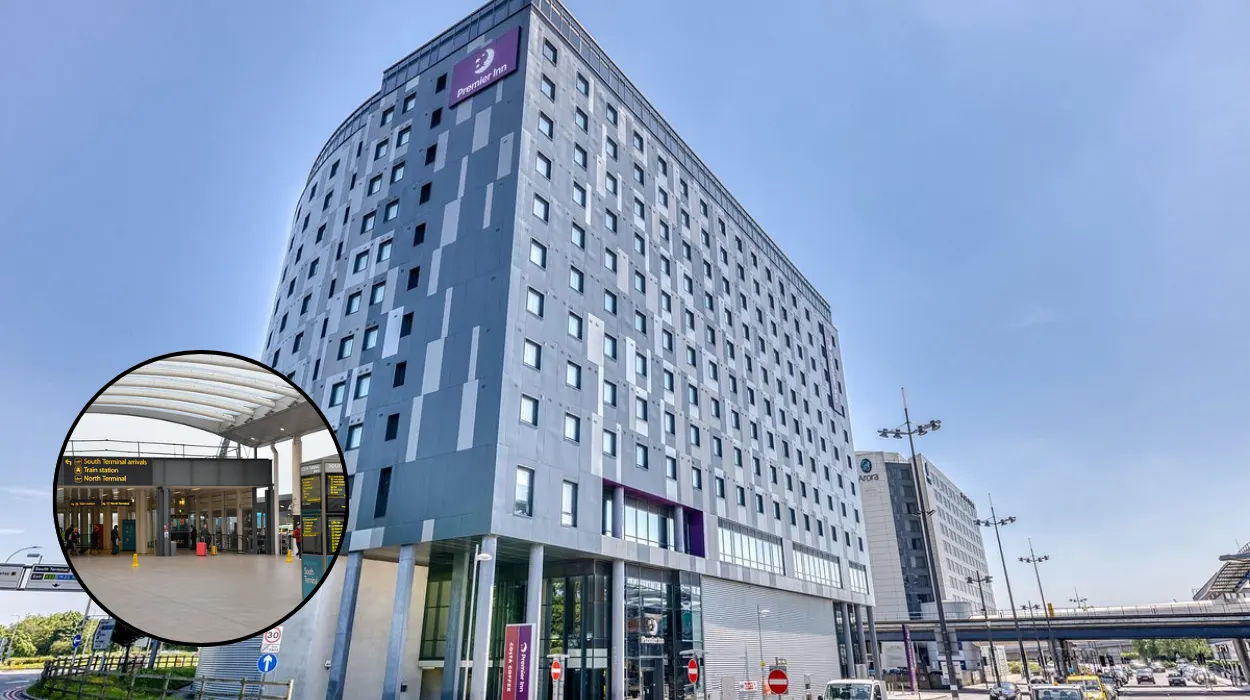
The history of the Gatwick North Terminal dates back to the mid-1980s when the British Airports Authority (BAA) undertook plans for expansion to accommodate increasing air travel demand. Construction of the North Terminal began in 1984 and culminated in a grand opening on March 22, 1988. The first flight to depart from the new terminal was British Airways flight BA323 to Naples, operated by a Boeing 737-236.
This terminal represented a substantial financial investment, estimated at around £200-230 million, designed to serve as a modern and expanded facility beyond the then-existing South Terminal. Queen Elizabeth II officially inaugurated the terminal in 1988, marking a pivotal moment in the airport’s development.
The initial design catered primarily to British Caledonian (BCAL) as the main tenant, with the terminal clad in BCAL’s royal blue colors and equipped with dedicated lounges and check-in facilities. The North Terminal originally featured a single pier (Pier 5) with seven gates, primarily accommodating long-haul BCAL flights and select European routes. Notably, it initially lacked a domestic facility, which BCAL intended to add by 1991 to consolidate operations.
By 1991, the North Terminal had expanded with the addition of Pier 4 and domestic flight facilities, enabling other international airlines such as Air New Zealand, Cathay Pacific, Emirates, and Delta to relocate from the South Terminal. This expansion was integral to Gatwick’s vision to become a key international hub.
Structural and Functional Overview
The North Terminal, in its inception, was planned as a flexible and open terminal supporting various airlines beyond BCAL, which underscored a forward-thinking approach to accommodating air travel diversity. Over the decades, it has evolved significantly and today features multiple piers, lounges, check-in areas, security checkpoints, retail outlets, and dining facilities—all optimized for passenger convenience and efficiency.
The terminal was initially designed with a focus on long-haul international flights. Its layout allows for efficient boarding processes via jet bridges connected to gates that support larger aircraft. The North Terminal has embraced technological advancements and renovations over the years, constantly adapting to passenger needs and evolving aviation requirements.
Significance for North London Residents and Travelers
North London residents often use Gatwick North Terminal when traveling internationally due to its comprehensive facilities and connectivity. The terminal offers extensive services including car parking, public transport links like buses and trains, and direct access roads facilitating easy transit from North London areas.
Moreover, for frequent flyers and business travelers, the North Terminal provides premium lounges and business-class services enhancing the travel experience. Its role as a hub for carriers such as British Airways increases flight options from North London to global destinations.
How to Access Gatwick North Terminal from North London
Accessibility is a critical factor for travelers using the North Terminal. From North London, passengers can conveniently travel via:
- Rail: Gatwick Express provides a direct train service from London Victoria to Gatwick Airport, including the North Terminal, with frequent, fast journeys.
- Public Bus Services and Coaches: Several bus routes link North London with Gatwick, serving the North Terminal directly.
- Car: The terminal offers extensive parking options including short-stay, long-stay, and valet parking, with clear signage from major roads leading to the North Terminal.
Impact and Future Prospects
Since its inauguration, the North Terminal has played a key role in establishing Gatwick Airport as a major international gateway. It supported the airport through periods of growth, including the arrival of low-cost carriers like easyJet in the late 1990s, which further diversified passenger options and airline operations.
Looking forward, Gatwick continues to plan upgrades and expansions to maintain efficiency and passenger comfort. The North Terminal remains central to these plans, reflecting its enduring importance in the airport’s ecosystem.