Key Points
- Lucy Powell criticised broadcasters for airing Russell Brand’s prison message.
- Brand’s wife, Laura Gallacher, read the message on their YouTube programme.
- Authorities are investigating whether Brand breached prison rules.
- Powell also said the Government is examining sexual-consent laws.
- Officials said any legal change would require careful consideration of victims, enforcement and teenage relationships.
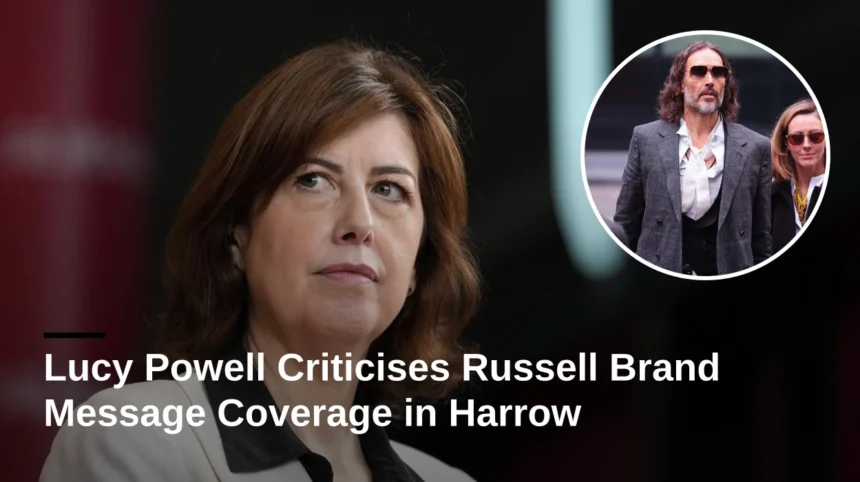
Harrow (North London News) November 18, 2026 — Labour deputy leader and Education Secretary Lucy Powell has criticised media organisations for broadcasting a message from imprisoned comedian Russell Brand, saying his words should not have been amplified. The message, read by Brand’s wife Laura Gallacher on their YouTube programme, asserted that he was not guilty of the offences for which he is serving a 10-and-a-half-year sentence. Authorities are investigating whether the communication breached prison rules.[1][2]
Why did Lucy Powell criticise the media?
As reported by the BBC and the Evening Standard, Powell told LBC Radio that she was “appalled” that mainstream media organisations had transmitted the message. She said Brand had shown no remorse or sensitivity towards victims and described the broadcast as a platform that should not have been amplified.[1][2]
The clip was played by several outlets, including BBC Radio 4’s Today, ITV’s This Morning, Sky News, LBC and The News Agents podcast.[1]
What did Russell Brand’s message say?
Gallacher read the message during a November 15 episode of the couple’s weekly YouTube programme. Brand maintained his innocence while in prison, prompting scrutiny over whether he had knowingly provided a statement intended for public release.[3][4]
Government representatives described the message as “clearly appalling” and said the matter was being urgently investigated. Officials said prisoners are prohibited from making statements that could distress victims, while media contact is permitted only in exceptional circumstances.[3][4]
What has Lucy Powell said about her earlier association with Russell Brand?
Powell acknowledged that she had been a close aide to Ed Miliband when he appeared on Brand’s online programme in 2015. She said that appearance occurred in a different context, before the allegations and criminal proceedings involving Brand were known.[2]
Could the law on sexual consent change?
Powell said the Government was seriously examining possible changes to the age-of-consent framework following Brand’s case. She described the issue as complex and said any reform would need to consider relationships between teenagers, enforcement and the protection of young people.[2]
Home Secretary Shabana Mahmood said the Government needed to hear from victims and assess the practical consequences before changing the law. Justice Minister Lord Lemos told the House of Lords that the Law Commission was examining consent as part of its future work and said ministers would consider further action if necessary.[2]
The debate has included public allegations by Mia Latter, who waived her anonymity when alleging that Brand raped her when she was 16, as well as separate allegations concerning entertainer David Walliams. Existing law permits consenting 16- and 17-year-olds to have sex with adults, although campaigners have called for stronger safeguards against exploitation by older people.[2]
What is the background to the investigation?
Brand is serving a 10-and-a-half-year prison sentence after being convicted of rape and sexual assault, according to the reports reviewed. His wife’s public reading of his message triggered an investigation into whether he circumvented restrictions on prisoners’ contact with the media.[1][3]
The investigation remains focused on the prison communication and its publication, rather than on Powell’s criticism of the broadcasters. Officials have said prisoners cannot avoid media restrictions by asking another person to publish or read their statements.[3][4]
Powell’s comments came as ministers considered wider questions about the treatment of victims and the adequacy of existing protections for young people. No final decision on changes to the age of consent had been announced in the reports available.[2]
The authorities’ confirmed outcome will depend on the prison investigation and any subsequent enforcement action. Media organisations involved have not been reported as facing formal sanctions over broadcasting excerpts of the message.[1][3]
How could this affect Russell Brand’s audience?
For Brand’s supporters, the controversy may increase attention on his direct communications from prison and reinforce competing claims about whether mainstream outlets should report them. For victims and safeguarding campaigners, Powell’s remarks may strengthen calls for media caution when reporting statements by convicted offenders that deny responsibility.
The investigation could also lead platforms and broadcasters to review how prison messages are verified, framed and repeated. Any future legal review of sexual-consent rules would affect the wider public and young people, but ministers have not committed to a specific reform.