
Key Points
- Nine households were evacuated from Atkins House in West Harrow late on Tuesday, 24 November, after serious structural safety concerns were identified.
- Cracks were found in the walls and a gable wall was seen leaning significantly.
- London Fire Brigade condemned the building following an inspection on Tuesday, while Harrow Council’s Building Control issued a dangerous structures notice.
- The council-owned block has been used as temporary accommodation since 2019.
- The affected families will not be allowed to return to Atkins House at this time.
- All nine households were moved into emergency accommodation; seven have made significant progress towards longer-term housing, while work continues for the remaining two.
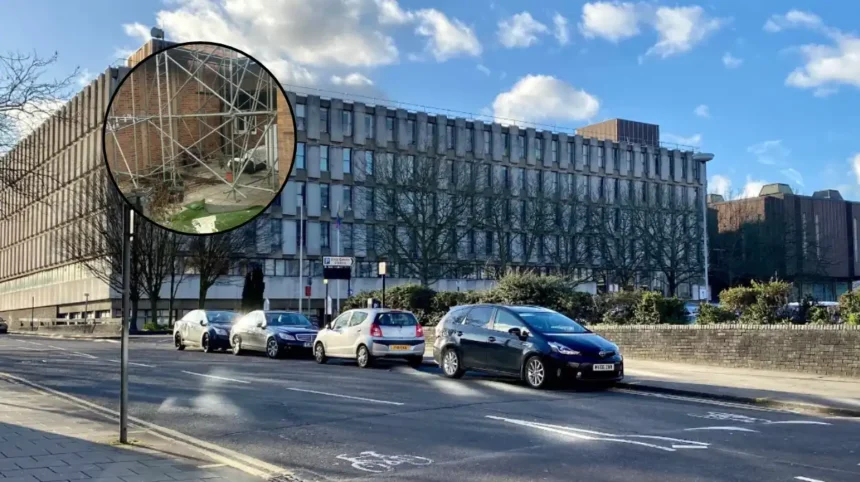
- Temporary structural support and scaffolding have been installed, and access to the building is restricted.
- Harrow Council leader Councillor Paul Osborn apologised for the distress caused and said residents would receive financial support while the council assessed the building’s future.
- West Harrow Labour councillor Mike Williams praised the emergency response but questioned how the building had deteriorated to such an extent.
- The council has acknowledged that more could have been done earlier to address problems with the building and is reviewing its processes.
- The development was discussed at Harrow Council’s full meeting on Thursday, 26 November, alongside the council’s self-referral to the Regulator for Social Housing.
- Council figures previously disclosed on 19 November showed 3,578 open housing-safety actions as of 16 November, including 550 classified as high risk.
- The council said all council-owned properties used as temporary accommodation will now come under the director of housing, and condition surveys will be carried out on all of them.
Harrow Council (North London News) November 28, 2026 — Nine families have been evacuated from a council-owned temporary accommodation block in West Harrow after cracks were found in its walls and a gable wall was seen leaning. The residents of Atkins House were moved out late on Tuesday, 24 November, following serious safety concerns, and the council has said they will not be able to return to the building at this time.
- Key Points
- What did Harrow Council say?
- What did inspectors find?
- Can residents return home?
- What has the council admitted?
- What did local councillors say?
- What happens to other council properties?
- What is the wider housing safety context?
- Background of the development
- Prediction: How this development can affect residents
As reported by MyLondon, London Fire Brigade condemned the building following an inspection on Tuesday, and Harrow Council’s Building Control issued a dangerous structures notice. The council said it took “swift and decisive action” to evacuate all nine households safely into emergency accommodation after structural concerns affecting part of the building were identified.
Atkins House has been used as temporary accommodation since 2019. The council has installed temporary structural support and scaffolding, while access to the building has been restricted. Residents are being supported with safe access to retrieve their possessions.
What did Harrow Council say?
Harrow Council leader Councillor Paul Osborn addressed the full council on Thursday, 26 November. As reported by MyLondon, he said:
“I know it’s been a worrying and disruptive time for the residents of Atkins House and I’m very sorry for the distress this has caused.”
Councillor Osborn said the council’s immediate priority was the safety and wellbeing of tenants. He said:
“Following serious structural concerns affecting part of the building, we took swift and decisive action to evacuate all nine households safely into emergency accommodation.”
He added that seven of the nine households had made significant progress in being supported into longer-term housing, while the council would continue working to find suitable accommodation for the other two.
Councillor Osborn also acknowledged that some residents did not want to leave their homes. He said the decision to evacuate was necessary to protect their safety.
As reported by London Local, the council leader said residents would receive financial support while the council assessed what could be done with the building. He said:
“At this time, residents will not be able to return to live at Atkins House.”
What did inspectors find?
The evacuation followed the discovery of cracks in the walls and a leaning gable wall at Atkins House. As reported by MyLondon, Councillor Mike Williams, of the local Labour group on Harrow Council, visited the site after hearing about the emergency evacuation.
Councillor Williams said: “The state of it was so precarious that they felt an emergency evacuation was required. I was quite shocked by what I saw: there were a very visible number of cracks in the walls, damage to the roof, and the brickwork on the gable was leaning quite significantly.”
As reported by London Local, Councillor Osborn told the full council that the problems at Atkins House were found during a survey of the roof.
London Fire Brigade condemned the building following its inspection, and Harrow Council’s Building Control issued a dangerous structures notice.
Can residents return home?
No. The council has said residents will not be able to return to live at Atkins House at this time.
All nine households were moved into emergency accommodation. Some were placed in permanent homes, while the council continues to support the remaining households towards longer-term housing.
Temporary structural support and scaffolding have been installed at the site. Access to the building is restricted, although the council is understood to be supporting residents with safe access to retrieve their belongings.
What has the council admitted?
Harrow Council has acknowledged that more could have been done earlier to address problems with the building. As reported by MyLondon, a council spokesperson said:
“We recognise more could have been done earlier to address problems with the building. When it became clear residents needed to leave, we acted to evacuate all nine households and provide emergency accommodation. We are currently reviewing our processes to understand what happened.”
Councillor Osborn also said the council would look into how the situation happened. As reported by London Local, he said it should never have reached the point where people had to be evacuated so quickly.
What did local councillors say?
Councillor Mike Williams praised the council officers’ response to the emergency, despite raising concerns about the condition of the building. As reported by MyLondon, he said:
“I thought the reaction to the crisis was first class, and I say that as an opposition councillor. I was acknowledging that what the officers were doing was ensuring that all of the families were safely removed.”
However, he questioned how the building had been allowed to deteriorate to such an extent. He said:
“But the question remains: how did it get into that state, and what is the plan going forward?”
As reported by London Local, Councillor Williams said the back of the building was “pretty terrifying”, with cracks wide enough to put an arm in. He asked how it had got into that state without anyone noticing.
Councillor Williams also pointed out that there were other blocks in the immediate area of a similar design and age. He said that, at the moment, all those other blocks appeared to be fine.
He requested that Conservative Cabinet Member for Housing Christopher Baxter and Council Leader Paul Osborn meet nearby residents to discuss ongoing repair issues, which were reportedly prevalent throughout the estate.
What happens to other council properties?
Councillor Osborn said all council-owned properties used as temporary accommodation will now come under the director of housing. As reported by London Local, condition surveys will be carried out on all of them.
Atkins House was temporary accommodation and was not part of the council’s main housing stock.
Separately, the council leader said the director of housing was taking action under its contract to make the council’s repairs contractor improve, following complaints about unfinished repairs.
What is the wider housing safety context?
The situation at Atkins House was highlighted in a motion at Harrow Council’s meeting on Thursday, 26 November. The motion discussed the authority’s self-referral to the Regulator for Social Housing after it was found that the council had thousands of safety actions still open relating to its housing stock.
As reported by MyLondon, figures previously disclosed to Cabinet on 19 November showed 3,578 open actions recorded as of 16 November. These included issues relating to gas, water, fire, lifts and electrical safety.
Of those actions, 550 were classified as high risk.
Background of the development
Atkins House is a council-owned block in West Harrow that has been used as temporary accommodation since 2019. The building was evacuated after serious structural concerns were identified late on Tuesday, 24 November.
London Fire Brigade condemned the building following an inspection, and Harrow Council’s Building Control issued a dangerous structures notice. Temporary structural support and scaffolding have since been installed, and access to the building has been restricted.
The council has said it is reviewing its processes to understand what happened and has acknowledged that more could have been done earlier to address problems with the building.
The development comes amid wider concerns about housing safety in Harrow. The council had previously disclosed 3,578 open safety actions relating to its housing stock, including 550 classified as high risk.
Prediction: How this development can affect residents
The evacuation is likely to have an immediate and continuing impact on the nine households affected, who must remain in emergency or alternative accommodation while the council assesses the future of Atkins House. Seven households have already made significant progress towards longer-term housing, but the remaining two are still being supported to find suitable accommodation.
Residents may face continued disruption as they arrange access to retrieve possessions, adjust to new accommodation and await decisions about permanent housing. The council has said it will provide financial support during this period.
For other residents living in similar council-owned temporary accommodation blocks, the development may lead to closer scrutiny of building conditions. The council has said condition surveys will be carried out on all council-owned properties used as temporary accommodation, which could result in further repairs, inspections or rehousing decisions if safety concerns are identified.
For the wider Harrow community, the case may increase attention on the council’s housing safety procedures, particularly given the number of open safety actions previously disclosed. The council’s self-referral to the Regulator for Social Housing and its review of processes may shape how future maintenance, inspections and emergency responses are handled across its housing stock.