Key Points
- In north London, particularly areas like Stoke Newington, Archway, and Golders Green, food establishments with perceived Israeli links, such as Gail’s bakery and Miznon restaurant, have faced vandalism, smashed windows, and protests amid the Israel-Gaza conflict.
- Jonathan Liew of The Guardian describes acts of “petty symbolism” including smashed windows and provocative stickers, highlighting food as a motif in the conflict, from Palestinian supper clubs to targeted boycotts.
- Gail’s bakery in Archway was vandalised twice in February 2026 with pro-Gaza messages like “reject corporate Zionism”, “fuck Bain Capital”, “boycott”, and an anarchist symbol, leading to a hate crime investigation by Metropolitan Police; no arrests made.
- Tom Molnar, chief executive of Gail’s, called the vandalism “completely unacceptable” and clarified the business is British with no links to any foreign government, founded by Israeli baker Gail Mejia but no longer associated with her or Ran Avidan.
- A representative from the Board of Deputies of British Jews stated the Gail’s attack is “part of a broader trend aimed at driving Jews out of society”, noting its Israeli origins.
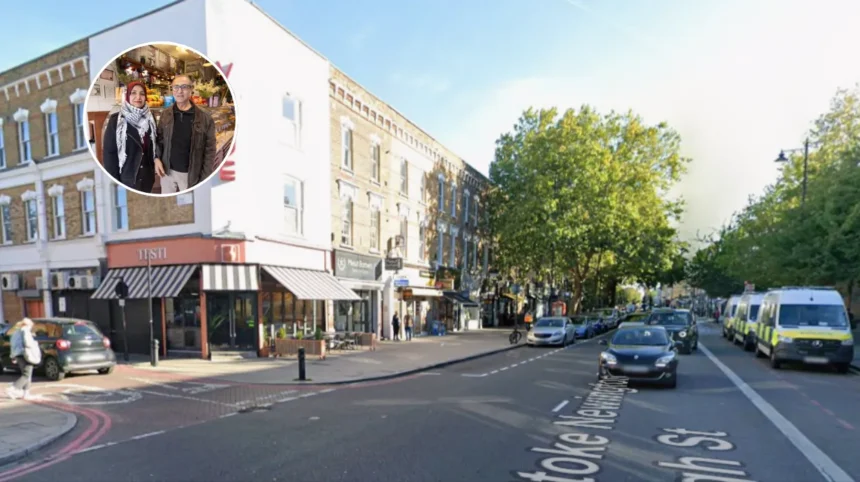
- Faten and Mahmoud run a popular Palestinian supper club at Cafe Metro in north London for six months, selling out tickets with proceeds to aid Gaza’s hungry and homeless; Faten, from Beit Hanoun, Gaza, uses food to showcase Palestinian culture amid threats.
- Protesters from Islington branch of Palestine Solidarity Campaign picketed Gail’s Archway opening, posting on Instagram: “Gail’s would like you to believe they are a down-to-earth alternative… but Gail’s is majority-owned by Bain Capital, a global private equity firm that is a vocal supporter of Israel.”
- Miznon, an Israeli-owned eatery in Notting Hill, faced protests by around 50 from International Jewish Anti-Zionist Network (IJAN) and Palestine Solidarity Campaign, chanting “shut it down” over alleged ties to Gaza Humanitarian Foundation (GHF) via co-owner Shahar Segal; police imposed Section 14 conditions, made arrests.
- Protesters claim actions oppose “war crimes” and complicity, not antisemitism, comparing to anti-apartheid boycotts; Jewish leaders call it antisemitic harassment.
- Historical incidents include Pita kosher restaurant in Golders Green vandalised in October 2023 with smashed glass and stolen cash register near “Free Palestine” graffiti; not treated as hate crime initially.
- Pro-Palestine activists targeted Israeli hummus, avocados, dates in Waitrose and independent shops, stripping shelves in actions against Israeli products.
- Archway fruit stall had “free Palestine” and “end the apartheid” stickers removed by Islington Council as “litter” after complaints from Jewish passersby via UK Lawyers for Israel (UKLFI).
- Metropolitan Police emphasise assertive action against hate crimes using protest cover, increased patrols; Sadiq Khan stated “no tolerance for hate” post-2023 incidents.
- Broader context: Food symbolises resistance and denial in Israel-Gaza war; supper clubs provide community, while boycotts escalate tensions in diverse north London.
Stoke Newington, (North London News) March 14, 2026 – Food outlets perceived to have Israeli connections have become flashpoints for protests and vandalism in north London, as tensions from the Israel-Gaza war spill into everyday community life. Acts of smashed windows at Gail’s bakery and provocative demonstrations outside Miznon restaurant underscore how cuisine, from hummus to baked goods, symbolises deeper divisions. Jonathan Liew, columnist for The Guardian, reports that in an era of seemingly meaningless protest, “petty symbolism” like stickers and graffiti proliferates, turning a corner of the city into a battleground.
What Sparked the Vandalism at Gail’s Bakery?
As reported by Peter Stevens of GB News on February 27, 2026, a Gail’s bakery branch in Archway, north London, was targeted at least twice in recent weeks. On Tuesday night, suspects spray-painted messages including “reject corporate Zionism” and “support local business” in red paint, with windows smashed and “boycott” scrawled above the logo alongside an anarchist symbol. Just last week, the same site was daubed with red paint, but it reopened at 7am after cleaning.
Tom Molnar, the chief executive of Gail’s, responded:
“We remain focused on playing a positive and meaningful role in feeding people better and attempts to disrupt our commitments to the communities we serve are primarily unkind and ill-informed.”
He added:
“Our immediate priority is to work closely with the relevant authorities to help ensure this does not happen again and provide reassurance to our bakery teams. As we have previously made clear, we are a British business with no links to any country or government outside the UK.”
Gail’s, with nearly 200 branches, was founded by Israeli baker Gail Mejia as a wholesaler and later expanded by Israeli entrepreneur Ran Avidan in the early 2000s, though neither remains associated. Bain Capital, which bought a majority stake in 2021, signed a letter supporting Israel post-October 7 attacks and invests in some Israeli firms, fuelling claims. In 2024, Mr Molnar told The Times the idea of supporting Israel was “completely ridiculous”, stating:
“Gail’s proudly has Jewish roots… but it’s not true it’s Israel-owned… We’re a wholly UK-based business, paying UK taxes.”
Who Organised Protests Against Gail’s Archway Opening?
The Islington branch of the Palestine Solidarity Campaign protested on opening day, replacing a Subway. Accompanied by a photo of protesters holding a sign “Boycott Israel for genocide and war crimes in Gaza”, they posted on Instagram:
“This morning, Gail’s tried to quietly open up in Archway and we made sure to give them the welcome they deserve.”
The caption continued:
“Gail’s is majority-owned by Bain Capital, a global private equity firm that is a vocal supporter of Israel.”
A representative from the Board of Deputies of British Jews remarked on the Gail’s incident: this is “part of a broader trend aimed at driving Jews out of society” (noting that Gail’s was established by an Israeli in the 1990s). The Metropolitan Police attended scenes before midnight but suspects fled; both incidents are treated as hate crimes, with no arrests. Police stated:
“We recognise the impact that incidents of this nature have. We will take an assertive and determined approach to dealing with antisemitism and other hate crime.”
How Has Miznon Restaurant Been Targeted?
Around 50 demonstrators from the International Jewish Anti-Zionist Network (IJAN) gathered outside Miznon in Notting Hill, chanting “shut it down” and accusing it of complicity in Gaza actions via ties to the Gaza Humanitarian Foundation (GHF). Protesters, including from Palestine Solidarity Campaign, highlighted co-owner Shahar Segal, a former GHF spokesperson, for a “fake aid operation” luring Palestinians into “deadly traps”.
They insist the action opposes “war crimes”, not antisemitism or Jewish identity, likening it to South Africa boycotts. Jewish community leaders and counter-protesters condemned it as “antisemitic harassment”, likening to 1930s bigotry; incidents escalated with physical pushback in December 2025. Police imposed Section 14 conditions, arresting several who refused to comply; accusations of “two-tier policing” surfaced.
What Role Do Palestinian Supper Clubs Play?
Jonathan Liew of The Guardian details Faten and Mahmoud’s supper club at Cafe Metro, running six months, with tickets selling out for Gaza aid. Dishes like hummus, tabbouleh, falafel, lentil soup, and upside-down chicken overwhelm senses, fostering community. Faten, who fled Gaza’s Beit Hanoun in 2014 and now has family in refugee camps, said:
“We love to showcase our culture.” Food connects her to homeland gatherings, acting as
“resistance expressed through delicious and delicately spiced dishes”
Liew notes:
“Food—its availability, the denial of it, and the culture and tradition it embodies—has emerged as a recurring motif in this perpetual conflict.”
Faten and Mahmoud continue, as “falaf, the lentil soup, the upside-down chicken: these may be rudimentary… Yet when they are among the few resources left, they are worth utilising.”
What Are Historical Precedents in North London?
In October 2023, Pita kosher restaurant in Golders Green had its glass entrance smashed and cash register stolen, near “Free Palestine” graffiti on bridges. Police were called at 06:10hrs, examined CCTV; not initially a hate crime. Sadiq Khan said:
“there will be ‘no tolerance for hate'”.
Scotland Yard noted incidents post-Israel-Gaza conflict, increasing patrols.
Pro-Palestine activists stripped Israeli avocados, hummus, dates from Waitrose shelves in Preston and targeted independents. In Archway, a fruit stall’s “free Palestine”, “end the apartheid” stickers and Palestinian flag were removed as “litter” by Islington Council after UKLFI complaints.
Why Is Food a Symbol in the Conflict?
Jonathan Liew explains protests feel meaningless, boosting “petty symbolism”. On Gail’s eve opening, it was vandalised with red paint; within a week, all windows shattered with “reject corporate Zionism” and “fuck Bain Capital”. Broader rallies, like thousands in central London via Islamic Human Rights Commission, demand end to Western support.
Police urge info via 101 or Crimestoppers. Community leaders call for distinguishing protest from hate. In north London, food bridges culture and conflict, nourishing amid threats.