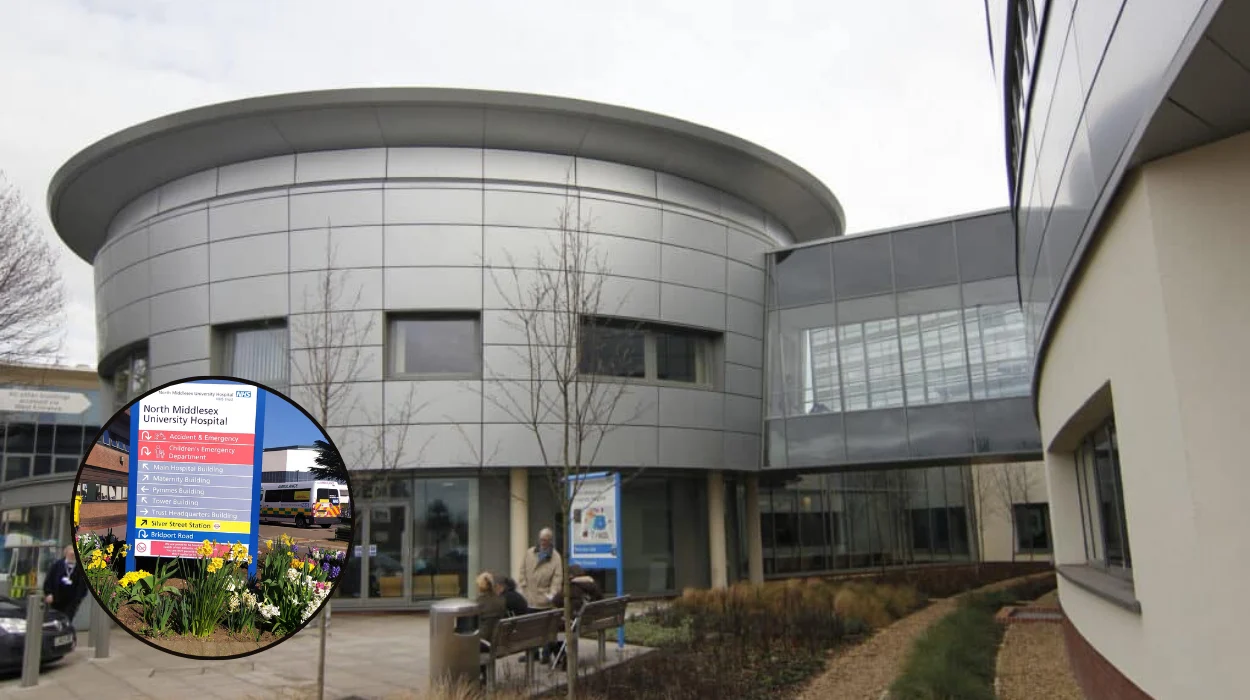
North Middlesex Hospital, situated on Sterling Way in London, stands as one of the key acute NHS hospitals in the region. Serving a diverse population of more than 350,000 people in the boroughs of Enfield and Haringey, the hospital plays a fundamental role in delivering vital medical and community care services to North London residents.
Historical Background
The origins of North Middlesex Hospital trace back to its establishment as an infirmary for the local workhouse at Langhedge Field, opening its doors on 25 July 1910. Initially segregated from the adjacent workhouse by an iron fence—the common gate still exists as a heritage marker—the hospital began life serving vulnerable populations.
In 1915, during World War I, the hospital transitioned temporarily into Edmonton Military Hospital under military control. Returning to civilian use in 1920, it was officially renamed the North Middlesex Hospital, a pivotal moment marking its evolution into a full-service healthcare facility for the community. Control of the hospital passed to Middlesex County Council in April 1930, cementing its status within the public health infrastructure.
Significant developments over the decades included the opening of various departments that were trailblazers in the UK. For instance, in 1934, North Middlesex was the first British hospital to appoint a radiotherapist—Margaret Bromhall—to head its radiotherapy department, setting a standard in cancer treatment.
The hospital endured challenges such as World War II bomb damage, with six high explosive bombs falling on the site, requiring rebuilding and modernization in subsequent years. A notable expansion was in 1955 when the Accident and Emergency (A&E) department opened, utilizing bomb-damaged land efficiently to expand critical services. In 1960, Princess Margaret officially inaugurated the new outpatients’ department, signaling royal recognition of the hospital’s growing importance.
Location and Accessibility
Sterling Way (the A406 North Circular Road), adjacent to the hospital, became a critical infrastructural element influencing hospital expansion and accessibility. In 1973, part of the hospital site was ceded to the Department of Transport for road expansion, and in exchange, new land was acquired along Watermill Lane for hospital development. This strategic location on Sterling Way connects North Middlesex Hospital to wider London, facilitating patient access from all surrounding areas.
Current Role and Services
Now part of the Royal Free London NHS Foundation Trust since January 2025, North Middlesex Hospital continues to offer comprehensive healthcare services. These include emergency care, maternity, surgical services, outpatient clinics, diagnostics, cancer treatment, and community health programs. Serving one of London’s most ethnically diverse and populous areas, the hospital is integral to the well-being of North London’s residents.
Its services are tailored to a population that requires culturally competent care, encompassing a wide range of medical specialties and innovations in patient-centric services. The hospital also supports public health initiatives aimed at preventive care and chronic disease management.
Architectural Evolution and Facilities
The hospital architecture is a patchwork of different styles accumulated over more than a century. From the original workhouse infirmary to the modern multi-story ward blocks on Watermill Lane, the site reflects the changing needs and technologies of healthcare. The 9-story maternity ward addition in the mid-1970s is a testament to its ongoing expansion to meet birth and neonatal care demands.
The hospital’s design also includes specialized departments such as radiotherapy units, hydrotherapy pools, diagnostic and pathology labs, reflecting the multidisciplinary approach to medicine.
Importance for North London Community
North Middlesex Hospital is more than a medical facility; it is a community cornerstone for North London. It offers critical care to vulnerable populations while educating and employing thousands in healthcare professions. Its long history intertwines with the social history of North London, evolving from a humble workhouse infirmary into a modern hospital serving a diverse and growing urban population.
Residents of North London look to North Middlesex Hospital for emergency care, maternity services, chronic disease management, and specialist treatments, underlining its role as an essential healthcare provider in the UK capital.
North Middlesex Hospital on Sterling Way, London, exemplifies the dynamic history and development of healthcare in North London. From its workhouse origins over a century ago, through wartime challenges and continuous innovation, to its modern role as part of the Royal Free London NHS Foundation Trust, the hospital remains a vital institution. Its accessibility, comprehensive services, and historical significance ensure that it will continue to be a healthcare beacon for the North London community for decades to come.