Key Points
- Transport for London (TfL) aims to increase Northern line trains to 36 per hour at peak times in North London, requiring 45 additional berths for extra trains.
- This upgrade necessitates at least two new depots, one on each branch of the Northern line serving North London.
- A potential site is identified next to Totteridge & Whetstone station on the High Barnet branch in North London.
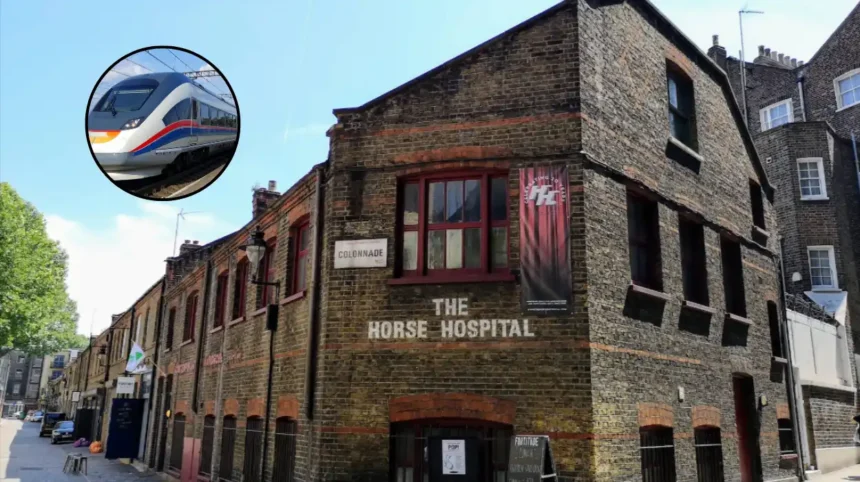
- The site is a large plot of disused land with a unique history as the Great Northern Railway’s horse hospital in North London.
- The station opened in 1872 as a mainline station by the Great Northern Railway, later operated by LNER, and taken over by London Underground in 1940.
- The horse hospital opened in 1884 to care for around 1,000 horses valued at £60,000, used for carting luggage, small freight, and horse-drawn buses.
- Horses were stabled near King’s Cross, but the hospital in North London’s Totteridge was built due to fears of Glanders disease outbreaks in urban areas.
- The facility could treat 55 horses at a time and featured a luxurious Turkish bath with hot steam from a basement boilerhouse.
- The site later became a Soft Drinks Works, then Planston Works, which closed, and was cleared around 2017/18.
Totteridge & Whetstone (North London News) – February 17, 2026 – Transport for London (TfL) is eyeing a disused plot next to Totteridge & Whetstone Underground station in North London for a new train depot to support a major upgrade of the Northern line, aiming to run 36 trains per hour at peak times. This ambition requires 45 extra berths and at least two new depots, one per branch, with the historic site – once home to a railway horse hospital – emerging as a prime candidate on the High Barnet branch in North London. The proposal revives a long-term aspiration to boost capacity on one of London’s busiest Tube lines serving North London communities.
- Key Points
- Why Does TfL Want More Trains on the Northern Line in North London?
- What Is the History of the Proposed Depot Site in North London?
- How Did the Site Evolve After the Horses in North London?
- What Challenges Might the Depot Face in North London?
- How Does This Fit TfL’s Broader Northern Line Plans in North London?
- Who Supports or Opposes the Proposal in North London?
- When Might Construction Begin in North London?
- Where Exactly Is the Site Located in North London?
- Why Is the Horse Hospital Historically Significant in North London?
- What Are the Economic Implications for North London?
- How Does This Affect Commuters in North London?
- Could Heritage Features Be Preserved in North London?
- What Next Steps for TfL in North London?
Why Does TfL Want More Trains on the Northern Line in North London?
TfL’s plan centres on enhancing service frequency to meet growing demand across North London. As detailed in coverage by Ian Visits, TfL aspires to increase Northern line trains to 36 per hour during peaks, a significant jump from current levels. This intensification demands additional stabling space, calculated at 45 new berths to house the extra rolling stock for North London routes.
The need for two new depots stems from the line’s split branches: one towards High Barnet in North London, the other via Edgware. Totteridge & Whetstone, on the High Barnet route through North London, offers a rare opportunity due to its adjacent disused land. No official planning application has been submitted yet, but TfL has identified the site as viable amid ongoing infrastructure assessments for North London.
What Is the History of the Proposed Depot Site in North London?
The plot’s railway heritage sets it apart in North London. As reported by Ian Visits, Totteridge & Whetstone station opened in 1872 under the Great Northern Railway as a mainline stop, later managed by the London and North Eastern Railway (LNER), before London Underground assumed control in 1940. Unlike modern stations, it once bustled with sidings for cargo, coal, parcels, and livestock in North London.
Most notably, the Great Northern Railway built a horse hospital next to the station in 1884. The company owned about 1,000 horses, an investment worth £60,000 at average prices then – equivalent to a fortune for shire horses and cartage animals. These equines hauled luggage to stations, managed small freight in yards, and powered the railway’s horse-drawn buses in central London, with key facilities in North London.
Stables stood near King’s Cross, but urban disease risks prompted the Totteridge facility in North London. Fear of Glanders – a highly contagious bacterial infection fatal to horses – drove the decision, as outbreaks in cities could cripple operations. The hospital, visible in a 1920s aerial photo from Britain from Above as a large building at about 9 o’clock near the water tower and railway cottages, could treat 55 horses simultaneously.
Luxuries included a central Turkish bath, where hot steam from a basement boilerhouse soothed ailments. British Newspaper Archive records confirm this capacity and features, underscoring the era’s investment in equine welfare at this North London site.
How Did the Site Evolve After the Horses in North London?
Horses faded with motorisation, rendering the hospital obsolete. The site repurposed first as a Soft Drinks Works, then Planston Works, an industrial unit in North London. Operations wound down, and clearance occurred around 2017/18, leaving the land vacant.
Today, the plot sits idle beside the station in North London, a quirk of history preserving it for potential rail use. No residential or commercial developments have claimed it, aligning with TfL’s depot needs for Northern line upgrades.
What Challenges Might the Depot Face in North London?
Local opposition could arise over noise, traffic, and loss of green space in North London. Totteridge & Whetstone, in Barnet within North London, blends suburban calm with commuter access; a depot might alter its character. Planning permission from Barnet Council would require environmental impact assessments, community consultations, and heritage considerations given the site’s railway legacy in North London.
TfL must balance upgrade benefits – reduced crowding, faster journeys – against disruptions for North London residents. Construction could span years, affecting services on the Northern line.
How Does This Fit TfL’s Broader Northern Line Plans in North London?
The Northern line upgrade forms part of TfL’s long-term vision for North London. Past improvements include new trains and signalling; this depot would enable full frequency gains. The Edgware branch may seek a second site, ensuring equity across North London branches.
As Ian Visits notes, the proposal highlights infrastructure ingenuity – repurposing heritage land amid land scarcity in North London. Success could model upgrades elsewhere, like the Victoria or Piccadilly lines.
Who Supports or Opposes the Proposal in North London?
TfL leads the initiative, with no public statements from executives quoted yet. Local MPs and councillors in Barnet, North London, have not commented in available reports. Residents groups, such as those preserving Totteridge’s lanes in North London, may scrutinise impacts.
Heritage bodies like the London Railway Record could advocate safeguards for the horse hospital’s memory, perhaps via plaques. Commuters in North London, facing chronic overcrowding, likely welcome more trains.
When Might Construction Begin in North London?
Timelines remain tentative for this North London project. Site identification precedes feasibility studies, public consultation, and planning approval – processes spanning 2-5 years typically. If greenlit, building a modern depot with berths, maintenance bays, and access could take another 3 years, targeting operational readiness by 2032-35.
TfL’s aspirations date back years; delays from funding or objections are possible in North London.
Where Exactly Is the Site Located in North London?
Adjoining Totteridge & Whetstone station on the A5109 Totteridge Lane in North London, the plot lies north of platforms, accessible via existing rail corridors. Water tower remnants and railway cottages nearby mark its footprint, visible on maps and historic photos.
Why Is the Horse Hospital Historically Significant in North London?
The facility exemplified Victorian railway innovation in North London. Owning 1,000 horses demanded top care; the Turkish bath treated respiratory issues via steam, a novel therapy. Glanders fears – a notifiable disease then – isolated treatment rurally, protecting urban networks.
The Great Northern’s “palace for horses” in North London reflected equine centrality pre-ICE. Its loss with motor vehicles mirrors transport evolution, now circling back for electric trains.
What Are the Economic Implications for North London?
A depot promises jobs in construction, operations, and maintenance – bolstering Barnet’s economy in North London. Enhanced Northern line service aids North London’s growth, supporting housing and businesses. TfL investments stimulate supply chains.
Yet, short-term disruptions hit locals and traders on Totteridge High Road in North London.
How Does This Affect Commuters in North London?
More trains mean shorter waits and space, vital for the 1.2 million daily riders on Northern line services through North London. Peak 36tph rivals global metros, cutting journey times. Depots ensure reliability, minimising breakdowns.
Could Heritage Features Be Preserved in North London?
Artefacts like foundations or photos could inform designs at this North London site. English Heritage might list elements, requiring sympathetic development.
What Next Steps for TfL in North London?
Expect consultations soon, per standard procedure for North London projects. Barnet Council planning portal will host applications. TfL updates via tfl.gov.uk.