Key Points
- Historic Conversion: The Parkland Walk in North London is a 2.5-mile (4-kilometre) linear nature reserve following a disused Great Northern Railway line connecting Finsbury Park to Alexandra Palace.
- London’s Longest Nature Reserve: Officially established as a parkland in 1984, the trail represents London’s longest linear local nature reserve, providing a crucial green corridor through urban neighbourhoods.
- Rich Heritage & Relics: Walkers encounter former platforms, sun-dappled woodlands, overgrown cuttings, and historical railway structures along the route.
- Artistic Folklore Feature: The trail features a famous green man sculpture known as the “Spriggan,” carved directly into the brickwork of a former railway arch.
- Evolution of the Track: The line ceased passenger operations in the 1950s, handled its final freight transport in 1970, and was subsequently saved from residential development before being turned into a public parkland.
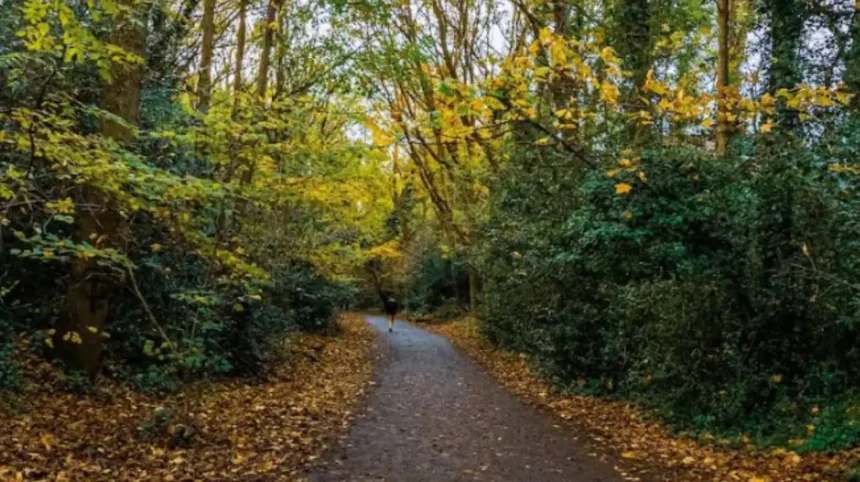
North London (North London News) August 24, 2026 – London remains a continuously transforming metropolis where venues, populations, and urban landscapes undergo ongoing evolution. One notable example of urban space adaptive reuse is the Parkland Walk, a 2.5-mile (4-kilometre) stretch of land that serves as London’s longest linear nature reserve. Spanning the distance between Finsbury Park and Alexandra Palace, the tranquil trail occupies a former railway line that has been completely repurposed into a sanctuary for nature lovers and local residents.
As reported by Mia of Secret London, the Parkland Walk stands out as one of the capital’s most picturesque routes. Visitors exploring the full stretch of the parkland navigate a variety of natural environments, ranging from sun-dappled woodland foliage to preserved railway structures that signal the trail’s historical past. Among its features is a mischievous elvish sculpture known as the Spriggan, built directly into the surviving brick walls.
What Is the History Behind the Disused Parkland Walk Railway Line?
As reported by Mia of Secret London, the Parkland Walk track originally formed part of the Great Northern Railway, facilitating passenger train transit between Finsbury Park and Alexandra Palace.
Initial urban plans intended for the rail segment to be integrated into the London Underground network’s Northern Line. However, the onset of the Second World War disrupted these developments, leaving the infrastructure to gradually fall out of active service during the post-war era.
As detailed by Mia of Secret London, passenger services along the railway line officially ceased during the 1950s. Freight and occasional rail transit continued on a diminished scale until the final train passed through the corridor in 1970.
A few years following the line’s final closure, the physical steel tracks were lifted, and the surrounding station buildings were demolished. In the years that followed, natural vegetation reclaimed the open space, paving the way for its official conversion into the Parkland Walk public reserve in 1984.
What Can Walkers Expect to Experience Along the Route?
As reported by Mia of Secret London, the 2.5-mile trail offers visitors an immersive journey through diverse habitats within North London.
The route retains structural remnants of its railway legacy, including station platforms, cuttings, and overbridges now surrounded by woodland canopy.
Alongside the historical infrastructure, walkers frequently spot the Spriggan—a green folklore sculpture mounted on a brick archway along the path, which has become one of the trail’s signature features. The linear nature reserve operates as an accessible retreat for city dwellers, offering a quiet pedestrian and cycle path through the urban surroundings.
Explore More Local North London News
Severe Delays Hit Metropolitan Line After Wembley Fire Alert Wembley 2026
Islington Caravan Site Opposition Triggers Intimidation Claims in North London 2026
Background of the Development
The development of the Parkland Walk traces back to the 19th century, when the Edgware, Highgate and London Railway constructed the route to link thriving North London suburbs with mainline services and the exhibition venue at Alexandra Palace.
Following the line’s eventual abandonment in 1970 and the removal of the tracks, the land faced potential housing development during the mid-1970s. Local opposition and conservation efforts successfully prevented residential construction, leading to the designation of the corridor as a green space managed by local authorities.
In 1984, the site officially opened as the Parkland Walk, subsequently earning recognition as a Local Nature Reserve and a Site of Metropolitan Importance for Nature Conservation. Today, it forms part of the Capital Ring strategic walking route, drawing thousands of walkers, runners, and nature enthusiasts annually.
Predictions
The continued protection and recognition of green spaces like the Parkland Walk will directly impact North London residents, local business owners, and city visitors.
For local residents, the preservation of this linear nature reserve ensures ongoing access to free outdoor recreation and protected urban biodiversity corridors.
As urban density increases across London, the trail will likely see higher footfall from commuters using the green route as a pedestrian pathway between Finsbury Park, Crouch End, Highgate, and Muswell Hill.
For local businesses situated near access points, steady visitor interest in historic and nature walks is expected to sustain foot traffic to nearby cafés, shops, and pubs. Environmental initiatives along the reserve are also projected to maintain essential wildlife habitats for local fauna within the city.