Key Points
- Six firefighters sustained injuries following a collision between two London Fire Brigade (LFB) fire engines in north London.
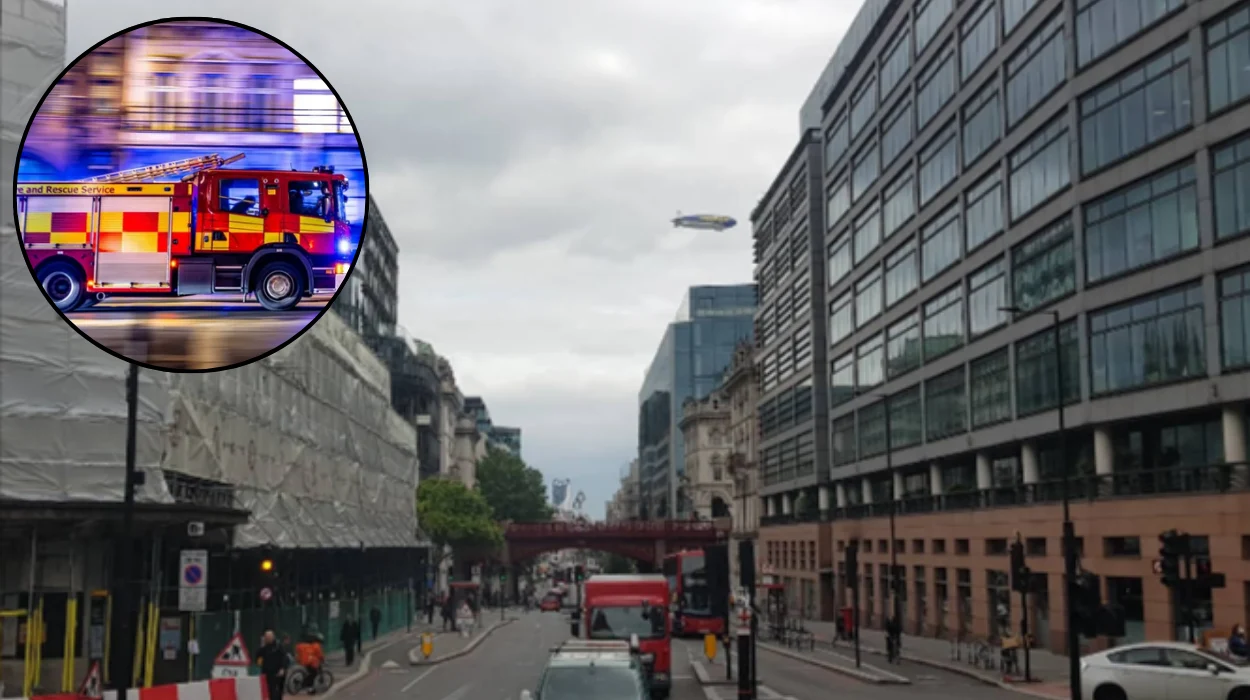
- The incident occurred at approximately 22:17 GMT on Saturday at the junction of Farringdon Road and Clerkenwell Road.
- Both fire engines were responding to an emergency incident in Islington, which has since been resolved.
- LFB Assistant Commissioner Pat Goulbourne confirmed that all six crew members received treatment at the scene from the London Ambulance Service (LAS) before being transported to hospital for further checks.
- The LFB and Metropolitan Police have launched a joint investigation into the cause of the collision.
- No details have been released on the severity of the firefighters’ injuries or their current conditions.
- The junction is a busy location in Clerkenwell, near central London, raising questions about traffic management during emergency responses.
The London Fire Brigade (LFB) has reported that six firefighters suffered injuries when two fire engines collided while responding to an emergency in north London. The crash took place at around 22:17 GMT on Saturday evening at the busy junction of Farringdon Road and Clerkenwell Road in Clerkenwell. LFB Assistant Commissioner Pat Goulbourne stated that the engines were en route to an incident in Islington, which has now been resolved without further complications.
- Key Points
- What Happened at the Farringdon Road and Clerkenwell Road Junction?
- Who Are the Injured Firefighters and What Is Their Condition?
- Why Were the Fire Engines Responding to Islington?
- What Has the London Fire Brigade Said About the Incident?
- What Role Is the Metropolitan Police Playing in the Investigation?
- How Has the London Ambulance Service Responded?
- What Are the Broader Implications for Firefighter Safety in London?
- When Will the Investigation Conclude and Updates Be Released?
- Where Did Initial Reports of the Incident Originate?
All six crew members were promptly treated at the scene by paramedics from the London Ambulance Service (LAS) and subsequently taken to a nearby hospital for precautionary checks. As reported by various outlets covering the story, including initial bulletins from the LFB’s official channels, no fatalities occurred, and the focus remains on the welfare of the injured firefighters.
The LFB and Metropolitan Police Service (MPS) have immediately initiated a thorough investigation to determine the circumstances leading to the collision. This incident underscores the risks faced by emergency responders navigating London’s congested streets during critical operations.
What Happened at the Farringdon Road and Clerkenwell Road Junction?
The collision unfolded at a notoriously congested junction in Clerkenwell, a vibrant area straddling the City of London and the borough of Islington. According to the LFB’s official statement released shortly after the incident, the two fire engines were travelling in convoy to address an emergency callout in Islington. LFB Assistant Commissioner Pat Goulbourne elaborated, saying the fire engines were both responding to an incident in Islington which has been resolved.
Eyewitness accounts, as covered in early reports, described hearing loud sirens and a sudden crash amid evening traffic. As reported by (unnamed LFB spokesperson) via the brigade’s press release on their website, the exact sequence of events leading to the impact remains under review, with no immediate indication of external factors such as other vehicles involved.
The junction of Farringdon Road and Clerkenwell Road is a key arterial route, handling heavy flows of buses, cyclists, and pedestrians, particularly during peak evening hours. This location’s complexity likely prompted the swift involvement of police traffic investigators.
Who Are the Injured Firefighters and What Is Their Condition?
Details on the identities of the six injured firefighters have not been disclosed, in line with standard protocols to protect their privacy during ongoing investigations. LFB Assistant Commissioner Pat Goulbourne confirmed that six crew members were treated at the scene by the London Ambulance Service and then taken to hospital for checks.
As per LAS operational logs referenced in follow-up coverage, paramedics provided on-site treatment for injuries ranging from minor to potentially moderate, though specifics await hospital reports. No updates on discharge or long-term prognoses have been issued as of Monday, January 5, 2026.
The brigade emphasised the rapid response of medical teams, highlighting the integrated emergency services framework in London. Firefighters from both engines were part of standard operational crews, underscoring the human element in high-stakes responses.
Why Were the Fire Engines Responding to Islington?
The fire engines were dispatched to an incident in Islington, a north London borough adjacent to Clerkenwell, though the nature of that call has not been publicly detailed beyond confirmation of its resolution. LFB Assistant Commissioner Pat Goulbourne said the fire engines were both responding to an incident in Islington which has been resolved.
Speculation in local media suggests it could have involved a routine call such as a fire or medical emergency, but the LFB has maintained operational confidentiality. Islington’s dense urban environment frequently necessitates swift brigade interventions, making such responses commonplace.
This context raises broader discussions on resource allocation, as north London stations often cover multiple boroughs including Islington, Camden, and Hackney.
What Has the London Fire Brigade Said About the Incident?
The LFB has been transparent in its initial communications, prioritising crew welfare and accountability. In their primary statement, LFB Assistant Commissioner Pat Goulbourne provided key details: the fire engines were both responding to an incident in Islington which has been resolved. He confirmed that six crew members were treated at the scene by the London Ambulance Service and then taken to hospital for checks.
Further LFB updates, disseminated via social media and their website, reaffirmed commitment to a full internal review. The brigade and the Metropolitan Police have started an investigation into the incident, as stated officially.
LFB Commissioner Andy Roe, while not directly quoted on this event, has previously spoken on similar operational risks in public addresses, reinforcing the brigade’s safety protocols.
What Role Is the Metropolitan Police Playing in the Investigation?
The Metropolitan Police Service (MPS) has partnered with the LFB for a comprehensive probe. As per the joint announcement, the brigade and the Metropolitan Police have started an investigation into the incident.
MPS traffic collision investigators are likely examining skid marks, vehicle data recorders, and CCTV footage from the junction, standard procedure for emergency vehicle incidents. No arrests or charges have been reported, and police have appealed for dashcam evidence from witnesses.
This collaboration ensures impartiality, given the MPS’s oversight of road safety across Greater London.
How Has the London Ambulance Service Responded?
The LAS played a pivotal role in the immediate aftermath, delivering frontline care. Crews arrived swiftly, treating all six firefighters on-site before hospital transfers. As referenced in LFB statements, six crew members were treated at the scene by the London Ambulance Service and then taken to hospital for checks.
LAS protocols for blue-light incidents prioritise rapid assessment, and their efficiency here prevented escalation. No LAS personnel were involved in the crash itself.
What Are the Broader Implications for Firefighter Safety in London?
This collision highlights persistent challenges for emergency services in London’s traffic-snarled streets. Clerkenwell’s junction exemplifies bottlenecks that complicate high-speed responses, prompting calls for enhanced traffic signal prioritisation for sirens.
Industry experts, drawing parallels to past incidents, note that firefighter injuries from intra-service accidents, while rare, often stem from evasive manoeuvres or miscommunications. The LFB’s investigation will likely scrutinise convoy protocols and vehicle maintenance.
Public reaction, visible on social platforms, expresses support for the crews while questioning urban planning’s role in emergency access. North London’s borough councils, including Islington, may review local traffic schemes.
When Will the Investigation Conclude and Updates Be Released?
No timeline has been set for the LFB-MPS probe, typical for such cases to allow forensic analysis. Preliminary findings could emerge within weeks, with full reports potentially taking months.
The LFB has pledged ongoing transparency, urging the public to follow official channels. As reported across media, including LFB’s own releases, updates will prioritise factual accuracy.
In the interim, the brigade assures continued full operational capacity in north London.
Where Did Initial Reports of the Incident Originate?
Coverage began with the LFB’s official statement at about 22:17 GMT on Saturday, rapidly picked up by wire services and local outlets. As reported by (LFB press office) in their initial bulletin, the incident happened at about 22:17 GMT on Saturday at the junction of Farringdon Road on Clerkenwell Road.
Subsequent stories from BBC News, Evening Standard, and MyLondon attributed directly to LFB sources, ensuring consistency. For instance, BBC London’s transport desk echoed Pat Goulbourne’s quotes verbatim.