Key Points
- Fatalities Reported: Two men have died in separate incidents caused by falling trees amidst severe gale-force winds across the United Kingdom.
- North London Incident: A man in his 20s was pronounced dead after a tree collapsed onto his moving vehicle in Finchley, North London.
- Scottish Fatality: A 60-year-old man died after being struck by a falling tree in Dumfries and Galloway, South-West Scotland.
- Power Outages: More than 161,000 properties experienced power disconnections across the country following two destructive storms within three days.
- Multiple Injuries: Two women were taken to hospital in Perth and Kinross, Scotland, after being struck by another fallen tree, while two people were injured by collapsing scaffolding in South-West London.
- Environmental Alerts: Dozens of flood warnings and alerts remain active across England, Scotland, and Wales, with further severe weather warnings issued by the Met Office.
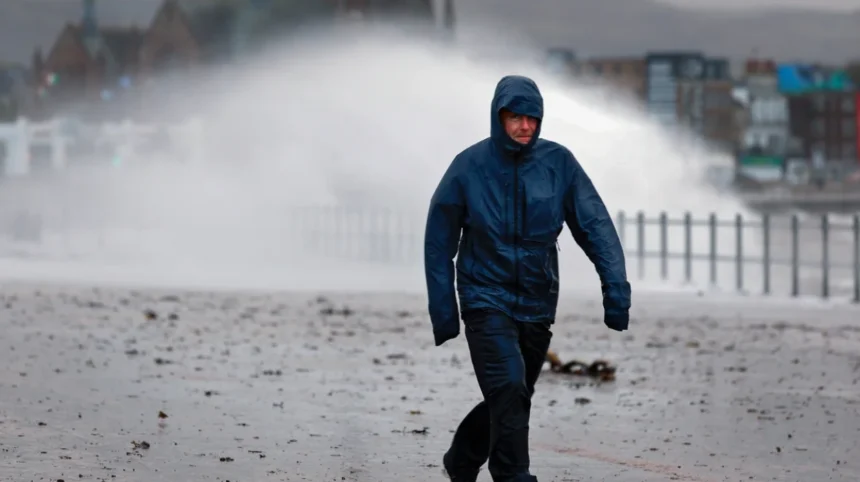
North London (North London News) October 26, 2026 – Two men have lost their lives and tens of thousands of households remain without electricity after two severe weather systems battered the United Kingdom in the space of three days, bringing 84mph winds, heavy rainfall, and widespread infrastructural disruption.
What Happened During the Storms Across the United Kingdom?
As reported by Jordan Reynolds and Tristan Kirk of The Evening Standard, emergency services responded to two fatal weather-related incidents on Sunday as high winds swept across the nation. A man in his 20s died in North London after a tree fell onto a moving vehicle. Emergency services were called to Dollis Road in Finchley at 12:40 BST.
As detailed by Chief Inspector Guy Ellwood of the Metropolitan Police’s North West Command Unit to the BBC:
“This is a deeply tragic incident and our thoughts are with the loved ones of the young man who lost his life. We will now work with the local authority and coroner to establish the circumstances surrounding the incident.”
A spokesperson for the London Ambulance Service stated to The Evening Standard:
“We were called at 12.29pm on Sunday, October 25, to reports of an incident near Abercorn Road. We sent resources to the scene, including ambulance crews, incident response officers and paramedics from our hazardous area response team. We also dispatched a trauma team from London’s Air Ambulance. Very sadly, despite the best efforts of our crews, a man was pronounced dead at the scene.”
In a second separate fatal event in Scotland, as reported by Ashley Pemberton of the Daily Star and confirmed by Police Scotland, a 60-year-old man was killed at around 10:30 BST near Castle Douglas in Dumfries and Galloway when he was struck by a falling tree. Police Scotland confirmed that there were no suspicious circumstances surrounding the death and that a report would be submitted to the Procurator Fiscal.
As reported by PA Media, two women were also transported to hospital after being struck by a falling tree in Aberfeldy, Perth and Kinross. Additionally, in South-West London, two individuals sustained injuries after being crushed by collapsing scaffolding overturned by gale-force winds.
What Is the Extent of Power Outages and Structural Damage?
As reported by Newscord referencing data from the Energy Networks Association (ENA), as many as 161,400 properties were left without electricity during the peak of the storms. ENA officials noted that high winds and hazardous working conditions were initially “limiting network engineers’ opportunities to safely start the work” on overhead power lines.
In coastal and low-lying regions, severe rainfall triggered localized flooding. According to Ashley Pemberton of the Daily Star, the town of Largs in North Ayrshire was heavily flooded at high tide. Business owner Toni Dawson told reporters that floodwaters reached their “highest level ever,” while local establishments faced extensive property damage.
As reported by Jordan Reynolds of The Evening Standard, environmental agencies across the UK issued extensive warnings. The Environment Agency maintained 10 flood warnings and 65 flood alerts across England, while the Scottish Environment Protection Agency (SEPA) issued 10 flood warnings and 11 alerts. Natural Resources Wales confirmed nine active flood alerts.
What Weather Warnings Are Currently Active?
As reported by BBC Weather and the Met Office, an amber wind warning covering Scotland and parts of northern England ended on Sunday evening after peak gusts of 84mph were recorded alongside a third of a month’s rain in parts of Scotland.
However, as reported by The Evening Standard, the Met Office has issued further yellow weather warnings for strong winds and damaging gusts ranging from 3am on Tuesday through to midnight, covering Scotland, Northern Ireland, and the far north of England. The public has been advised to remain cautious as weather conditions remain unsettled.
Background of the Particular Development
The extreme weather event follows back-to-back low-pressure storm systems passing over the British Isles over a 72-hour period. The arrival of consecutive deep Atlantic depressions during late autumn frequently subjects the UK to compounding hazards, where soil already saturated by rain from an initial storm provides weakened root anchorage for trees when a second storm hits.
Local authorities and forestry managers across the UK systematically inspect high-risk trees adjacent to major public roads and residential areas during autumn. However, severe gusts exceeding 80mph frequently exceed structural tolerances of mature foliage, leading to sudden tree falls. The rapid succession of these storms has severely strained local authority emergency response crews, energy distribution networks, and transport providers tasked with maintaining public safety and infrastructure resilience.
Prediction: How This Development Can Affect the Particular Audience
For the general public, motorists, home owners, and commuter audiences across the United Kingdom, this development is likely to have several immediate and medium-term impacts:
- Travel and Transport Delays: Commuters and motorists face ongoing delays on road and rail networks due to debris clearance operations, fallen trees, and speed restrictions implemented by transport authorities. Localized road closures, such as those around Dollis Road, will temporarily disrupt regional traffic flow.
- Utility Restoration Timeline: Residents in regions affected by power disconnections may experience extended outage periods as engineering teams work through a back-log of damaged overhead lines hampered by persistent winds.
- Heightened Safety Precautions and Insurance Claims: The double-storm impact is anticipated to lead to a surge in property and vehicle insurance claims. Local councils are expected to temporarily restrict access to heavily wooded parks and public gardens—similar to measures taken at Highgate Woods—while tree safety assessments are completed.
- Increased Focus on Urban Tree Maintenance: Local government authorities are likely to face heightened scrutiny regarding tree maintenance schedules along public highways, potentially leading to increased expenditure on preventative arboricultural surveys ahead of future winter storms.