Key Points
- Pantomimes, or “pantos,” are a cherished British holiday tradition during the Christmas season, featuring interactive audience participation with shouts like “It’s behind you!” and booing villains.
- Performances blend fairy tales with bawdy twists, music, pop parodies, and men in drag playing “dames” (female characters).
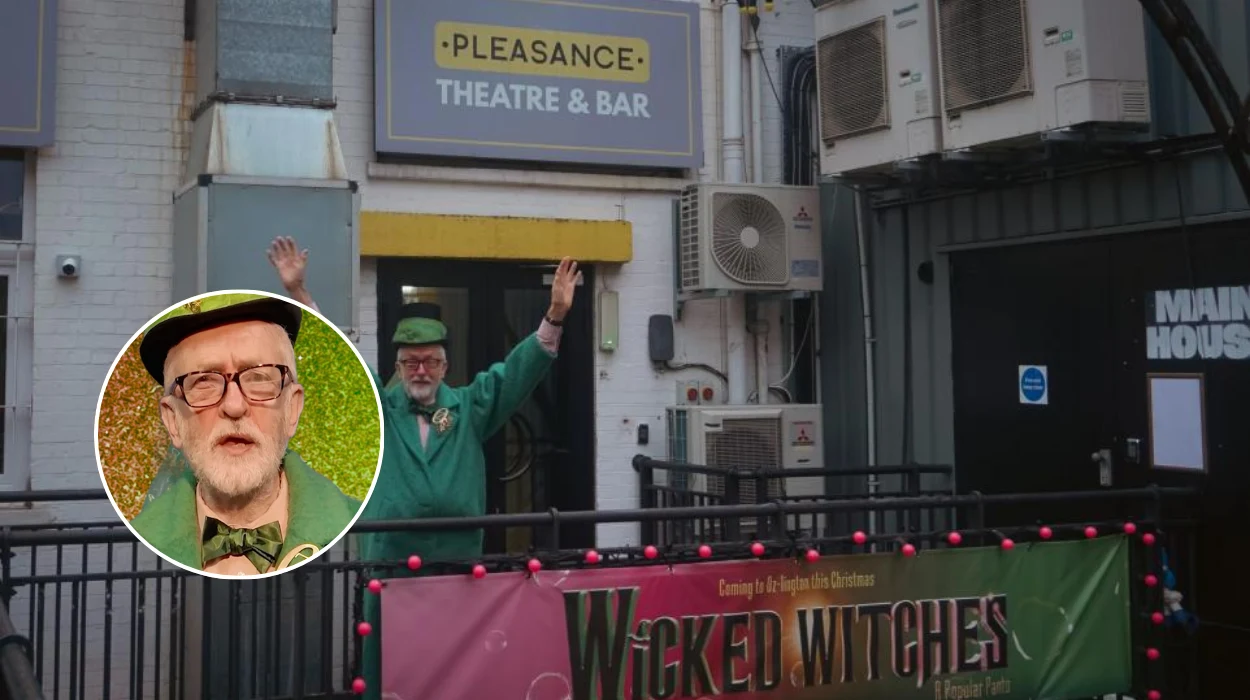
- The article spotlights Wicked Witches at Pleasance Theatre in North London, inspired by The Wizard of Oz and Wicked, with a plot involving Dorothy (renamed Dor) returning to Oz amid a blizzard 20 years later.
- Audience interaction is central: a green witch villain prompts boos, and crowds join in classic catchphrases throughout the two-hour show.
- Celebrity cameos include politician Jeremy Corbyn as the Wizard of Oz-lington (a pun on Islington) via video, and actor Ian McKellen as Toto the dog in a clip.
- Playwright Shane “ShayShay” Konno, an American nonbinary writer from California’s Bay Area living in the UK for 12 years, created the show to bridge cultural gaps and promote LGBTQ+ inclusivity.
- Konno’s production features a nonbinary lead (Dor) and themes of accepting differences; it offers family and adult versions with disguised innuendos in the family show.
- Historical roots trace to 16th-century Italian commedia dell’arte, evolving in East London as community events.
- Wicked Witches emphasises silly jokes, innuendos, and songs over plot, helping families enter the Christmas spirit.
Pantomimes ignite Britain’s festive season with raucous family fun, as crowds nationwide shout “It’s behind you!” at villains lurking onstage. At the Pleasance Theatre in North London, the premiere of Wicked Witches exemplifies this tradition, drawing packed houses for its interactive twists on The Wizard of Oz and Wicked. Families boo witches, cheer heroes, and revel in drag dames and pop parodies, cementing pantomime’s role as a holiday staple.
- Key Points
- What Makes Pantomimes a British Holiday Staple?
- Who Wrote Wicked Witches and What’s Its Unique Story?
- Which Celebrities Star in Wicked Witches?
- What Are the Origins of British Pantomime?
- How Does Audience Participation Work in Pantomimes?
- Why Do Pantomimes Offer Family and Adult Versions?
- What Impact Do Pantomimes Have on British Culture?
This two-hour spectacle, running through the holidays, prioritises audience heckling over intricate plots. A cackling green witch storms in amid foreboding music, only to scold the initially quiet crowd for not booing her villainy loudly enough. She exits and re-enters, prompting explosive jeers that set the tone for constant participation.
What Makes Pantomimes a British Holiday Staple?
Pantomimes, affectionately called “pantos,” flood British theatres from late November through January, transforming fairy tales into bawdy, musical extravaganzas. As reported by Phil Galley of OPB (Oregon Public Broadcasting) in the article “It’s behind you! How Britain goes wild for pantomimes during the holidays” published on 28 December 2025, these shows “help get [families] into the Christmas spirit.”
Traditional elements include men playing exaggerated “dames” in drag, cross-dressing principal boys (heroines in tight outfits), slapstick comedy, and audience call-outs like “He’s behind you!” or “Oh yes you can!” (to actors’ denials). Plots loosely adapt tales such as Cinderella, Aladdin, or Jack and the Beanstalk, laced with innuendos that sail over children’s heads while delighting adults.
Galley describes the North London scene:
“All across Britain during the festive period, families attend pantomimes — often shortened to ‘pantos’ — which help get them into the Christmas spirit. Pantomimes are usually based on a well-known story, often a fairy tale, which is then given a bawdy twist. Traditionally, they feature female characters, or ‘dames,’ played by a man in drag, and include lots of music, particularly pop parodies.”
Attendance surges during holidays, with over 1,000 professional pantomimes yearly, per industry estimates from the Society of London Theatre. Venues from grand West End houses like the London Palladium to community halls in villages host them, generating millions in revenue.
Who Wrote Wicked Witches and What’s Its Unique Story?
At the heart of this coverage stands Wicked Witches at Pleasance Theatre, Islington. Its storyline whisks Dor (a reimagined Dorothy) back to Oz 20 years later via a blizzard, but
“in many ways, the plot comes second to the silly jokes, innuendos, and songs,”
notes Galley.
The playwright is Shane “ShayShay” Konno, a nonbinary American from California’s Bay Area who has resided in the UK for 12 years. As quoted by Galley, Konno says:
“I didn’t grow up in the U.K., and when I moved here, starting to understand pantomime felt like a huge cultural hurdle.”
Konno infused the production with LGBTQ+ themes, casting a nonbinary actor as Dor and weaving messages of acceptance. “I wanted to make something that made an explicitly LGBT version of The Wizard of Oz and Wicked, because that’s such a beloved franchise for the queer community,” Konno states in the OPB piece.
Two versions cater to audiences: family-friendly with children and adults-only. Yet, Konno reveals overlaps:
“When a quite rude joke is said, but one that goes over the kids’ heads, it does tickle the adults in the room more than it would in an adult show because they’re like, ‘Oh my goodness, I can’t believe that they said that in front of the children,’”
as reported by Galley.
Which Celebrities Star in Wicked Witches?
Pantomimes thrive on star power, and Wicked Witches delivers. Video appearances feature Jeremy Corbyn, former Labour Party leader and now independent MP for Islington North. He plays the Wizard of Oz-lington—a pun on Islington—adding political flair.
Even more thrilling is Ian McKellen, the Oscar-nominated actor famed as Gandalf in The Lord of the Rings trilogy and Magneto in X-Men. He appears in a clip as Toto the dog, delighting fans. Galley highlights:
“This one features politician Jeremy Corbyn, who used to lead Britain’s Labour Party. He appears on video as the Wizard of Oz-lington, a pun on Islington, the area of London he represents, now as an independent, in Parliament. Even more exciting is actor Ian McKellen — famous for playing Gandalf in the Lord of the Rings films — who is seen in a video clip as Toto the dog.”
Such cameos boost ticket sales; McKellen, aged 86, has a history in pantomime, having played Widow Twankey in Aladdin at the Old Vic in 2004.
What Are the Origins of British Pantomime?
Pantomime’s lineage stretches to 16th-century Italian commedia dell’arte, with stock characters and improvisation. In Britain, it took root in the 1700s via John Rich’s productions at Covent Garden, blending harlequinade with fairy tales.
Konno traces its community roots:
“The actual history of pantomime is it started in East London, and it used to be this huge thing where the whole community would come together,”
as cited by Galley.
By the Victorian era, pantomimes became annual fixtures, evolving with music hall influences. Post-war, they adapted to television and pop culture, surviving theatre closures. Today, they remain resilient, with 2024-2025 seasons selling out amid economic pressures.
How Does Audience Participation Work in Pantomimes?
Interaction defines pantomimes, turning passive viewers into co-stars. In Wicked Witches, the green witch’s entrance sets it:
“She says the audience is being too quiet, and should boo her as loudly as they can, because she is the ‘villain’ of the pantomime. She leaves the stage and comes back on — and this time, the audience does what it’s told, heckling with loud boos,”
Galley reports.
Classic lines include “It’s behind you!” (alerting actors to offstage threats), “Oh no it isn’t!” / “Oh yes it is!”, and “Look behind you!” Audiences, often repeat visitors, know them by heart. This brews chaos and joy, especially with children leading cheers.
Why Do Pantomimes Offer Family and Adult Versions?
Innuendos are pantomime hallmarks, calibrated for dual audiences. Konno’s versions exemplify this: family shows retain “ruder jokes” veiled for kids, heightening adult amusement.
“Many of the ruder jokes remain in the family-friendly show, but they are carefully disguised,”
Galley quotes Konno.
Adult-only editions unleash bolder content, appealing to child-free crowds seeking unfiltered laughs. This flexibility sustains broad appeal across Britain’s diverse demographics.
What Impact Do Pantomimes Have on British Culture?
Pantomimes foster community amid holiday hustle, blending tradition with modernity. They champion inclusivity—Konno’s queer twist mirrors growing representation, from nonbinary roles to diverse casts. Corbyn and McKellen’s involvement bridges politics and pop culture.
Economically, they inject vitality into theatres; the Traditional Pantomime Report 2024 by Qdos Entertainment notes £65 million in sales last season. Amid streaming dominance, pantos prove live, tactile entertainment endures.
Galley’s piece captures the essence: foreboding music yields to joyous pandemonium, uniting generations in Britain’s wildest holiday ritual.