Key Points
- Incident: Westminster City Council has removed a wooden street bench installed outside the home of 89-year-old resident Katharine Hoskyns.
- Location: St John’s Wood, North West London.
- Background: Mrs Hoskyns, a retired teacher, created and maintained a small street garden containing tomatoes, geraniums, and herbs over a period of 25 years.
- Council Justification: Local authorities acted following complaints regarding persistent anti-social behaviour associated with individuals gathering at the seating spot.
- Resident Reaction: Mrs Hoskyns expressed deep distress over the sudden loss of the bench, which served as a focal point for her gardening routine and local community interaction.
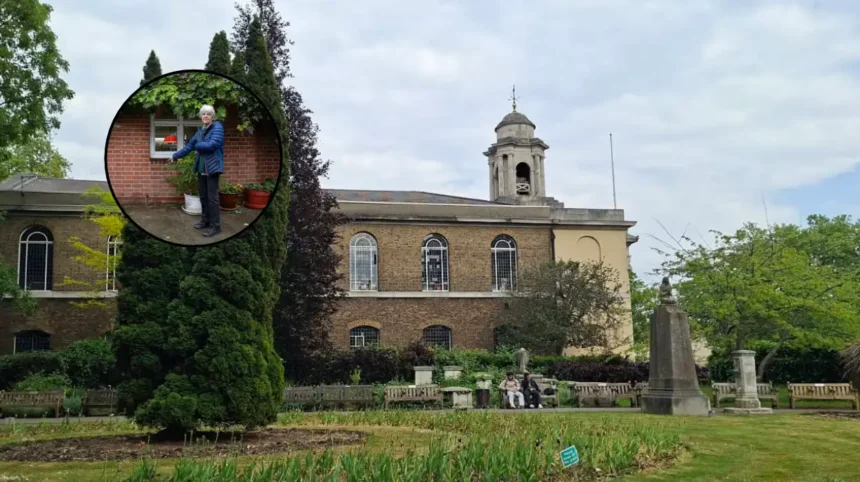
North London (North London News) November 2, 2026 – An 89-year-old grandmother and retired teacher has been left deeply upset after Westminster City Council removed a bench from her long-established street garden in St John’s Wood, North West London. Katharine Hoskyns, who has cultivated the small public-facing garden outside her residence for more than a quarter of a century, discovered that local authority workers had taken the wooden seat following disputes over anti-social behaviour in the immediate area.
As reported by administrative staff and journalists covering local government developments in North West London, the local council opted to clear the seating fixture after receiving reports from surrounding residents regarding noise, loitering, and disruptive public gatherings. The decision has drawn attention to the balance local authorities must strike between managing public order and preserving community green spaces maintained by long-term residents.
How Did Katharine Hoskyns React to the Bench’s Removal?
Mrs Hoskyns, who spent over 25 years nurturing a selection of geraniums, potted herbs, and tomato plants along the pavement perimeter of her property, described her heartbreak upon waking to find the street furniture missing. The garden and its accompanying bench had long served as a quiet retreat where she could tend to her horticulture and engage with passing neighbours.
Speaking regarding the emotional impact of the removal, Mrs Hoskyns indicated that she was “really upset” by the sudden loss of the bench, which she viewed as an integral part of the neighbourhood display she had painstakingly built over decades. She noted that the space was intended to bring brightness and greenery to the residential street, rather than encourage disruption.
What Statements Have Been Issued by Westminster City Council and Local Representatives?
Westminster City Council maintains strict regulatory oversight regarding street furniture, highways management, and complaints concerning public order. While local authority guidelines encourage community gardening initiatives where appropriate, street installations that attract persistent nuisance behavior frequently face removal or relocation under municipal highways legislation.
According to statements gathered from local authority communications, council teams were prompted to act following sustained reports from nearby occupants regarding anti-social conduct centered around the seating area. Council representatives underscored their responsibility to ensure safety, peaceful enjoyment, and accessibility for all pedestrians along public footpaths, citing that unpermitted street furniture associated with public nuisance must be addressed in accordance with standard environmental health and enforcement protocols.
Background of the Particular Development
Street greening initiatives and pocket gardens have grown increasingly popular across inner London boroughs over the past two decades, with residents converting small paved roadside areas into floral displays. In many cases, local authorities actively encourage parklets and greening schemes to improve urban biodiversity and resident well-being.
However, the legal status of street furniture placed on highways or council-maintained footpaths remains strictly regulated under the Highways Act 1980. Municipal councils across Greater London routinely review unauthorized items—including benches, large planters, and structures—if they impede footways or become focal points for anti-social behavior, rough sleeping, or night-time noise. The situation in St John’s Wood reflects an ongoing tension in dense urban areas where private resident initiatives intersect with public space administration and municipal crime prevention strategies.
Prediction: How Will This Development Affect Local Residents and Community Greening Initiatives?
This development is likely to have immediate implications for local residents, community gardeners, and neighborhood groups across Westminster and adjacent London boroughs.
Firstly, elderly and long-term residents who maintain informal public-facing gardens may feel discouraged from investing time and personal funds into neighborhood beautification projects due to fears of strict enforcement or unexpected removal of items. Community groups may demand clearer guidelines and formal permitting processes from Westminster City Council regarding what constitutes permissible street decoration and seating.
Secondly, nearby residents affected by street-level disruption may see a temporary reduction in localized anti-social behavior around this specific footprint. However, the removal of public seating across residential sectors risks reducing accessibility for elderly or mobility-impaired pedestrians who rely on periodic rest spots while walking through urban areas. In the longer term, local councils may face heightened pressure to implement collaborative mediation frameworks—such as installing monitored or lockable urban infrastructure—rather than resorting to outright removal, balancing public order enforcement with the preservation of valued community spaces.