Key Points
- Azu Ishiekwene wrote that Arsenal supporters have needed unusual patience and loyalty through years without major success.
- He said the Manchester City v A.C. Bournemouth match ended 1-1 on Tuesday night, giving Arsenal an “irretrievable” win.
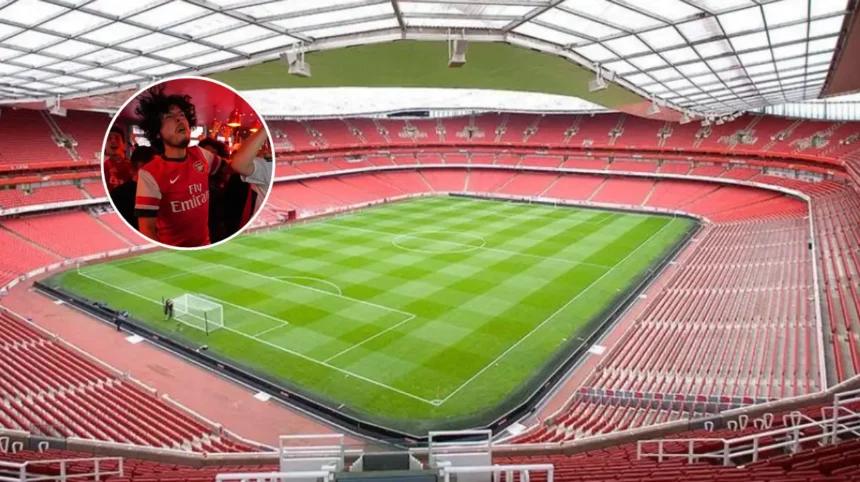
- The reaction among Arsenal fans was described as intense relief and joy after more than two decades of frustration.
- Ishiekwene referred to the feeling among supporters as “Arsenalotary”, capturing the emotional release after the result.
- He also raised the possibility of a further landmark moment if Arsenal defeat PSG on May 30 and win the UEFA Champions League.
- The story is written as a reflective opinion-style column rather than a hard news report, so the central developments are the result, Arsenal’s relief, and the wider emotional context.
Arsenal (North London News)May 22, 2026 – The Manchester City v A.C. Bournemouth match ended 1-1 on Tuesday night, and that result handed Arsenal what Azu Ishiekwene described as an irretrievable win. As reported by Azu Ishiekwene, the outcome triggered “relief and joy” among Arsenal supporters after what he portrayed as a long period of disappointment. The column framed the draw not as an isolated scoreline, but as a moment that carried symbolic weight for a fanbase that has waited years for success.
Ishiekwene’s piece is built around the idea that Arsenal fans have endured an especially demanding journey. He wrote that supporting the club through 22 winless seasons and 835 matches required
“the patience of Job and the fidelity of a monk”,
language that underlines the depth of the wait he is describing. He said the supporters’ reaction was “beyond belief” when the City-Bournemouth result confirmed a major outcome in Arsenal’s favour. The central emphasis is on emotional release, rather than on tactical or statistical analysis.
Why did Azu Ishiekwene describe Arsenal fans so strongly?
Azu Ishiekwene used highly expressive language to describe the emotional commitment of Arsenal fans, saying they have kept faith with the club despite repeated setbacks.
In his column, he said there “can’t be many” fans who would not make good spouses or lifetime friends because of the loyalty required to stay with the team through long spells without success.
That comparison was used to stress endurance, steadiness and attachment, not to make a literal claim about supporters. The piece presents Arsenal fandom as a test of patience that eventually paid off in one moment of shared relief.
He also pointed to the song
“The Angel (North London) Forever”, saying supporters had continued to sing it when they filed out to play in the last three years or so since the song was adopted. That detail is used to show how club identity and shared ritual helped sustain morale during difficult periods.
Ishiekwene’s writing suggests that the fans’ emotional response was shaped not only by the result itself, but by the accumulation of expectation across many seasons. The column therefore treats the draw in Manchester as the trigger for a much larger story about persistence.
What did the reaction look like among supporters?
The reaction, as Ishiekwene described it, was one of pure joy and deep relief. He wrote that the “ecstasy” of “Arsenalotary” was on full display after more than two decades of shattered dreams.
The expression is used to capture a collective mood rather than to report a formal club statement or official comment. In the column, the supporters are presented as people who had been waiting for a breakthrough and who finally saw a moment that felt meaningful.
This section of the story is emotional in tone, but the facts remain simple: Manchester City drew 1-1 with Bournemouth, and Arsenal benefited from that result. Ishiekwene’s column turns that fact into a narrative about release after prolonged frustration.
His focus is on the human response around the club, especially the way supporters experienced the result as a turning point. The piece does not report a formal post-match quote from Arsenal or City; instead, it interprets the feeling in the stands and among followers of the club.
Could Arsenal still go further this season?
Ishiekwene ended by pointing to the possibility of even greater success if Arsenal defeat PSG on May 30. He suggested that a win in that match, followed by a UEFA Champions League triumph, would raise the emotional stakes even further.
The column does not claim that those victories have happened; it presents them as a possibility. That makes the final part of the piece forward-looking while still rooted in the immediate joy caused by the Bournemouth result.
The mention of PSG and the Champions League broadens the story beyond a single league-related outcome. It turns a moment of relief into a wider question about whether Arsenal could convert momentum into something historic.
Ishiekwene did not present the club as guaranteed to achieve that, but he did use the prospect to show how one result can change the atmosphere around a team. In that sense, the column moves from present relief to possible future significance.
What is the background to this development?
Azu Ishiekwene’s column is built on Arsenal’s long history of near misses, frustrations and periods without major domestic reward.
He referred to 22 winless seasons and 835 matches, which he used as shorthand for the scale of the wait felt by supporters. The piece also links that background to the identity of the fanbase, suggesting that Arsenal followers have remained committed even when success has been limited.
In that sense, the draw between Manchester City and Bournemouth becomes important because it is understood against years of expectation.
The background also includes the role of fan culture in keeping belief alive. Ishiekwene’s reference to “The Angel (North London) Forever” shows how songs, rituals and matchday habits can matter as much as on-pitch results in shaping club identity.
The article presents Arsenal support as a form of endurance that stretches across seasons. That context helps explain why the reaction to the City-Bournemouth draw was so strong in the column.
What is the prediction for Arsenal fans?
For Arsenal fans, the immediate effect of this development is likely to be renewed belief and a stronger sense that patience can be rewarded. If the club goes on to beat PSG on May 30, the result would deepen that feeling and could turn this moment of relief into a much bigger emotional milestone. Ishiekwene’s column suggests that supporters have already experienced a significant release, so any further success would add to that sense of vindication. The development may also intensify anticipation around every remaining match because expectations will rise once a major breakthrough feels possible.
For the wider audience around the club, especially long-term supporters, the episode shows how one external result can shift the mood around a team. The Bournemouth draw did not only affect standings; it changed the atmosphere, the conversation and the level of hope. If Arsenal continue to progress, that renewed optimism could strengthen fan engagement and sharpen attention on every future fixture. The prediction, based on the column’s framing, is that the emotional impact will be felt most strongly by supporters who have waited the longest for success.