Key Points
- Arsenal conducted undisclosed talks with former Tottenham Hotspur manager Mauricio Pochettino in November 2019 following the dismissal of Unai Emery.
- The revelation emerges from a new book authored by Sam Dean of The Telegraph, detailing Arsenal’s path towards their Premier League title success.
- Pochettino was free to negotiate after being sacked by Tottenham Hotspur just 10 days prior to Emery’s departure from Emirates Stadium.
- Arsenal’s hierarchy compiled a comprehensive shortlist that included several prominent managerial figures before ultimately selecting Mikel Arteta.
- Pochettino reportedly demonstrated a willingness to engage in dialogue regarding the vacant position, despite his deep-rooted ties with north London rivals Tottenham Hotspur.
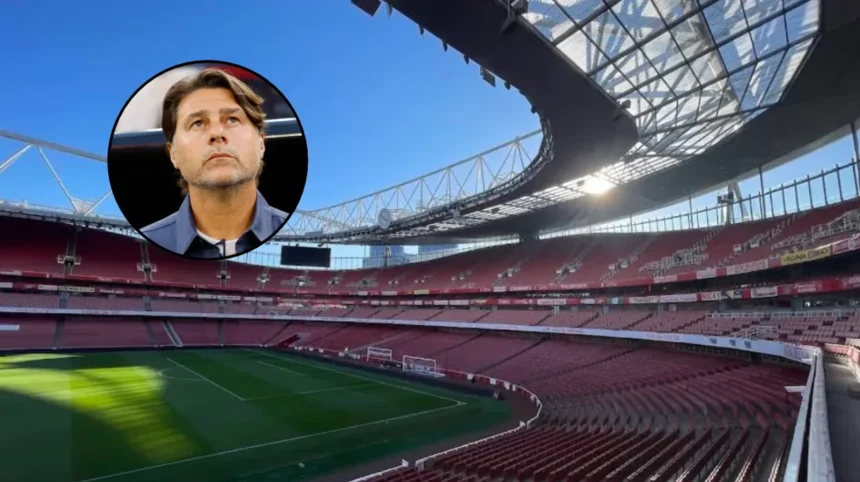
Arsenal (North London News) October 19, 2026 – Arsenal held confidential discussions with Mauricio Pochettino over the vacant managerial position following the departure of Unai Emery in November 2019, prior to the eventual appointment of Mikel Arteta. As reported by Sam Dean of The Telegraph, the north London club compiled a broad shortlist of candidates to replace Emery and engaged in serious dialogue with Pochettino, who had recently been dismissed by local rivals Tottenham Hotspur.
- Key Points
- What candidates were on Arsenal’s shortlist after Unai Emery was sacked?
- How close was Mauricio Pochettino to taking over at Emirates Stadium?
- Why did Arsenal choose Mikel Arteta over experienced managers?
- Background to the 2019 Arsenal managerial search
- Prediction: How could this revelation affect football supporters and club dynamics?
What candidates were on Arsenal’s shortlist after Unai Emery was sacked?
Following the decision to dismiss Unai Emery after a seven-match winless run, Arsenal’s executive team embarked on a thorough search for a successor. As documented by Sam Dean of The Telegraph, the club’s leadership explored various profiles across European football.
The shortlist featured established managers alongside emerging coaching talent. Alongside Mauricio Pochettino, the club considered internal candidate Freddie Ljungberg, who took temporary charge as interim head coach, as well as several high-profile external options including Carlo Ancelotti, Massimiliano Allegri, and former Arsenal captain Patrick Vieira. However, Mikel Arteta, who was serving as assistant coach to Pep Guardiola at Manchester City at the time, remained a central figure in the decision-making process.
How close was Mauricio Pochettino to taking over at Emirates Stadium?
According to Sam Dean of The Telegraph, Arsenal held “serious conversations” with Mauricio Pochettino shortly after his departure from Tottenham Hotspur. Pochettino had been relieved of his duties at White Hart Lane only 10 days before Emery was relieved of his duties at Arsenal, leaving the Argentine coach immediately available without contract complications.
As noted by Sam Dean of The Telegraph, Pochettino “showed willingness to engage” with Arsenal’s executive hierarchy despite his recent five-year tenure at Tottenham Hotspur. Although preliminary discussions took place to gauge interest and assess his tactical vision for the squad, negotiations did not progress to a formal contract offer. The club ultimately decided to pursue Mikel Arteta, who was formally appointed as head coach on 20 December 2019.
Why did Arsenal choose Mikel Arteta over experienced managers?
As detailed by Sam Dean of The Telegraph, Arsenal’s executive team—led by technical director Edu Gaspar and chief executive Vinai Venkatesham—focused on long-term structural cultural reform. Whilst managers such as Carlo Ancelotti and Mauricio Pochettino offered extensive managerial records, Arteta presented a detailed blueprint for restructuring the squad’s dynamic, tactical identity, and everyday culture.
As reported by Sam Dean of The Telegraph, Arteta impressed the leadership during his interview at his home in Manchester, articulating a precise diagnosis of the team’s deficiencies and outlining an uncompromising culture of performance standards. This vision aligned directly with the board’s strategy for rebuild and long-term sustainability.
Background to the 2019 Arsenal managerial search
The managerial search in late 2019 occurred during a period of transition and operational instability for Arsenal Football Club. Following the departure of Arsène Wenger in May 2018 after 22 years in charge, Unai Emery was appointed to lead the post-Wenger era. Despite reaching the UEFA Europa League final in his first season, Emery’s tenure experienced a sharp decline in results and performance during autumn 2019.
Simultaneously, north London rivals Tottenham Hotspur underwent their own managerial disruption. Mauricio Pochettino, who had guided Tottenham to the UEFA Champions League final in May 2019, was dismissed in November 2019 following a poor start to the domestic campaign and replaced by José Mourinho. The concurrent availability of Pochettino and the vacancy at Emirates Stadium created a unique window where both parties explored an unexpected cross-rival dialogue.
Prediction: How could this revelation affect football supporters and club dynamics?
The revelation of secret talks between Arsenal and Mauricio Pochettino highlights how close the north London rivalry came to a historic shift. For Arsenal supporters, this insight reinforces appreciation for the board’s decision to trust Mikel Arteta, whose strategic vision ultimately yielded domestic success and restored the club to the top tier of European football.
For Tottenham Hotspur supporters, the news that Pochettino engaged in discussions with their primary rival may alter perceptions of his legacy at the club. Whilst cross-London managerial moves are rare, the willingness of a former manager to discuss terms with a direct rival underscores the pragmatic nature of modern football management. Moving forward, the confirmation of these historical negotiations illustrates the subtle margins involved in top-level executive decisions and how single recruitment choices shape the competitive landscape of the Premier League.